Fitness / Motivation / Technology & A.I / Crypto

Welcome to the latest edition of Powerbuilding Digital, your go-to source for the intersection of fitness and the digital frontier. As always, we’re thrilled to have you with us as we delve into the dynamic worlds of fitness, technology, artificial intelligence, and the ever-evolving realm of cryptocurrencies.
In this edition, we bring you the most recent and impactful stories, carefully curated to fuel your motivation and inform your fitness journey. Whether you’re a seasoned athlete or just starting out, our insights are designed to propel you towards your personal best.
But that’s not all. We’re also keeping a pulse on the digital age, bringing you the latest advancements in technology and artificial intelligence. Discover how these innovations are reshaping the fitness industry and beyond, offering new ways to track, enhance, and enjoy your fitness journey.
And let’s not forget the intriguing world of cryptocurrencies. With its rapid developments and potential impact on the global economy, we bring you expert analysis and updates to keep you ahead of the curve.
As we explore these exciting topics, we extend our heartfelt gratitude to you, our dedicated readers. Your enthusiasm and support inspire us to continually deliver content that enriches your life. We encourage you to share this newsletter with friends and family, and if you haven’t already, be sure to subscribe for more inspiring content.
In closing, we wish you peace, health, and wealth in abundance. May this edition of Powerbuilding Digital empower and enlighten you on your path to personal and professional success.
Stay strong, stay informed, and keep building your power!
Fitness
Charting Your Own Path: Embracing Individuality in Your Fitness Journey

In fitness and well-being, it’s easy to fall into the trap of comparison and competition. However, true progress and fulfillment come from understanding and adhering to your unique fitness journey. This comprehensive guide delves into why personalizing your fitness goals is crucial and how to effectively do it.
Understand Your Unique Fitness Journey
Identifying Your Personal Fitness Needs
Every individual has unique physical capabilities and limitations. Recognizing these aspects is the first step towards setting realistic and personal fitness goals. It involves understanding your body type, health history, current fitness level, and lifestyle.
Setting Personalized Goals
Your fitness goals should be tailored to your specific needs and aspirations. Whether it’s weight loss, muscle gain, endurance improvement, or simply maintaining a healthy lifestyle, your goals must reflect your personal journey.
Avoid the Comparison Trap
The Pitfalls of Comparing with Others
Comparing your fitness journey with others can lead to unrealistic expectations and demotivation. Remember, everyone’s body responds differently to exercise and diet. What works for one person might not necessarily work for you.
Focus on Your Progress
Measure your success based on your progress, not others’. Celebrate your small victories and use them as motivation to keep pushing forward.
Develop a Customized Fitness Plan
Consulting with Fitness Professionals
Seeking advice from fitness experts can provide insights into what exercises and diet plans might work best for you. They can help tailor a plan that aligns with your goals and physical capabilities.
Adapting the Plan as Needed
Your fitness journey is dynamic. Be ready to adapt your fitness plan as your body changes and your goals evolve.
Incorporate a Balanced Diet
Understanding Nutritional Needs
A balanced diet is integral to any fitness regime. Understanding your body’s nutritional needs helps in crafting a diet plan that complements your fitness goals.
Avoid Fad Diets
Steer clear of fad diets that promise quick results. Opt for a sustainable and balanced diet plan that you can maintain in the long run.
Embrace Consistency and Patience
The Importance of Consistency
Consistency is key in achieving and maintaining fitness goals. Regular exercise and a steady diet plan are crucial for long-term success.
Patience is a Virtue
Fitness goals are not achieved overnight. Be patient with yourself and understand that progress takes time.
Utilize Technology and Resources
Fitness Apps and Trackers
Leverage technology like fitness apps and trackers to monitor your progress and stay motivated.
Educational Resources
Stay informed about fitness trends and research. Knowledge is power when it comes to personalizing your fitness journey.
Final Thoughts
Your fitness journey should be a personal one, tailored to your individual needs and goals. By understanding your unique requirements, avoiding the comparison trap, developing a customized plan, incorporating a balanced diet, maintaining consistency, and utilizing available resources, you can achieve and sustain your fitness objectives.
Remember, the key to success in fitness is understanding and respecting your body’s journey. Embrace your individuality and let it guide you towards your personal fitness aspirations.
Motivation
Life are lessons to finding true understanding of Self

Introduction to Self-Discovery
Understanding oneself is a journey that lasts a lifetime. Self-discovery is about unraveling the unique layers of our personality, beliefs, and values. It’s a quest to find our true essence beyond societal labels and expectations.
The Journey Begins: First Steps
Acknowledging the need for self-discovery is where it all starts. Setting intentions is crucial as they guide us through our journey. It’s about asking ourselves what we seek to understand and why.
Self-Awareness: The Foundation
The bedrock of self-discovery is self-awareness. It involves delving into our personal values and beliefs, recognizing our strengths, and accepting our weaknesses. This understanding forms the basis of our personal growth.
Life Experiences as Teachers
Every life experience, whether a success or a failure, teaches us something valuable. Relationships, too, play a significant role, mirroring aspects of ourselves we may not see alone.
Embracing Change and Growth
Stepping out of our comfort zones is essential for growth. Life’s changes, though sometimes challenging, are opportunities for us to learn and evolve.
Mindfulness and Self-Reflection
Mindfulness helps us remain present and introspective, fostering a deeper understanding of our thoughts and feelings. Regular self-reflection is a vital practice in the journey of self-discovery.
Overcoming Challenges and Obstacles
We often encounter self-doubt and fear on this journey. Overcoming these challenges teaches us resilience and fortitude, shaping our character and understanding of self.
The Role of Creativity and Passion
Discovering and pursuing our passions and creativity is a joyful and revealing part of self-discovery. They provide a sense of purpose and fulfillment, enhancing our understanding of who we are.
The Impact of Social Influences
We must navigate social pressures and expectations while staying true to ourselves. Building supportive and understanding relationships is key to this process.
Integrating Lessons Learned
Applying the lessons learned from life experiences is crucial for personal growth. This continuous process of learning and development shapes our journey.
The Power of Gratitude and Positivity
Cultivating a positive mindset and practicing gratitude enhances our journey of self-discovery. They help us appreciate our journey and the lessons learned.
Setting and Achieving Personal Goals
Setting personal goals is a powerful tool for self-discovery. Achieving these goals brings a sense of accomplishment and clarity about our capabilities and desires.
Maintaining Balance and Harmony
Finding balance in life and prioritizing self-care are essential for a healthy journey of self-discovery. They ensure we have the energy and mindset to continue our quest.
The Ongoing Journey of Self-Discovery
Self-discovery is an ongoing process, a journey of lifelong learning. It prepares us for future challenges and enriches our understanding of ourselves.
Embracing Your True Self
In conclusion, the journey of self-discovery is about embracing and understanding our true self. It’s a continuous and evolving process, one that enriches our lives in every aspect.
Technology & A.I
Spatial Content Creation: Sony Unveils Cutting-Edge XR Headset at CES 2024

Sony’s latest revelation at CES 2024 has sent ripples through the tech world. After a suspenseful 25-minute introduction, the electronics giant unveiled its groundbreaking XR head-mounted display and controller system. This innovative tech, yet to be named, is specifically designed for spatial content creation. Its sleek matte gray appearance, reminiscent of the PSVR2 but with a more streamlined design, includes two forward-facing cameras, a wand-like controller, and a compact peripheral akin to a ring.
Introducing the Future of Virtual Design: Sony’s New XR Hardware
This latest offering from Sony is tailored for creators and artists who thrive in virtual realms, crafting and manipulating digital products. Set for release later in 2024, this device stands out as a beacon for creative minds, though its pricing remains under wraps for now.
Sony’s onstage presentation was just the tip of the iceberg. A subsequent press release revealed the device’s heart: a Qualcomm Snapdragon XR2+ Gen 2 processor, unveiled at the onset of CES. This powerhouse enables the headset to operate independently, free from the constraints of a computer. Its dual 4K OLED microdisplays promise an immersive mixed reality experience with advanced user and space tracking capabilities. Sony CEO Kenichiro Yoshida praises its crisp visuals and intuitive 3D design interaction, placing it on par with the company’s professional-grade cameras and devices.
A New Dimension in Interactive Design
The headset boasts video see-through functionality, augmented by six cameras and sensors. The controllers, one ring-shaped for object manipulation and another for pointing, allow creators to sculpt 3D models in real-time. These tools, used in conjunction with traditional input devices like keyboards, offer an unprecedented level of control and precision.
“Utilizing the pointing controller in the dominant hand and attaching the ring controller to the other, creators can seamlessly model 3D objects while engaged with both controllers and a keyboard,” Sony illustrates, highlighting the device’s versatility.
Balanced, User-Friendly, and Visionary
Besides its technical prowess, Sony has meticulously calibrated the headset’s balance, ensuring a comfortable center of gravity. The display portion can be flipped up, allowing users to transition between virtual and real worlds without removing the headset. This feature underscores Sony’s commitment to a user-centric design philosophy.
At the CES stage, Sony demonstrated the headset’s potential by showing a user manipulating a bipedal robot model. This level of interaction suggests a creative alternative to Microsoft’s HoloLens, positioning Sony’s device as a tool for intricate design work. Additionally, through third-party creative apps, the headset promises to facilitate remote collaboration and review processes.
As CES 2024 continues, anticipation builds for further revelations at Sony’s booth. This innovative headset is not just a product; it’s a testament to Sony’s vision for the future of spatial content creation, blending cutting-edge technology with intuitive design to unlock new realms of creative potential.
Exploring the Future of Immersive Technology: Apple Vision Pro’s Launch

The tech giant Apple is on the verge of introducing its much-anticipated Vision Pro headset in the U.S. market on February 2nd. Priced at a hefty $3,499, the device is not just another addition to the burgeoning field of virtual and mixed reality; it represents a significant leap in immersive computing. Despite its steep price, the Vision Pro launch is a calculated move by Apple, mirroring its conservative sales forecast.
Apple first unveiled Vision Pro in June at its annual developer event. Since then, it has methodically built anticipation through select media previews and influencer partnerships. The big question, however, looms large: Will Vision Pro be a transformative force in immersive computing, or will it join the ranks of high-profile but ultimately underwhelming VR/AR/MR product launches?
First Impressions and Quality Assessments
Initial reactions to Apple Vision Pro highlight its exceptional quality and capabilities. Users have praised the device for its integration with other Apple products, notably the iPhone, which allows for the playback of volumetric videos. The experience of watching 3D blockbuster movies through the headset has also garnered positive feedback. While some aspects of the Vision Pro have elicited mixed reactions, the overall impression is overwhelmingly favorable.
Apple’s Strategic Approach to Mixed Reality
Apple’s strategy with Vision Pro seems to revolve around enhancing everyday tasks performed on existing devices like iPhones, Macs, and iPads. This approach is sensible, considering the history of mixed reality devices making grandiose promises and ending up as niche products or costly disappointments. By focusing on familiar functionalities, Apple aims to integrate Vision Pro seamlessly into the users’ digital ecosystem.
Comparative Market Analysis: Meta’s Quest 3
Meta, another key player in this market, launched the third generation of its Quest headset, priced at a more accessible $499. Meta’s journey from high-end offerings to a mass-market strategy contrasts sharply with Apple’s approach. The Quest 3, balancing superior features, performance, and price, has performed well, especially during the holiday season. However, the overall demand for VR headsets remains tepid, and Meta continues to invest heavily in this sector.
Software Ecosystem and Consumer Expectations
The software offerings for Apple Vision Pro at launch remain an area of speculation. Apple has been actively engaging with developers to ensure a robust lineup of apps for its consumers. This strategy suggests that the Vision Pro could debut with some standout applications, setting a high bar for user experience.
Apple’s Unique Position in the XR Market
Apple’s foray into the XR (extended reality) space is marked by its traditional strategy of entering a market late and then dominating it, as seen with the iPhone, iPad, and Apple Watch. However, the XR sector presents a unique challenge. Despite being hyped as the “next big thing” in computing for years, VR and mixed reality have struggled to live up to expectations.
The Challenges Ahead
Apple’s Vision Pro launch is a bold move in a market filled with unfulfilled promises. Mark Zuckerberg’s repeated announcements about the future of spatial computing highlight the difficulty of breaking new ground in this field. Apple, with its Vision Pro, is at a crossroads, attempting to redefine a mixed reality future that has been long promised but not fully embraced by consumers.
The Apple Vision Pro headset is a significant step in the evolution of immersive technology. Its success will depend not only on its technological prowess but also on its ability to integrate seamlessly into everyday life and resonate with consumers. As the market awaits its launch, the tech world watches closely to see if Apple can indeed redefine the boundaries of virtual and augmented reality.
Rabbit’s R1 – The Compact Powerhouse Reshaping Device Interactions

Rabbit, an AI startup led by CEO Jesse Lyu, is charting a new course. Unlike conventional smartphone alternatives, Rabbit’s latest innovation, the R1, isn’t just another gadget; it’s a testament to the potential of AI in transforming our daily digital interactions.
Compact Design with Advanced Features
The R1, a $199 AI device, is redefining portable technology. Its design, reminiscent of a Playdate console with a touch of ’90s handheld TV nostalgia, is both appealing and practical. The device, about half the size of an iPhone, is equipped with a 2.88-inch touchscreen, a versatile rotating camera, and a user-friendly scroll wheel/button. Inside its sleek, rounded body lies a powerful 2.3GHz MediaTek processor, 4GB of RAM, and 128GB of storage, ensuring smooth performance.
An Interface that Feels Right
Upon handling the R1, its build quality immediately stands out. Despite its lightness, the device feels robust and comfortable in hand. The tactile feedback from its buttons, a signature of Teenage Engineering’s design expertise, adds to the overall user experience. However, it’s worth noting that the R1 is prone to fingerprints, a minor drawback in its otherwise impressive design.
Rabbit OS: A Leap in AI Technology
The heart of the R1 lies in its operating system, Rabbit OS, underpinned by cutting-edge AI technology. Instead of mimicking existing large language models, Rabbit OS introduces a novel ‘Large Action Model’ (LAM). This model acts as a universal controller, seamlessly integrating various services, whether they be websites, apps, or desktop platforms.
Simplifying Digital Life
Rabbit OS’s brilliance is in its simplicity. It offers a unified interface to control music, order transportation, manage groceries, send messages, and more. Its on-screen interface, organized into category-based cards, ensures ease of use and clarity. The innovative approach of training the LAM using real interactions with popular apps like Spotify and Uber is a game-changer, allowing Rabbit OS to adapt to any app’s functionality.
Empowering Users with Custom Training
Another groundbreaking feature is the R1’s dedicated training mode. Users can teach the device specific tasks, which it can then automate. For instance, instructing it to remove watermarks in Photoshop becomes a task the R1 can learn and execute independently, showcasing the device’s adaptability and learning capabilities.
The Future of AI-Driven Devices
The R1’s practicality extends beyond its hardware. The Rabbit Hole web portal is a central hub for managing various services, further enhancing the device’s utility. The challenge, however, lies in ensuring smooth operation across diverse user environments and platforms.
A Visionary Approach to AI Hardware
Rabbit’s strategy in circumventing the need for widespread operating system support by directly teaching the model to use existing apps is ingenious. This positions Rabbit OS as a potential central hub for app interactions, similar to what ChatGPT aims to be for web search.
Redefining the Role of AI Devices
The R1’s purpose in the AI landscape is multifaceted. While it may not fully replace smartphones, its capabilities in video calling and voice assistance, coupled with features like a SIM card slot, position it as a versatile accessory and a glimpse into the all-in-one future of technology. Rabbit’s commitment to security and privacy in the design of Rabbit OS is also noteworthy, considering the device’s access to users’ primary services.
Availability and Market Prospects
Currently available for pre-order, with shipping expected to begin in March, the R1 is set to make a significant impact in the AI and technology market, potentially outpacing competitors like Humane’s AI Pin.
Rabbit’s R1 is not just a gadget; it’s a bold statement in the AI world, blending innovative design with groundbreaking technology to simplify and enhance our digital experiences.
Sony Honda Mobility’s Afeela: A Visionary Approach to Future Cars

The automotive world was abuzz when Sony first hinted at entering the car market four years ago at CES. Fast forward to CES 2024, and the buzz has only intensified with Sony Honda Mobility’s latest revelation. The question on everyone’s lips: Is the Afeela merely a visionary concept, or is it the future of driving?
The Evolution of Afeela: From Concept to Near-Reality
The Afeela, a joint venture between tech giant Sony and automotive leader Honda, has evolved significantly since its initial announcement. It’s more than just a car; it’s a blend of high-tech innovation and automotive prowess. This all-wheel drive prototype boasts twin 180kW motors (equivalent to around 483 horsepower), a 91kWh lithium-ion battery, and up to 150kW of fast DC charging capability. These specs suggest that the Afeela is gearing up to be a strong contender in the electric vehicle market.
More Than Just Transportation: Afeela as an Entertainment Hub
Sony’s influence is unmistakable in the Afeela’s design. The vehicle’s interior is a testament to Sony’s heritage in entertainment technology. It offers a unique experience with features like a wide strip screen for immersive movie watching and gaming. The car even transforms into a mobile advertisement platform for Sony’s movies and games, all controlled via a dedicated smartphone app.
A Peek Inside the Afeela Experience
Despite the car’s impressive features, the Afeela still retains an air of mystery. During the CES showcase, attendees were only allowed limited interaction with the vehicle, emphasizing the experience of just being in an Afeela rather than focusing on its driving capabilities. This approach aligns with Sony Honda Mobility’s vision of creating a vehicle that’s as much about experience as it is about transportation.
Technological Innovations and Partnerships
Sony Honda Mobility isn’t stopping at just hardware. The company has announced partnerships with tech leaders like Microsoft, using Azure to develop an AI conversational personal agent, and with Polyphony Digital to blur the lines between virtual and real-world driving experiences. These collaborations hint at a future where the Afeela is not just a car but a fully integrated technology platform.
The Future of Afeela: Ambitions and Uncertainties
The Afeela’s journey is far from complete. Key features such as Level 3 self-driving capabilities and a definitive personal assistant are still under development. Sony Honda Mobility’s commitment to innovation is clear, but the final form and functions of the Afeela remain to be seen.
A New Era of Mobility
Sony Honda Mobility’s Afeela represents a bold step into the future of mobility, one that combines entertainment, technology, and automotive design in a unique package. While there’s still much to learn about the Afeela, its potential to redefine our driving experience is undeniable. As the world eagerly awaits its release, one thing is certain: the Afeela is more than just a car; it’s a glimpse into the future of integrated technology and transportation.
The Fusion of Advanced AI and Next-Generation Cloud Computing

In recent years, the landscape of scientific research has undergone a transformative change, thanks to the integration of advanced artificial intelligence (AI) with next-generation cloud computing. This fusion is not just a step forward; it’s a quantum leap in accelerating the pace of scientific discovery, reaching speeds previously unimaginable. This article delves into how this technological synergy is making groundbreaking advancements, particularly in the fields of chemistry and materials science, and how it’s shaping the future of sustainable energy solutions.
The Power Duo: Microsoft and PNNL in Collaboration
The collaboration between Microsoft and the Pacific Northwest National Laboratory (PNNL) in Richland, Washington, serves as a prime example of this revolution. Their joint effort is focused on harnessing the capabilities of AI and high-performance computing (HPC) – a specialized form of cloud-based computing – to make significant strides in chemistry and materials science. These areas are crucial for discovering energy solutions that our planet desperately needs.
Rapid Discovery of New Battery Materials
A testament to this collaboration’s success is the rapid discovery of a new battery material. Traditionally, such discoveries could take years of research and experimentation. However, by leveraging advanced AI and HPC, PNNL scientists made this breakthrough in a matter of weeks. Microsoft’s Quantum team played a pivotal role, employing AI to sift through millions of potential materials, drastically narrowing down the options to the most promising candidates for battery development.
Azure Quantum Elements: A Game Changer
The use of Microsoft’s Azure Quantum Elements was instrumental in this process. It efficiently filtered through 32 million potential inorganic materials, identifying 18 promising candidates in just 80 hours. This approach not only speeds up the discovery process but also paves the way for addressing urgent challenges in sustainability, pharmaceuticals, and other areas. Moreover, it offers a glimpse into the future advancements possible with quantum computing.
Learning from Success and Failure: A New Approach to Materials Synthesis
One of the major hurdles in traditional materials synthesis is the reliance on published studies, which often highlight successes while omitting failures. This one-sided learning curve can be limiting. However, the combination of AI and cloud computing introduces a more comprehensive approach, considering all possibilities and learning from both successes and failures.
From Theory to Real-World Applications: Teaching AI Materials Science
Microsoft’s AI systems have been trained to perform sophisticated evaluations of various elements and their combinations, significantly streamlining the process of material discovery. By efficiently analyzing stability, reactivity, and energy conductivity, these AI tools have been able to narrow down millions of candidates to the most viable options.
High-Performance Computing: Ensuring Accuracy and Practicality
While AI offers speed, HPC brings in the necessary accuracy, especially in the final stages of candidate material selection. It employs advanced techniques like density functional theory and molecular dynamics simulations to evaluate the practicality of each material, considering factors such as availability and cost.
The Future of Battery Technology and Beyond
The newly discovered material, a solid-state electrolyte, shows promise in reducing lithium content, potentially by up to 70 percent. This discovery is particularly significant given the increasing demand and limited availability of lithium. Furthermore, the AI-derived material’s unique molecular structure facilitates the movement of both sodium and lithium ions, a surprising finding that contradicts previous assumptions in solid-state electrolyte systems.
Digital Twins and Future Prospects
Looking ahead, the vision is to develop digital twins for chemistry and materials science. This would enable simulations of how materials would perform under various conditions without the need for physical lab experiments. Such advancements could significantly accelerate the development of new materials and technologies.
Ushering in a New Era of Scientific Discovery
The collaboration between Microsoft and PNNL epitomizes the immense potential of combining AI and cloud computing in scientific research. It’s not just about the discovery of a new battery material but the revolutionary speed and efficiency with which it was achieved. This synergy of AI and HPC is paving the way for a new era of accelerated scientific discovery, addressing critical global challenges and advancing our understanding of the world around us.
Wildlife Observation: The Unveiled Swarovski Optik AX Visio Smart Binoculars

Imagine a world where observing the intricate details of wildlife becomes not just easier but smarter. This is the reality that Swarovski Optik brings to life with its groundbreaking release: the Swarovski Optik AX Visio smart binoculars. These are not your average binoculars. They mark the first foray into AI-supported optics, blending high-performance traditional long-range vision with cutting-edge digital intelligence. With a mere touch, these binoculars transform bird and wildlife identification, allowing for shared discoveries and an array of additional practical functions.
The Swarovski Optik AX Visio: A Blend of Technology and Design
At the heart of the Swarovski Optik AX Visio binoculars lies a synergy of intelligent technology and high-precision analog optics, branded as Swarovision. The binoculars are equipped to recognize over 9,000 bird species and wildlife, making them a boon for nature enthusiasts and professionals alike. The inclusion of a built-in camera permits users to capture photos and videos, seamlessly integrating these visuals with smartphones via the Swarovski Optik Outdoor App. This app not only stores and manages captures but also features a unique “Share discoveries” function, empowering users to guide others to their observed subjects with real-time markers.
The technical prowess of the AX Visio is underscored by its composition of 390 hardware components. Yet, its dedication to sustainability is evident in the eco-friendly standards adhered to by its analog components, like optics and housing.
Continuous Innovation and User-Friendly Design
Swarovski Optik has ensured that the AX Visio remains at the forefront of technological advancements. Regular system and function updates through the app, coupled with an open programming interface, allow for the expansion of capabilities, catering to the evolving needs of users for enhanced vision and information.
The design, crafted by the renowned industrial designer Marc Newson in collaboration with Swarovski Optik, emphasizes a modern aesthetic and intuitive usability. Following the successful CL Curio model, the AX Visio is the second binoculars series from the brand influenced by Newson’s visionary approach. His focus on ergonomic comfort and a sleek appearance adds a distinctive edge to these smart binoculars.
Beyond Observation: Changing the Game in Wildlife Conservation
The AX Visio binoculars are more than just observation tools; they are game-changers in wildlife conservation and birding. They simplify identification processes, making them accessible to a broader audience and enhancing engagement in wildlife conversations. However, this leap in technology comes with a price – $4,799 / £3,820, a factor worth considering for enthusiasts gearing up for their next outdoor adventure.
The Swarovski Optik AX Visio smart binoculars, with their fusion of AI support and high-quality optics, are not just a product. They represent a milestone in the evolution of wildlife observation, making every experience more insightful and connected. As they hit the markets in February 2024, they promise to redefine how we interact with and understand the natural world around us.
Crypto
New Era of Bitcoin ETFs: A Game-Changer in Cryptocurrency Investment

The world of cryptocurrency investment has entered a new chapter with the United States Securities and Exchange Commission’s (SEC) groundbreaking approval of several Bitcoin exchange-traded funds (ETFs). This pivotal development on January 10 marked the beginning of a new investment landscape, seeing these innovative ETFs making their debut on various exchanges.
Bitcoin ETFs Take the Stage: A Detailed Overview
At 2:45 pm UTC on January 11, a flurry of activity was observed on the Cboe BZX Exchange. Shares of the ARK 21Shares Bitcoin ETF began trading at $50.18 under the ticker ARKB. Close on its heels were Invesco Galaxy’s ETF trading at $49.59 under BTCO, and WisdomTree’s at $52.13 under BTCW. Fidelity’s entry, priced at $44.40, was listed under FBTC, while Franklin Temple’s ETF marked its presence at $28.48 under the ticker EZBC. Notably, VanEck’s highly anticipated spot BTC ETF, HODL, was poised for an opening price of $54.92, though it wasn’t live at the time of reporting.
The Nasdaq Narrative: Valkyrie and BlackRock Make Their Moves
On the Nasdaq Stock Market, the Valkyrie Bitcoin Fund (ticker BRRR) commenced trading in the pre-market, initially priced around $20 before settling at $14.10. Meanwhile, the iShares Bitcoin Trust, managed by the world’s largest asset manager BlackRock and listed under IBIT, witnessed a significant pre-market surge of approximately 22%, trading at $28.64.
Grayscale and Bitwise: Spearheading Bitcoin ETF Trading
Further spotlighting the Bitcoin ETF landscape was Grayscale Investments’ ETF, which opened at $42.25 under GBTC on the New York Stock Exchange Arca. This offering, climbing to $42.97, was instrumental in the SEC’s decision. Bitwise Bitcoin Trust also commenced trading, opening at $26.80 under BITB, alongside Hashdex Bitcoin Futures ETF (ticker DEFI), which integrates spot BTC, opening at $60.00.
Regulatory Green Light: SEC’s Role in ETF Approvals
The Cboe BZX Exchange initially moved ahead of SEC announcements, approving Bitcoin ETF listings on January 11. However, they later retracted this approval, followed by the SEC’s announcement granting full regulatory approval to spot BTC ETFs from 11 asset managers across Nasdaq, Cboe BZX, and NYSE Arca.
A New Investment Horizon
The introduction of Bitcoin ETFs marks a significant milestone in the evolution of cryptocurrency investments. Offering a blend of traditional investment practices with the dynamic world of digital currencies, these ETFs not only symbolize regulatory progress but also present new opportunities for investors to diversify their portfolios. As the market adapts to this new investment instrument, it will be intriguing to observe how it shapes the future of both cryptocurrency and traditional investment strategies.
Potential of Bitcoin through Bitfinity’s Integration with Ethereum Virtual Machine

The blockchain technology landscape is continuously evolving, with new developments capturing the attention of developers and investors alike. One such groundbreaking protocol is the Ordinal Inscription, which has recently become a hotspot for innovation within the Bitcoin blockchain. A standout in this arena is Bitfinity, a pioneering project aiming to merge the capabilities of the Ethereum Virtual Machine (EVM) with Bitcoin. This initiative represents a significant step forward in the quest to expand Bitcoin’s functionality, particularly in the realm of decentralized finance (DeFi).
Bitfinity’s Vision: Bridging Bitcoin and Ethereum
Bitfinity, with its ambitious project, has secured $7 million in funding, led by prominent investment firms such as Polychain Capital and ParaFi Capital. This investment underlines the market’s confidence in Bitfinity’s ability to enhance Bitcoin’s utility, opening up a world of new applications and use cases. Ben Forman, ParaFi Capital’s managing partner, expressed enthusiasm for Bitfinity’s approach to integrate Bitcoin into broader ecosystems, highlighting the potential for novel applications.
The Role of Internet Computer in Bitfinity’s Strategy
An integral component of Bitfinity’s strategy is the Internet Computer (ICP), developed by the Dfinity Foundation. Launched in 2021, ICP stands as a sophisticated blockchain-based computing system, leveraging a network of globally distributed machines. It employs a unique proof of stake algorithm, Threshold Relay, for consensus building. The Threshold Relay generates a ‘random beacon’ that plays a crucial role in the selection of node groups and in driving the platform’s protocols.
Bitfinity’s Innovative Approach to Smart Contracts and Ordinal Inscriptions
Bitfinity’s proposal allows for the on-chain holding and transfer of Bitcoin and Ordinal assets using Internet Computer’s Chain-Key threshold signature scheme. This isn’t the first instance of the ICP network handling Ordinal inscriptions – a notable example being the launch of the Ordinals Marketplace Bioniq on Internet Computer. Bitfinity’s approach, however, stands out in its potential to offer a more cost-effective and efficient solution for handling these inscriptions.
The Philosophy Behind Bitfinity: Uniting Bitcoin and Ethereum Communities
Max Chamberlin, the founder of Bitfinity, emphasizes that the project’s goal is not to replace Bitcoin but to demonstrate the underlying similarities between Ethereum and Bitcoin communities. Referencing Ethereum researcher Justin Drake’s statement – “Ethereum is Bitcoin,” Chamberlin asserts Bitfinity’s inclusive approach, catering to all, despite potential resistance from Bitcoin purists.
Bitfinity’s Challenge: Gaining Acceptance Among Bitcoin Enthusiasts
While Bitfinity promises lower costs and increased speeds, the platform faces the challenge of winning over Bitcoin purists and Ordinal enthusiasts. Chamberlin points out that Bitfinity does not alter the fundamental nature of Ordinals as direct inscriptions on the Bitcoin blockchain, but rather makes their usage more efficient and economical.
The Growing Popularity of Ordinal Inscriptions and Bitfinity’s Future Plans
Since its inception, over 50 million Ordinal inscriptions have been minted on the Bitcoin blockchain. Bitfinity’s future plans include introducing BRC-20 tokens, allowing the creation of meme-coins on the Bitcoin network. This move is indicative of a broader trend where users increasingly prefer low-cost, efficient side-chains or Layer 2 solutions for their transactions.
A New Era for Bitcoin and Blockchain Technology
Max Chamberlin concludes with a thought-provoking statement – reversing Justin Drake’s notion, he suggests that instead of Ethereum being akin to Bitcoin, it might be more apt to say that Bitcoin embodies Ethereum’s principles through solutions like Bitfinity’s L2 and beyond. This perspective signifies a pivotal moment in the blockchain world, where the lines between Bitcoin and Ethereum are not just blurring but converging, heralding a new era of integrated blockchain functionality.
USD Coin’s Issuer Circle Embarks on an IPO Journey: A New Era in Digital Currency
USD Coin (USDC) issuer Circle has discreetly initiated an initial public offering (IPO) process with the U.S. Securities and Exchange Commission (SEC). This significant development, dated January 11, marks a new chapter in the digital currency landscape.
Circle, known for its influential role in the stablecoin market, submitted a draft registration statement on Form S-1. This filing is a critical step in Circle’s proposed IPO of its equity securities. The details regarding the number of shares and their pricing remain under wraps, awaiting determination.
This IPO is anticipated to materialize post SEC’s thorough review, contingent on market dynamics and various other factors. Circle’s statement underscores the procedural and market-sensitive nature of this endeavor.
USDC, Circle’s flagship product, stands as the second-largest stablecoin in terms of market capitalization. Boasting over $25 billion in circulation, its impact and reach are undeniable, as per CryptoSlate’s recent data.
While Circle has maintained a reserved stance on additional comments, the significance of this move cannot be overstated. The company’s journey towards an IPO isn’t a first-time endeavor.
Previously, Circle had explored going public through a merger with Concord Acquisition Corp., a Special Purpose Acquisition Company (SPAC). However, this plan did not come to fruition, collapsing in December 2022 when Circle was valued at a staggering $9 billion.
The investment landscape for Circle has been robust, with backing from heavyweight institutions like Goldman Sachs, General Catalyst, BlackRock, Fidelity Management, and Marshall Wace. This support underscores the confidence and potential seen in Circle’s business model and its contributions to the digital currency domain.
In the past year, Circle’s global expansion has been both rapid and strategic. The company has forged significant partnerships, such as with Japan’s financial powerhouse SBI Holdings, enhancing its presence in Asia. Another notable collaboration includes integrating USDC support with Mercado Pago for Chilean users, a significant stride in the Latin American market. Additionally, Circle has achieved critical licensing milestones in key jurisdictions, including Singapore.
Circle’s IPO move is more than just a corporate development; it’s a signal of the growing acceptance and integration of digital currencies in mainstream finance. As the digital currency landscape evolves, Circle’s IPO venture is a testament to the growing intersection of technology and finance, heralding a new era for digital currencies and their role in the global economy.
The Launch of the DeRec Alliance in the Hedera and Algorand Ecosystems
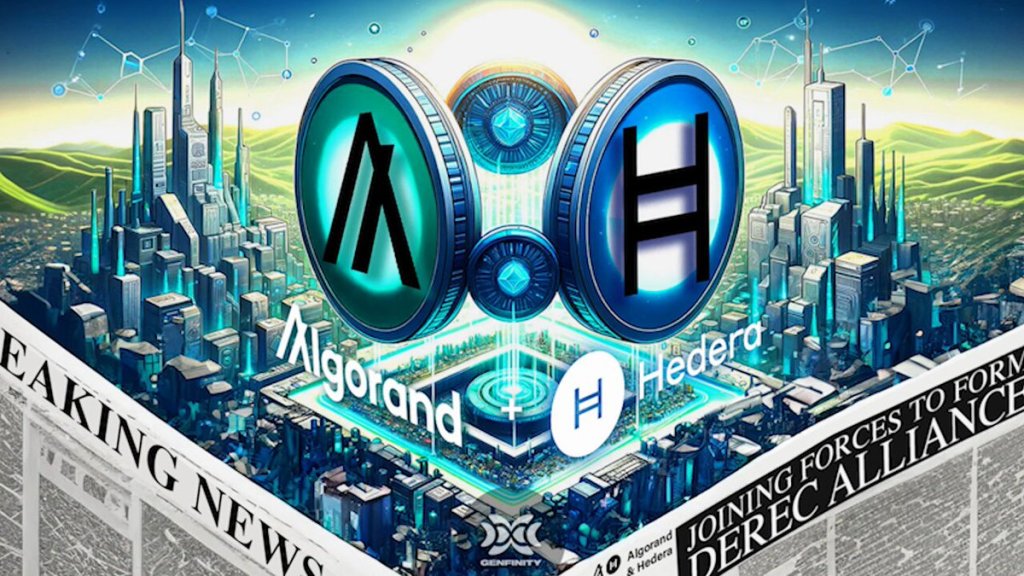
Hedera and Algorand ecosystems have taken a monumental step forward. Recently, prominent entities within these ecosystems, namely the HBAR Foundation and the Algorand Foundation, have embarked on a groundbreaking venture with the inception of the DeRec Alliance. This initiative, which was announced on January 11, is set to revolutionize the way we approach digital asset recovery.
Unveiling the DeRec Alliance: A New Era in Decentralized Asset Recovery
The DeRec Alliance’s launch was a highlight at the Crypto Finance Conference in St. Moritz, brought into the limelight by Hedera’s co-founder Leemon Baird and John Woods, the Algorand Foundation’s CTO. Their joint panel session marked a significant moment in the blockchain industry’s history.
This alliance is not just another industry collaboration. It represents a strategic move to enhance the security and ease of managing digital assets. The DeRec Alliance’s primary goal is to develop a decentralized system that mirrors the user experience of traditional Web2 platforms, but with the added benefits of blockchain technology.
Streamlining Digital Asset Security and Recovery
The philosophy behind this alliance is straightforward yet profound: simplifying the process of digital asset recovery while maintaining robust security protocols. Leemon Baird emphasized the need for the blockchain community to work collaboratively towards standardizing open-source codes and practices. This, according to him, is crucial for bringing safety and simplicity to Web3 technologies.
A particularly noteworthy aspect of this initiative is its inclusivity. Baird pointed out that the project is not limited to Hedera and Algorand. In fact, it has already garnered interest from various financial institutions and wallet software projects, indicating a broad industry impact.
Introducing the DeRec Protocol: A New Standard in Secret Management
Accompanying the formation of the DeRec Alliance is the launch of the DeRec open-source protocol. This innovative approach to secret management is based on the concept of secret sharing among a chosen group of helpers – which could include personal contacts or professional entities. The protocol ensures that individual shares of a secret do not compromise the secret itself, and it guarantees recovery even in cases where a recovery device is lost.
Enhancing User Experience in Decentralized Finance
John Woods of the Algorand Foundation underscored the importance of user experience in this endeavor. He emphasized that any successful product in the DeFi space must prioritize ease of use and minimize risks associated with self-sovereignty. The DeRec protocol addresses this by implementing automatic confirmations for secret shares and resharing mechanisms, all while maintaining the anonymity of the helpers involved.
This innovative approach is particularly relevant in the current climate where security concerns in the DeFi space are escalating. For instance, just a day before the announcement, the United States Commodity Futures Trading Commission released a report highlighting the need for enhanced security measures in DeFi. This context makes the DeRec Alliance’s efforts even more pivotal.
Setting a New Standard in Digital Asset Recovery
The launch of the DeRec Alliance and the introduction of the DeRec protocol are not just significant developments for the Hedera and Algorand ecosystems. They represent a paradigm shift in how digital assets are secured and recovered. As the blockchain and DeFi sectors continue to evolve, initiatives like these pave the way for a more secure and user-friendly digital future.
Vanguard’s Restriction on Bitcoin ETFs Sparks Debate in Investment World

In a surprising move that’s shaking up the investment industry, Vanguard, a giant in the world of mutual funds and ETFs, has recently implemented a controversial restriction. The company has decided to block its customers from acquiring Bitcoin ETFs, notably the widely-known Grayscale Bitcoin ETF (GBTC). This decision has caused ripples across the financial sector, raising questions about investment philosophy and market adaptability.
Vanguard’s Stance on Bitcoin: A Philosophy of Caution
Vanguard’s approach to Bitcoin ETFs reflects a conservative investment philosophy. The company, known for its traditional investment strategies, has always promoted long-term, low-cost investing. Their decision to exclude Bitcoin ETFs, including GBTC, stems from a belief that these products do not align with their core investment values. As a senior ETF analyst at Bloomberg first reported, Vanguard’s stance has been clear: “Currently we aren’t allowing those [GBTC] to be purchased as it doesn’t fit with Vanguard’s investment philosophy.”
Despite the growing popularity and SEC’s approval of Bitcoin ETFs, Vanguard halted the purchase of GBTC, allowing only sales on their platform. This move came as a surprise to many investors, especially following the SEC’s green light for trading these products. The company’s silence on public forums and lack of response to inquiries further adds to the intrigue around this decision.
Comparative Analysis: Vanguard and Robinhood’s Market Restrictions
This recent action by Vanguard mirrors a similar scenario involving Robinhood and GameStop (GME) trading. Robinhood’s restriction led to a significant debate over retail investors’ rights and market fairness. Vanguard’s decision is now under a similar microscope, with industry experts and customers alike questioning the implications of such restrictions.
Social Media and Industry Reaction: A Divided Opinion
The response to Vanguard’s decision has been swift and polarized. Social media platforms are buzzing with opinions, highlighting a divide between traditional investment methods and the evolving digital asset landscape. Critics argue that such decisions could make traditional investment companies less relevant to younger, more digitally-inclined investors. This demographic shift, coupled with the transfer of generational wealth, could pose a significant challenge to firms like Vanguard if they continue to resist emerging investment trends.
On the other hand, supporters of cryptocurrencies view the approval of Bitcoin ETFs as a pivotal moment for the industry. They believe this could lead to increased institutional investment in digital assets, advocating for their inclusion in mainstream investment portfolios. Some even perceive Vanguard’s restrictive move as a form of market manipulation or a sign of being out of touch with current trends.
A Fork in the Investment Road
Vanguard’s decision to restrict Bitcoin ETFs, including GBTC, marks a critical point in the investment world. It reflects the ongoing struggle between traditional investment philosophies and the rapidly evolving world of digital assets. As the industry grapples with these changes, the reactions and adaptations of companies like Vanguard will be crucial in shaping the future of investment strategies and market dynamics. The path Vanguard chooses to take could either reinforce its position in the traditional investment landscape or push it to adapt to the new digital era.
Ethereum’s Gas Limit Debate: A Comprehensive Analysis

The digital currency community is currently engrossed in a heated debate surrounding Ethereum, the pioneering blockchain platform. Spearheaded by Ethereum’s co-founder Vitalik Buterin, the discussion hinges on the proposed increase in the platform’s gas limit. Buterin, on January 11, put forward a suggestion to augment the gas limit by 33%, a move aimed at enhancing the network’s transactional capacity.
Understanding the Gas Limit Proposal
Ethereum’s gas limit is a crucial element in its blockchain architecture, dictating the maximum amount of computational work permissible in each block. The current gas limit stands at 30 million, and the proposed increase to 40 million is anticipated to boost the network’s throughput. This enhancement would theoretically allow for more transactions per block, expanding the overall capability of the network.
The Flip Side of the Gas Limit Increase
However, this proposal is not without its challenges. Marius van der Wijden, an esteemed Ethereum developer, outlined potential drawbacks in a blog post dated January 11. One significant concern is the accelerated growth of the blockchain state, which encompasses account balances and smart contract data. The current state size is approximately 267 gigabytes (GB), and an increased gas limit could escalate this growth.
Moreover, Ethereum’s full history data size, currently hovering around 900GB as per Blockchair statistics, could also expand rapidly. Wijden emphasized that while data storage might be affordable, the real issue lies in the slower access and modification speeds of this burgeoning data. He also highlighted the difficulties in developing diverse clients and the increased synchronization times resulting from higher limits.
Diverse Perspectives in the Ethereum Community
This topic has elicited varied opinions within the Ethereum community. Gnosis co-founder Martin Köppelmann expressed concerns about the potential rise in bandwidth requirements. Ethereum team lead Péter Szilágyi echoed similar apprehensions, emphasizing the downsides such as faster state growth and slower synchronization times.
Exploring Potential Solutions
The community is exploring several solutions to address these challenges. Upgrades like EIP-4444, which aims to tackle chain history expiration, and EIP-4844, focusing on rollup data availability through “blobs”, are under consideration to manage long-term growth trends. Software developer Micah Zoltu, responding to Buterin’s Reddit post, stressed the importance of ensuring the feasibility of running Ethereum nodes on everyday machines for a diverse demographic.
The Way Forward for Ethereum
The debate over Ethereum’s gas limit increase underscores the complex balancing act between network performance and accessibility. As the platform continues to evolve, it becomes increasingly crucial to weigh the benefits of enhanced capacity against the potential pitfalls of rapid data growth and accessibility challenges. The decision made will play a pivotal role in shaping Ethereum’s future and its ability to cater to a growing user base while maintaining efficiency and inclusivity.
 Powerbuilding Digital