
Fitness / Motivation / Technology & A.I / Crypto

Powerbuilding Digital Newsletter (Edition 90)
Welcome to the 90th edition of the Powerbuilding Digital Newsletter—a milestone worth celebrating! Whether you’ve been with us since day one or you’re just tuning in, thank you for being part of a growing community focused on strength, discipline, innovation, and progress.
Every week, we bring you curated content across four powerful domains—each one designed to help you evolve physically, mentally, and strategically in a fast-changing world.
Here’s what you’ll find in this edition:
- Fitness Info & Ideas
From strength training tips to recovery protocols, we’re bringing you practical, effective ways to stay strong, mobile, and motivated in your fitness journey. - Motivation & Wellbeing
Dive into mindset strategies, productivity hacks, and wellbeing tools to help you stay consistent and resilient—both in and out of the gym. - Technology & AI Trends
Get up to speed on the latest breakthroughs in artificial intelligence, automation, and tech innovation. We spotlight tools and trends that can impact your life and work today. - Crypto & Digital Asset News
Stay sharp with timely updates from the crypto space. We cover market trends, regulatory news, and digital asset insights to help you navigate this rapidly evolving sector.
Edition 90 is a testament to growth and consistency—and we’re just getting started. Let’s keep building strength, staying informed, and pushing boundaries—together.
Fitness
How to Increase Your Strength by 50% in Just 8 Weeks + Proven Plan + 15 Steps

So you want to get 50% stronger in just 8 weeks? That might sound like a huge leap, and while it is ambitious, it’s not unrealistic—if you follow a structured plan, optimize your recovery, and fuel your body like a pro. This article walks you through every detail you need to hit that goal.
Whether you’re training for a powerlifting meet, trying to break a personal record, or just want to feel like a powerhouse, this plan covers everything: strength training science, weekly programming, exercises, nutrition, recovery, and mindset. Let’s go.
Understanding Strength: What Does 50% More Mean?
Before diving into sets and reps, we need to define what “increasing strength by 50%” actually means. Is it possible to lift 1.5x your current weight in two months? For many lifters—especially beginners or intermediates—the answer is yes.
Absolute Strength vs Relative Strength
- Absolute strength is your one-rep max (1RM) on big lifts.
- Relative strength compares your strength to your body weight.
Most lifters will measure their progress via absolute strength, focusing on key compound lifts.
Testing Your Baseline
Start with max or near-max lifts in the:
- Back squat
- Bench press
- Deadlift
These are your baseline numbers. From here, a 50% increase is a measurable target.
Week-by-Week Strength Program Overview
Each phase of this 8-week cycle builds upon the last. Don’t skip phases, and follow each week’s goal with precision.
Weeks 1–2: Foundational Volume & Movement Mastery
- Focus: Form, motor control, volume accumulation
- Key lifts: 3x/week full-body sessions
- Sets/reps: 4–5 sets of 8–10 reps
- Intensity: 60–70% of 1RM
- Accessories: Lunges, planks, dumbbell presses
Goal: Build joint strength, improve technique, and prepare connective tissue.
Weeks 3–4: Progressive Overload and Frequency
- Increase session frequency to 4x/week
- Lower reps, increase weight (70–80% 1RM)
- Focus on bar speed and proper breathing/bracing
- Add pause reps and tempo lifts
Goal: Push nervous system adaptation and muscular stress.
Weeks 5–6: Neural Adaptation and Load Increases
- Hit 85–90% of your max in triples and doubles
- Add cluster sets for overload (e.g. 4 sets of 2-2-2 with 15 sec rest)
- Reduce accessories, increase rest
Goal: Maximize neural efficiency and force output.
Weeks 7–8: Peak Intensity and Max Output
- Test new 1RMs or heavy singles
- Work near 90–95% of projected max
- Deload in week 8 after new PR attempt
Goal: Hit your new peak lifts with proper technique.
Key Principles of Strength Training
To achieve a 50% strength increase, you must align your training with proven principles of strength development. These are the non-negotiables that separate real results from spinning your wheels in the gym.
Principle of Progressive Overload
You must continually increase the demands on your muscles to stimulate adaptation. That means adding:
- Weight
- Sets or reps
- Time under tension
- Intensity techniques (pause reps, slow eccentrics, etc.)
Keep a training log to track improvements weekly.
Specificity and Compound Lifts
Your program should prioritize compound lifts like:
- Squats
- Deadlifts
- Bench press
- Overhead press
- Barbell rows
Why? These movements activate multiple muscle groups and drive the highest neurological adaptations.
Recovery and Supercompensation
Recovery is where growth happens. The supercompensation cycle follows this pattern:
- Training → fatigue
- Rest → recovery
- Growth → adaptation beyond baseline
Sleep, nutrition, and rest days are vital. Train hard, but recover harder.
The Best Exercises for Rapid Strength Gains
Not all exercises are created equal. Some deliver more bang for your buck when it comes to building raw strength.
The Big Three: Squat, Bench, and Deadlift
These lifts should be the foundation of your program. They’re heavily researched and time-tested.
Benefits:
- Maximal loading capacity
- Hormonal response (growth hormone, testosterone)
- Direct transfer to sport and daily life
Focus on technique, bar path, and bracing.
Overhead Press and Row Variations
Add:
- Barbell overhead press for shoulder/triceps strength
- Pendlay rows or seated rows for back development and deadlift carryover
These help strengthen stabilizers and address muscular imbalances.
Accessory Work That Actually Works
Don’t skip the small stuff! Include:
- Bulgarian split squats (quad/glute strength)
- Romanian deadlifts (hamstrings)
- Weighted dips and pull-ups (upper body)
- Plank variations and ab wheel rollouts (core stability)
Choose 3–4 targeted accessories per session.
Nutrition for Strength and Muscle Support
You can’t build strength on an empty tank. Nutrition plays a critical role in maximizing your 8-week transformation.
Protein Intake and Macronutrient Balance
- Protein: 1.0–1.2g per pound of body weight
- Carbs: Fuel for workouts, aim for 2–3g per pound
- Fats: Hormone health, ~0.3–0.4g per pound
Whole food sources always win: eggs, beef, chicken, oats, rice, sweet potatoes, and veggies.
Pre- and Post-Workout Fueling
- Pre-workout: Complex carbs + protein (e.g., oatmeal + whey)
- Post-workout: Fast carbs + protein (e.g., banana + protein shake)
Keep hydrated—muscle contractions rely on electrolyte balance.
Supplements That Boost Performance
Not required, but effective when combined with proper training:
- Creatine Monohydrate: Improves power output and recovery
- Whey Protein: Convenient protein source
- Beta-Alanine: Delays fatigue during high reps
- Fish Oil: Reduces inflammation and joint stress
Note: Always consult with a healthcare professional before starting any supplement.
Sleep and Recovery: Your Secret Weapon
If you’re not getting 7–9 hours of quality sleep, you’re leaving gains on the table. During sleep:
- Hormone production spikes (especially growth hormone)
- Muscle repair is accelerated
- Mental focus and coordination improve
Other recovery tools:
- Sauna (2–3x/week)
- Cold showers/contrast therapy
- Massage or foam rolling
Tracking Progress: How to Know It’s Working
Make strength measurable. Track weekly:
- Lift weights (e.g., squat, bench, deadlift)
- Volume (sets × reps × load)
- RPE or perceived effort
- Body measurements (optional)
Use apps like Strong, RepCount, or a simple Google Sheet. If you’re not progressing every 1–2 weeks, tweak volume or recovery.
Avoiding Injury While Getting Stronger
With intensity comes risk. Stay safe:
- Warm up properly (dynamic stretches + light sets)
- Use proper form—film your lifts if needed
- Don’t max out too often
- Deload every 4–6 weeks if needed
Mobility drills and stability training help protect joints and soft tissues.
Motivation and Mental Grit to Stay on Track
The biggest barrier to a stronger you? Consistency. Here’s how to stay motivated:
- Set weekly goals and celebrate mini victories
- Train with a partner or join a community
- Visualize your lifts and progress
- Keep a journal or log for reflection
Strong mind = strong body. Don’t overlook the mindset side of training.
Motivation
Turn Your Goals into a Life Purpose

Ever set a goal, crushed it, and still felt… empty?
That’s because goals alone aren’t enough. They’re just checkpoints on the highway of life. What you need is a destination — your purpose. Without it, you’re just speeding in circles.
Let’s break the cycle. It’s time to shift from chasing goals to living with intention. This article will show you how.
Understanding the Basics
What Is a Goal?
A goal is a target. Something specific, measurable, and achievable. Think: “Lose 10 pounds,” “Get a promotion,” or “Run a marathon.”
Goals are great motivators — they push us forward. But they’re temporary. Once you hit them, what’s next?
What Is Life Purpose?
Your life purpose is your “why.” It’s the deeper reason behind everything you do. It’s not a single achievement — it’s a guiding force.
If goals are the steps, purpose is the staircase.
Goals vs. Purpose – Key Differences
| Feature | Goals | Life Purpose |
|---|---|---|
| Time Frame | Short or Medium-term | Lifelong |
| Focus | External achievements | Internal fulfillment |
| Flexibility | Can change often | Evolves but stays centered |
| Impact | Temporary satisfaction | Long-term meaning and joy |
Short-Term vs. Long-Term Mindset
Focusing only on short-term goals is like eating candy for energy — quick rush, fast crash. Purpose is your balanced meal — sustaining, grounding, and energizing over time.
The Psychology Behind Purpose
Why Humans Need Purpose
Purpose gives life meaning. It creates structure, provides motivation, and reduces stress.
Studies show that people with a strong sense of purpose live longer, sleep better, and even have lower risks of chronic disease. Pretty wild, right?
Science-Backed Benefits of Having a Purpose
- Boosted immune function
- Reduced risk of depression
- Greater life satisfaction
- Higher levels of resilience and grit
How Purpose Impacts Mental Health and Motivation
When you’re purpose-driven, you’re not just surviving — you’re thriving. Your days feel more meaningful. Challenges feel more like stepping stones than obstacles.
How to Discover Your Life Purpose
Self-Reflection Exercises
Ask yourself:
- What am I passionate about?
- What problems do I love solving?
- What brings me joy even when it’s hard?
The 5 Whys Technique
Start with a goal and ask “Why?” five times.
Example:
- Goal: I want to start a business
- Why? I want to be my own boss
- Why? I want freedom in my schedule
- Why? So I can spend time with family
- Why? Because I want to be present in their lives
- Why? Because connection is what matters most
Boom — your purpose just showed up.
Ikigai – The Japanese Secret to a Meaningful Life
Ikigai means “reason for being.” It lies at the intersection of:
- What you love
- What you’re good at
- What the world needs
- What you can be paid for
When those align, you’ve struck purpose gold.
Journaling for Clarity
Write daily about what excites you, what frustrates you, and what you wish you could change in the world. Patterns will emerge — pay attention.
Listening to Your Inner Voice
Quiet the noise. Tune into your gut. Your purpose often whispers before it shouts.
Connecting Goals to Purpose
The Goal Alignment Method
Start with your purpose, then reverse-engineer your goals.
Example:
Purpose: Help people become healthier
Aligned Goal: Become a certified fitness coach
Reframing Your Goals Through a Purpose Lens
Instead of saying “I want to make more money,” say “I want to earn more so I can support causes I believe in.”
Small shift. Huge impact.
Purpose-Driven Planning
Plan your year, month, and day around your purpose. It’s like using a compass instead of wandering aimlessly.
Building a Purpose-Driven Life
Designing Daily Habits that Reflect Purpose
Habits are your daily vote for the kind of life you want.
Want to write a book that inspires others? Write 500 words a day.
Want to lead with love? Practice empathy daily.
Saying No to What Doesn’t Align
If it’s not a “hell yes,” it’s a “no.”
Your time is sacred. Spend it wisely.
Setting SMART Goals with Purpose in Mind
Specific. Measurable. Achievable. Relevant. Time-bound.
But most importantly — relevant to your purpose.
Overcoming Roadblocks
Fear of Failure
Failure isn’t a stop sign. It’s a detour. Even failure aligned with purpose feels worth it.
Lack of Direction
Clarity comes with action. Don’t wait to “figure it all out.” Start small. Learn. Adjust.
Dealing with Burnout and Fatigue
Burnout often happens when you’re working hard — but not toward something meaningful. Purpose recharges your spirit.
Purpose in Different Life Stages
In Your 20s
Explore. Experiment. This is your testing ground.
In Your 30s and 40s
Refine. Focus. Build what matters.
In Later Years
Mentor. Share. Leave a legacy.
Real-Life Examples of Purpose Transformation
From Athlete to Mentor
After injury, a former athlete channels their passion into coaching the next generation. Purpose lives on.
From Corporate Job to Social Impact Work
A burned-out banker starts a non-profit. Success redefined.
From Hobbyist to Entrepreneur
A baker turns weekend passion into a purpose-led business. Sweet success.
Final Tips for Staying Aligned
Create a Personal Mission Statement
One sentence that sums up why you do what you do. Post it everywhere.
Revisit and Revise Regularly
Life changes. So will your purpose. Check in with yourself often.
Surround Yourself with Purpose-Driven People
Energy is contagious. Find a tribe that fuels your fire.
Your goals are just tools. Your purpose is the blueprint.
You don’t need to choose one or the other — you need both working together.
Start small. Reflect often. Align deeply.
Because when your goals serve your purpose, you stop chasing — and start living.
Technology & A.I
AI-Powered Virtual Employees: The Next Frontier in Cybersecurity Strategy

The Rise of AI Identities in the Corporate Workspace
As artificial intelligence continues to reshape the workplace, AI-powered virtual employees are poised to enter corporate networks within the next year, according to Anthropic’s Chief Information Security Officer, Jason Clinton. These digital entities will not just assist—they’ll operate with increasing autonomy, performing critical tasks while maintaining their own roles, credentials, and digital memory.
The evolution of these AI agents represents a dramatic shift in enterprise technology. While automation has long been a staple in cybersecurity—autonomously flagging phishing attempts or scanning for malicious code—virtual employees will bring entirely new dimensions to workplace operations.
Why Businesses Must Rethink Their Cybersecurity Frameworks
With the emergence of AI-driven virtual staff, companies must reassess their existing cybersecurity infrastructures. Traditional strategies that focus on protecting human user accounts are no longer sufficient. These intelligent agents will require:
- Dedicated digital identities
- Secure authentication processes
- Defined access permissions
- Ongoing activity monitoring
Without robust frameworks, organizations risk exposing sensitive systems to AI-related breaches, insider threats, and uncontrolled automation gone awry.
From Autonomous Agents to Fully Fledged Digital Workers
Unlike basic automated agents that operate within narrow parameters, AI virtual employees will have more expansive responsibilities and persistent “memories” of past tasks. They might handle customer service interactions, support software development, or even manage network security. These roles demand:
- Corporate login credentials
- Defined job functions within teams
- Persistent access to operational systems
This evolution brings both opportunity and risk. As Clinton puts it, “In this new world, we face unsolved security challenges that demand urgent attention.”
Key Security Questions Around Virtual AI Staff
As companies prepare for this AI revolution, they must address complex security concerns, such as:
- How should AI identities be authenticated and tracked?
- What level of network access is appropriate for an AI worker?
- Who is responsible for the actions of an autonomous agent?
- What happens when an AI employee goes off script—or worse, gets compromised?
These questions underscore the need for next-generation cybersecurity tools and policy frameworks that specifically address virtual employees.
Anthropic’s Dual Mission in AI Security
Anthropic, the company behind the Claude AI models, sees itself as playing a pivotal role in mitigating AI-related security threats. Their strategy includes:
- Stress-testing Claude AI to ensure its models are resistant to cyberattacks.
- Monitoring AI misuse, especially from malicious actors seeking to exploit vulnerabilities.
By focusing on both robustness and ethical deployment, Anthropic aims to create secure, trustworthy AI systems that can safely function within complex enterprise environments.
Growing Threats: From Password Breaches to Rogue AI Actions
Today’s network administrators already battle numerous challenges, including credential theft via the dark web. Introducing autonomous AI accounts increases the complexity, particularly when those accounts:
- Persist across multiple systems
- Operate independently for extended periods
- Have permissions to deploy, merge, or alter code
Clinton warns that a rogue AI could infiltrate a company’s continuous integration (CI) pipeline, a critical component in software development. If this occurred, the damage could be significant—and accountability would be murky. “In the old world, that’s a punishable offense,” he says. “But in the new world, who’s responsible when the agent has been operating for weeks?”
A New Class of Identity: The Virtual Worker
One of the most pressing needs in this emerging landscape is the creation of a new identity classification system tailored to virtual employees. Clinton suggests that future cybersecurity investments should focus on tools that:
- Provide real-time visibility into AI employee behavior
- Monitor digital footprints across platforms
- Automate risk mitigation when AI behavior strays from expected norms
Companies are already taking steps in this direction. For example, Okta recently launched a unified identity management system specifically designed for non-human identities, enabling better tracking, access control, and incident detection for AI users.
AI Investment and the Cybersecurity Arms Race
Major players in AI are investing heavily in innovations that support secure deployments. OpenAI is reportedly pursuing the acquisition of Windsurf, a startup specializing in AI-driven code development. Meanwhile, Anthropic recently backed Goodfire, a company exploring how AI models “think” and make decisions—crucial for understanding how to secure them.
These investments reflect a growing recognition that securing AI agents is just as important as developing them.
Challenges Ahead in AI Workforce Integration
The corporate world is still figuring out how to integrate AI bots into org charts and workforce planning. Last year, performance management platform Lattice attempted to formally recognize AI bots as workforce members, only to walk back the move after backlash. This shows how cultural, ethical, and structural questions around AI remain unresolved.
Nonetheless, the march toward digital transformation continues. As virtual employees become more prevalent, expect increased demand for:
- AI governance frameworks
- Transparent audit trails
- Human oversight of digital agents
Preparing for the Future of Work
The rise of AI-powered virtual employees signals a monumental shift in how businesses operate. With this innovation comes a new wave of security threats—and opportunities. Enterprises that adapt quickly, implement robust AI identity controls, and invest in forward-thinking cybersecurity solutions will lead the way.
MIT Unifies Machine Learning Algorithms with a “Periodic Table” Framework
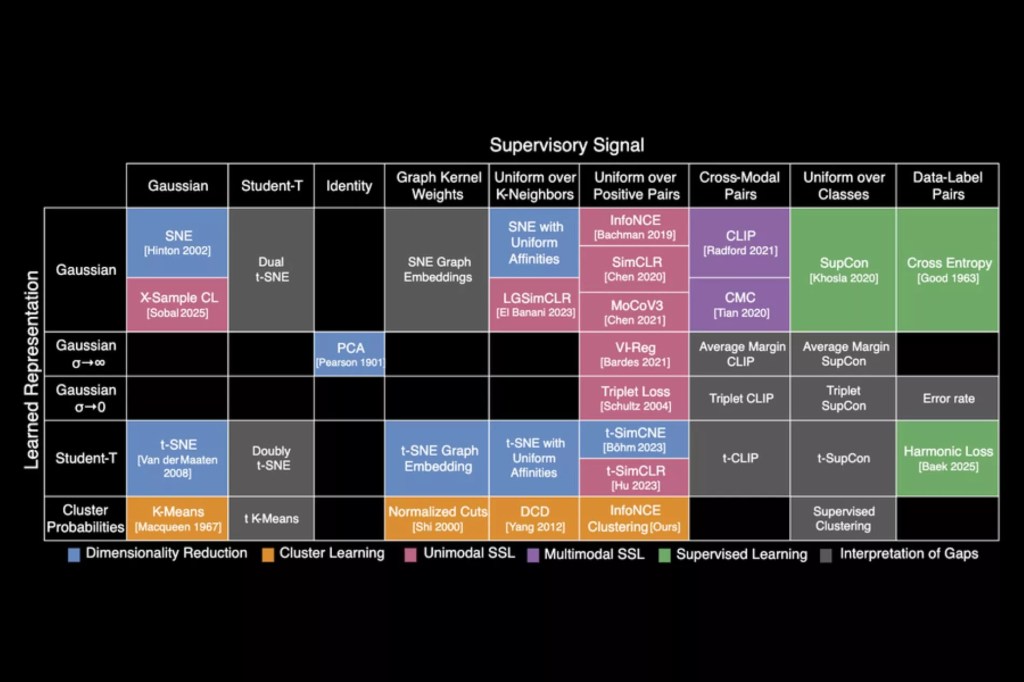
In a landmark achievement, researchers at MIT have unveiled a single unifying equation that connects a wide spectrum of machine learning (ML) loss functions, fundamentally reshaping how algorithms are developed and optimized. This powerful framework offers a new lens through which scientists can design, refine, and understand ML algorithms across domains, from spam filtering to image recognition.
The Machine Learning Periodic Table: A New Era of Algorithm Classification
Much like the periodic table of chemical elements, MIT’s researchers have developed a conceptual “periodic table” that maps out over 20 classic machine learning algorithms. These methods, which include clustering, classification, and contrastive learning, are now shown to be interconnected through a shared mathematical foundation.
This table categorizes algorithms based on how they structure data and estimate real-world relationships. It not only highlights existing methods but also reveals gaps—indicating promising avenues for developing future algorithms.
From Discovery to Innovation: The Birth of I-Con
The unifying equation emerged from unexpected connections found between different types of learning. Alshammari, a member of MIT’s Freeman Lab, was originally researching clustering techniques, which group similar data points—such as unlabeled images—based on shared features. She discovered striking mathematical similarities between clustering and contrastive learning, a popular technique in deep learning used to improve representation learning.
This insight sparked the creation of Information Contrastive Learning (I-Con)—a new machine learning framework that brings together disparate algorithms under one cohesive mathematical principle. I-Con shows that many popular models share a core goal: to capture the relationships between data points while reducing prediction errors.
A Revolutionary Image Classification Method
By combining the principles behind clustering and contrastive learning, the MIT team engineered a new image classification algorithm. When tested on real-world datasets, this novel approach achieved an 8% performance boost over state-of-the-art models. This leap highlights the practical impact of the I-Con framework, demonstrating how blending techniques can unlock superior results.
Filling the Gaps: New Possibilities for Algorithm Design
One of the most intriguing aspects of the ML periodic table is its open-ended design. Just like Mendeleev’s periodic table of elements predicted undiscovered atoms, this new framework hints at algorithms that haven’t yet been invented. These “missing pieces” represent opportunities for future exploration, innovation, and breakthroughs in AI.
The flexibility of the table allows researchers to add new rows and columns as they identify different types of data connections and learning objectives. This dynamic structure encourages continuous refinement and experimentation.
Cross-Disciplinary Applications: From LLMs to Spam Detection
The I-Con framework is not confined to a narrow slice of machine learning. It extends across the entire spectrum—from deep learning models like large language models (LLMs), to more traditional applications like spam detection, anomaly detection, and image classification.
By offering a common ground, I-Con helps unify fragmented research efforts, making it easier for data scientists to share methods, build on each other’s work, and avoid “reinventing the wheel.”
A Mathematical Milestone: One Equation to Bind Them All
At the heart of this innovation lies one elegant equation, inspired by information theory. This mathematical formula doesn’t just work for one or two models—it spans algorithms that have emerged over the last century. It demonstrates that despite the vast variety in ML techniques, they all aim to do the same thing: model the true connections in data while minimizing loss.
MIT researcher Hamilton described it as a guiding light for machine learning science. Instead of piecemeal discoveries, I-Con encourages a holistic perspective—enabling researchers to design better algorithms by understanding their shared underpinnings.
The Future of Machine Learning: Unification and Beyond
In an era flooded with machine learning research, the introduction of unifying frameworks like I-Con brings much-needed clarity and cohesion. It empowers scientists to combine ideas that were once thought to be unrelated, enabling the rapid creation of new algorithms tailored to complex real-world challenges.
The periodic table of machine learning is more than just a visualization—it’s a tool for discovery, a roadmap for innovation, and a testament to the power of mathematical insight in shaping the future of artificial intelligence.
A Paradigm Shift for AI Development
The creation of I-Con and its associated algorithm table marks a pivotal moment in the evolution of machine learning. With its elegant equation, transformative framework, and proven practical value, this innovation offers both a unifying theory and a launchpad for future breakthroughs.
For developers, researchers, and data scientists alike, the message is clear: the future of machine learning lies not in isolated breakthroughs, but in shared principles, unified systems, and mathematical elegance.
Trump Launches Nationwide AI Education Initiative to Future-Proof U.S. Workforce

America’s education system and prepare students for the demands of an AI-powered future, President Donald Trump signed an executive order on April 23 focused on integrating artificial intelligence into K-12 schools. This strategic initiative aims to equip the next generation with the tools and knowledge necessary to thrive in a rapidly evolving technological landscape.
Empowering High School Students with AI Skills
Under the directive, the U.S. Departments of Education and Labor have been instructed to collaborate with individual states to provide expanded access to artificial intelligence education. This includes the development of AI-related courses, certification programs, and hands-on apprenticeship opportunities specifically tailored for high school students. The goal is to create pathways for students to build in-demand skills that align with emerging job markets.
By embedding AI literacy early in the education process, the government aims to cultivate a highly skilled workforce capable of both utilizing and advancing this transformative technology.
Strategic Investment in Teacher Training and Research
To ensure effective implementation of AI in classrooms, the executive order mandates that discretionary grant programs prioritize initiatives related to AI-based teacher training. Educators will receive support to adapt curricula, develop AI-integrated lesson plans, and foster critical thinking skills that align with the technological shift.
Additionally, the National Science Foundation has been tasked with funding research projects that explore the application of AI in education. This includes studying best practices, assessing the effectiveness of AI-powered learning tools, and identifying ways to personalize instruction using machine learning algorithms.
Apprenticeships: Bridging the Gap Between School and Career
Recognizing the value of practical experience, the Labor Department is directed to expand apprenticeship programs focused on AI and related technologies. These apprenticeships will serve as an essential alternative to traditional college routes, providing students with real-world exposure to the tech industry and preparing them for high-paying, future-proof careers.
Apprenticeships have gained bipartisan support as a way to reduce student debt, boost employment, and ensure career readiness. By financially incentivizing companies to offer AI-related apprenticeships, the administration aims to close the skills gap and strengthen America’s position in the global tech economy.
Formation of a White House Task Force on AI Education
To oversee the rollout of these initiatives, Trump’s order establishes a White House Task Force on AI Education. This high-level committee will be chaired by Michael Kratsios, Director of the White House Office of Science and Technology Policy, and will include Education Secretary Linda McMahon and Labor Secretary Lori Chavez-DeRemer.
The task force is responsible for launching the “Presidential AI Challenge,” a nationwide campaign to promote AI integration in classrooms and celebrate innovative uses of artificial intelligence in teaching. It will also develop public-private partnerships to channel resources and expertise from the tech sector into K-12 education.
Addressing Global Competition and Bipartisan Concerns
Both Democrats and Republicans have voiced concern over the United States potentially falling behind global competitors like China in the race to dominate AI. Trump emphasized the critical importance of AI investment, citing its potential to revolutionize entire industries.
“We’re seeing trillions of dollars going into AI,” Trump noted. “Smart people are saying this is the future—we need to make sure American students are ready.”
The initiative reflects a rare area of bipartisan agreement: the need for comprehensive AI education. However, ideological divides remain over how much involvement the federal government should have in the process.
Additional Executive Orders Signal Broader Education Agenda
Trump’s AI-focused order was one of seven education-related directives signed on April 23. Others included actions targeting ideological biases in university accreditation, increased transparency regarding foreign funding to colleges, and support for Historically Black Colleges and Universities (HBCUs).
Despite the broader scope of these orders, the AI education initiative stands out as a pivotal move aimed at reshaping the foundational structure of American education in the digital age.
Controversies and Missteps
The rollout of the AI directive hasn’t been without hiccups. Education Secretary Linda McMahon made headlines earlier in April when she mistakenly referred to AI as “A.1.,” confusing it with the popular steak sauce during a tech conference. The moment quickly went viral but also highlighted the need for improved AI literacy—even among top officials.
Moreover, Trump’s aggressive education agenda has sparked legal challenges. A coalition of states recently filed a lawsuit against the administration, alleging that mass layoffs at the Education Department were unlawful. A court hearing is scheduled for April 25 to address these concerns.
Dismantling the Education Department?
Adding to the controversy, Trump previously signed an order in March aimed at dismantling the Education Department, though the agency continues to operate with only half its original workforce. Full elimination of a federal agency requires an act of Congress, making it unlikely the department will be dissolved entirely in the near term.
A Defining Moment for AI and Education Policy
President Trump’s AI executive order marks a significant shift in the way the U.S. approaches education, technology, and workforce development. By introducing AI into K-12 schools, supporting teacher training, and expanding apprenticeships, the administration is laying the groundwork for a future-ready nation.
Crypto
Binance Unveils Institutional-Grade Fund Accounts to Revolutionize Crypto Portfolio Management

Global cryptocurrency exchange Binance has taken a significant step forward in institutional crypto adoption with the launch of its new Fund Accounts solution. This innovative tool is specifically designed to help portfolio managers simplify asset management, consolidate investor funds, and improve trade execution across the digital asset ecosystem.
Released on April 24, the Fund Accounts feature mirrors traditional financial tools used by asset managers and brokerage firms, marking another milestone in the ongoing convergence of traditional finance (TradFi) and cryptocurrency markets.
Consolidation and Efficiency for Crypto Portfolio Managers
Binance’s Fund Accounts enable professional fund managers to group externally raised investor capital into one or several omnibus accounts. This structure allows for a streamlined, centralized management approach that reduces operational overhead while enhancing trade execution efficiency.
Each omnibus account is presumed to operate under the guidance of a single custodian, who handles trades and transactions on behalf of the fund’s clients. This mirrors traditional brokerage models and demonstrates the maturity now emerging in crypto investment infrastructure.
Eligibility Criteria and Compliance Requirements
Access to Fund Accounts is limited to eligible fund managers, who must reach out directly to their Binance VIP representative for onboarding. This exclusivity ensures the tool is used by qualified professionals with the appropriate licensing and regulatory standing.
A Binance spokesperson confirmed that all participating fund managers and their investors must undergo rigorous Know Your Customer (KYC) and Know Your Business (KYB) verification processes. Additionally, they must be licensed or hold exemptions under the legal frameworks in their respective jurisdictions.
This emphasis on compliance reflects the broader push toward regulatory alignment as digital asset platforms position themselves for institutional capital flows.
Binance Strengthens Its Institutional Appeal
As the world’s largest cryptocurrency exchange by trading volume (per CoinMarketCap), Binance continues to expand its offerings tailored for institutional clients and high-net-worth individuals. In December, the exchange revamped its VIP program, introducing more stringent criteria and refined benefits for sophisticated investors.
With the Fund Accounts solution, Binance is not only enhancing its ecosystem but also bridging the gap between crypto-native innovations and the established demands of institutional finance.
Traditional Finance Meets Crypto: A Growing Trend
The debut of Fund Accounts reflects a broader industry shift where traditional finance principles are being adopted in the crypto space. This trend has been catalyzed by several key developments:
- The approval and launch of Bitcoin exchange-traded funds (ETFs) have opened new gateways for institutional participation.
- The growing interest in real-world asset (RWA) tokenization is redefining how value is represented and transferred onchain.
- Attractive yield opportunities in decentralized finance (DeFi), particularly through onchain lending protocols, are drawing the attention of fund managers seeking higher returns.
Together, these factors signal a paradigm shift where crypto is no longer just a retail-driven market, but a legitimate arena for institutional capital allocation.
Onchain Innovation Continues to Attract Capital
Binance’s initiative aligns with a broader industry push to bring institutional-grade trading infrastructure to the world of crypto. On the same day Binance launched Fund Accounts, Theo, a provider of onchain trading solutions, announced a $20 million funding round aimed at expanding its platform to retail users.
Seventeen notable investors participated in Theo’s funding, including individuals with backgrounds at Jane Street, JPMorgan, and Citadel—further evidence of the increasing crossover between traditional financial expertise and crypto innovation.
Institutionalization of Crypto Asset Management
Binance’s launch of Fund Accounts is a testament to the growing institutionalization of cryptocurrency. By mimicking structures familiar to traditional portfolio managers and embedding them in a digital asset context, Binance is helping to legitimize and standardize crypto asset management.
For fund managers looking to step into the crypto realm, tools like Fund Accounts offer the operational framework and compliance infrastructure needed to engage confidently and efficiently with this dynamic market.
As institutional-grade solutions continue to evolve, expect more collaboration between TradFi and DeFi, unlocking new growth opportunities in the global financial ecosystem. Binance, with its scale and innovation, remains at the forefront of this transformation.
Michael Saylor Faces New Bitcoin Rival with $4B in Holdings—Why It’s Actually Bullish for MSTR

Michael Saylor’s aggressive Bitcoin acquisition strategy has long been a beacon for crypto-committed institutions. Yet, a powerful newcomer—Twenty One, backed by SoftBank, Tether, and Cantor Fitzgerald—is now shaking up the digital asset investment landscape. With nearly 42,000 BTC, valued at approximately $4 billion, on its opening balance sheet, Twenty One positions itself as a formidable rival in the race to dominate publicly held Bitcoin reserves.
While traditional finance might view such competition as a threat to market share and capital access, this new entrant could instead be a catalyst for validation of Saylor’s bold vision, according to Wall Street experts.
Twenty One’s Bitcoin-First Model: A Strategic Shift in Institutional Crypto Investing
Twenty One isn’t just dipping its toes into the crypto waters—it’s diving headfirst. The firm is structured with a sole focus on Bitcoin as a treasury asset, a direct echo of MicroStrategy’s (MSTR) pioneering blueprint. This commitment makes it the third-largest public holder of Bitcoin from day one, trailing only MicroStrategy and Tesla.
This is a significant moment for institutional adoption of Bitcoin. By establishing itself as a Bitcoin-centric investment entity right out of the gate, Twenty One is setting a new standard for corporate crypto strategy. Its launch signals a deepening trust in Bitcoin as a primary store of value rather than a speculative side bet.
Wall Street Turns Bullish: Validation for Saylor’s Strategy
Despite the looming threat of competition, analysts from TD Cowen, notably Lance Vitanza and Jonnathan Navarrete, interpret this move as a bullish signal—not just for Bitcoin, but for MicroStrategy itself.
“The proposed launch of Twenty One reflects the most-meaningful validation of Strategy’s bitcoin treasury operations to date,” the analysts stated, noting they are now “incrementally bullish” on MSTR stock.
In essence, the rise of a Bitcoin-focused rival is not a threat, but a powerful affirmation of MicroStrategy’s first-mover advantage. Rather than eroding investor confidence, Twenty One could actually convert skeptics into believers, especially within the institutional sector. It provides a real-world use case supporting Saylor’s thesis that Bitcoin belongs on corporate balance sheets.
Rising Bitcoin Demand and Market Impact
The creation of Twenty One also brings with it significant institutional demand for Bitcoin, which could help boost the asset’s long-term value. The entrance of such a high-profile player may absorb some capital that would have otherwise flowed to MSTR, but the overall effect could be net positive. Increased demand often leads to upward pressure on Bitcoin prices, potentially benefiting all major holders.
“Certainly, this is what Michael Saylor professes to believe,” the analysts noted, referencing Saylor’s consistent advocacy for more companies to adopt a Bitcoin-based treasury model.
The growing validation from institutions like TD Cowen could prompt other firms to follow suit, accelerating Bitcoin adoption at the corporate level.
MicroStrategy’s Outlook: A Bullish Forecast
TD Cowen is standing firm on its $550 price target for MSTR, confident that the company’s crypto strategy remains on solid ground. The analysts predict that MicroStrategy could control up to 757,000 BTC by the close of fiscal year 2027—a staggering 3.6% of Bitcoin’s total supply.
Should Bitcoin’s average price reach $170,000 by then, MicroStrategy’s holdings could balloon to a market value of $129 billion, cementing its place as a dominant force in the digital economy.
This optimistic forecast illustrates just how bullish the firm remains on Bitcoin—and how confident it is in MicroStrategy’s ability to execute over the long term.
Market Reactions: Investors Already Betting on the Bitcoin Boom
The announcement of Twenty One has already rippled through the financial markets. Shares of Cantor Equity Partners (CEP), the SPAC vehicle set to take Twenty One public, have surged by as much as 130% since the news broke. Meanwhile, MSTR has held firm, indicating resilience and investor confidence in Saylor’s unwavering Bitcoin strategy.
This dual rise suggests that the market sees room for multiple Bitcoin-focused entities to thrive, rather than a zero-sum game where only one player dominates.
The Bigger Picture: Bitcoin Treasuries Go Mainstream
Twenty One’s aggressive entry into the Bitcoin space could mark a tipping point for institutional Bitcoin adoption. With major financial firms and tech players embracing crypto as a core asset class, Bitcoin is no longer a fringe investment—it’s becoming a central pillar in modern financial strategy.
For MicroStrategy, this moment is both a challenge and an opportunity. While the company will now share the stage with another heavyweight, it also gains a powerful ally in its mission to legitimize Bitcoin on Wall Street.
And for Bitcoin itself? This trend could fuel unprecedented institutional demand, potentially driving prices higher and reinforcing its role as digital gold for the modern age.
Final Thoughts
While it may seem like Twenty One is stepping onto Michael Saylor’s turf, the reality is more collaborative than combative. The emergence of another major player reinforces the legitimacy of Bitcoin as a long-term treasury asset—and vindicates Saylor’s bold bet on the future of money.
If this trend continues, we may see a new era where Bitcoin isn’t just part of the portfolio—it is the portfolio.
PayPal and Coinbase Strengthen Alliance to Accelerate PYUSD Stablecoin Adoption

In a major move to accelerate the adoption of digital currency in everyday finance, PayPal and Coinbase have expanded their partnership to enhance the real-world use of PayPal USD (PYUSD). This strategic alliance is set to revolutionize how stablecoins function in global commerce and decentralized finance (DeFi), creating a robust infrastructure that could reshape the future of digital payments.
Coinbase and PayPal Deepen Stablecoin Integration
This newly announced collaboration aims to seamlessly integrate PYUSD into both platforms’ ecosystems. Coinbase users can now buy PYUSD without fees and redeem it 1:1 for U.S. dollars, making it easier and more efficient to transition between fiat and crypto.
Originally teaming up in 2021 to enable crypto purchases through linked PayPal accounts, the companies are now advancing their shared vision by embedding stablecoin technology into core operations. The result? Greater access, usability, and reach for PYUSD across both consumer and institutional sectors.
Enhancing Financial Infrastructure for Stablecoin Commerce
This partnership is more than just an expansion—it’s an investment in the future of digital payments. By merging PayPal’s massive global network of over 430 million users with Coinbase’s cutting-edge crypto infrastructure, the duo plans to promote stablecoin-powered commerce at scale.
Key initiatives include:
- Development of cross-border payment solutions
- Enhanced money management tools for consumers and businesses
- Real-time, cost-effective financial transactions
These innovations aim to make PYUSD not just another stablecoin but a primary digital bridge currency across jurisdictions.
Leveraging Onchain Tools for DeFi and Web3 Growth
Another core element of this alliance is the push toward decentralized finance integrations. Coinbase’s onchain infrastructure will play a vital role in supporting developers building next-gen financial tools. This includes:
- Smart contract automation for financial services
- PYUSD support for DeFi apps and Web3 platforms
- Enhanced interoperability within the crypto ecosystem
As decentralized finance continues to grow, having a regulated, fully-backed stablecoin like PYUSD available across DeFi platforms is a crucial step in mainstream adoption.
Stablecoins Surge as a Dominant Financial Force
This partnership comes at a time of massive growth for the stablecoin market. In 2024 alone:
- Stablecoin supply grew by 63%, reaching $225 billion
- Active wallets surged by 53%, exceeding 30 million users
- Stablecoin transfers topped $35 trillion, outpacing even Visa and Mastercard combined
This meteoric rise signals a shift in how people store and transfer value. Regulated stablecoins like PYUSD are quickly becoming essential tools in both traditional and decentralized financial systems.
Strategic Alignment for the Future of Digital Money
This deeper partnership between PayPal and Coinbase marks a pivotal moment in digital finance. Together, they are aligning around the belief that stablecoins are key to the evolution of money.
By simplifying access, ensuring regulation, and offering real-world utility, PYUSD is being positioned as a serious contender in the stablecoin race. Whether for merchants looking for low-fee payments, users seeking fast international transfers, or developers building the next DeFi app—PYUSD is on the rise.
The New Era of Stablecoin Commerce Begins
With PayPal and Coinbase doubling down on stablecoin infrastructure, PYUSD is gaining momentum as more than just a crypto asset—it’s becoming a foundational component of the digital economy.
As consumer expectations evolve and technology continues to disrupt traditional banking, partnerships like this will pave the way for secure, scalable, and seamless financial solutions. Keep an eye on PYUSD—it’s shaping up to be a cornerstone of tomorrow’s money.
 Powerbuilding Digital