
Fitness / Motivation / Technology & A.I / Crypto

Welcome to Edition 91 of the Powerbuilding Digital Newsletter—your weekly dose of strength, strategy, and forward-thinking insight. Whether you’re a longtime reader or just jumping in, we’re here to help you stay sharp, strong, and ahead of the curve.
This week, we continue our mission to bring you focused content across four powerful domains—each designed to help you level up in every area of life:
- Fitness Info & Ideas
Explore new training methods, performance tips, and recovery strategies to build a body that’s not just strong—but built to last. - Motivation & Wellbeing
Fuel your inner drive with mindset tools, wellness habits, and motivational insights to stay centered, consistent, and goal-oriented. - Technology & AI Trends
Catch up on the latest advancements in artificial intelligence, automation, and digital tools that are reshaping how we live, work, and think. - Crypto & Digital Asset News
Navigate the ever-evolving world of digital finance with updates on market trends, token movements, and regulatory shifts that matter.
As we enter the 90s of this newsletter series, our goal remains the same: to give you the knowledge, clarity, and confidence to build your best self—in the gym, in business, and in life.
Fitness
How to Stay Fit Without Ever Stepping into a Gym

Staying fit is not confined to gym memberships or expensive equipment. In fact, staying healthy and active without a gym is not only achievable but often more enjoyable, flexible, and sustainable. Below is an in-depth guide that covers everything you need to know about achieving fitness outside traditional gym walls.
Why You Don’t Need a Gym to Stay Fit
The misconception that fitness is tied to gym attendance prevents many from starting their journey. Physical fitness is fundamentally about movement, consistency, and lifestyle — not about a location or monthly membership fee.
The Science Behind At-Home and Outdoor Fitness
Research consistently shows that bodyweight training, outdoor activities, and everyday movements can deliver results equivalent to gym-based workouts when done correctly. Cardiovascular health, strength development, flexibility, and endurance can all be improved with minimal or no equipment.
Effective Strategies to Stay Fit Without a Gym
Mastering Bodyweight Exercises
One of the most powerful ways to build strength without any equipment is through bodyweight exercises. They utilize your own mass for resistance, providing strength and endurance benefits.
Essential Bodyweight Moves
- Push-ups: Target chest, shoulders, and triceps.
- Squats: Strengthen legs, glutes, and core.
- Planks: Develop deep core muscles.
- Lunges: Improve balance and strengthen the lower body.
- Burpees: Combine strength and cardio in one move.
Tip: Create a circuit using these moves to build full-body strength.
Walking and Running: Timeless Fitness Solutions
Walking and running are among the simplest ways to maintain cardiovascular health and manage body weight. They require no equipment except supportive shoes and can be done almost anywhere.
Maximizing Benefits
- Interval walking: Alternate fast-paced and moderate paces.
- Trail running: Adds terrain variation for strength and stability.
- Urban hiking: Explore cityscapes while getting a workout.
Incorporating Daily Movement
Staying active doesn’t always mean structured workouts. NEAT (Non-Exercise Activity Thermogenesis) plays a significant role in calorie burning.
Simple Ways to Increase Daily Movement
- Take the stairs instead of elevators.
- Park farther from store entrances.
- Do brief stretch or squat breaks during TV time.
- Walk while taking phone calls.
Home Fitness Equipment That Makes a Difference
While you don’t need equipment, certain affordable tools can enhance your results.
Top Minimal Equipment Choices
- Resistance Bands: Versatile for strength training and stretching.
- Kettlebells: Ideal for dynamic strength moves like swings and snatches.
- Jump Rope: Exceptional for high-intensity cardio in small spaces.
- Yoga Mat: Provides comfort for floor exercises and stretches.
Investment in basic tools can unlock countless exercise variations at home.
Outdoor Activities for Full-Body Fitness
Nature offers an excellent playground for functional fitness and stress reduction.
Popular Outdoor Fitness Activities
- Hiking: Builds endurance and strengthens lower-body muscles.
- Cycling: Enhances cardiovascular endurance and leg power.
- Kayaking: Develops core strength and upper body muscles.
- Rock Climbing: Challenges strength, flexibility, and problem-solving skills.
Benefits of Outdoor Workouts
- Improved mood through natural sunlight exposure.
- Greater variety and stimulation versus repetitive gym routines.
- Opportunity to socialize and explore.
Creating a Consistent At-Home Fitness Routine
Establish Clear Goals
Whether it’s weight loss, muscle gain, or stress reduction, defining your goals guides your actions and helps maintain motivation.
Design a Weekly Plan
Example Weekly Schedule:
- Monday: Full-body strength workout (bodyweight)
- Tuesday: 30-minute brisk walk
- Wednesday: Yoga and stretching
- Thursday: Interval run
- Friday: Bodyweight circuit
- Saturday: Outdoor adventure (hike, bike ride)
- Sunday: Rest or light stretching
Track Progress Without Gym Metrics
Progress can be measured by:
- Reps and sets completed
- Time spent active
- Distance covered walking or running
- Flexibility improvements
Mindset and Motivation Without a Gym Community
Build Personal Accountability
- Use fitness apps to track workouts.
- Join virtual fitness groups for shared motivation.
- Celebrate milestones, no matter how small.
Staying Consistent
Consistency is the key to success. Make movement non-negotiable by weaving it into your daily schedule just like brushing your teeth or having meals.
Nutrition Tips to Complement Your Fitness Journey
Focus on Whole Foods
Prioritize:
- Lean proteins (chicken, fish, legumes)
- Healthy fats (avocados, nuts, olive oil)
- Complex carbohydrates (whole grains, vegetables)
Hydration is Key
Staying hydrated supports optimal performance. Aim for at least 8 glasses of water per day, adjusting based on activity levels and climate.
Meal Timing for Energy
Eat balanced meals throughout the day to maintain energy for your activities, rather than relying on large, infrequent meals.
How to Level Up Over Time Without a Gym
Progressive Overload Principles at Home
Challenge your body to continue adapting by:
- Adding more reps or sets.
- Shortening rest intervals.
- Incorporating new, more complex movements.
- Wearing a weighted vest during bodyweight exercises.
Exploring New Fitness Modalities
Consider learning new disciplines like:
- Calisthenics
- Parkour basics
- Martial arts drills
- Dance cardio routines
These skills improve not only fitness but coordination, balance, and confidence.
Final Thoughts:
Fitness without a gym is not only possible but also liberating. With creativity, consistency, and commitment, you can achieve outstanding physical health, emotional well-being, and a fit lifestyle without ever stepping into a formal gym setting. Your body is the best piece of equipment you’ll ever own — use it well.
Motivation
Self-Realization Through Minimalism: Decluttering to Find Yourself

Understanding the Core of Minimalism
Minimalism is not merely about owning fewer possessions; it is about intentionally focusing on what truly matters. By eliminating the excess, individuals can gain clarity, reduce stress, and discover a more meaningful existence. Self-realization through minimalism emerges when individuals strip away material distractions and confront their true identities.
Minimalism demands an honest evaluation of one’s life—what items, relationships, and commitments serve a genuine purpose? What is merely noise, clouding the mind and soul? These questions form the foundation of a journey toward personal clarity and fulfillment.
The Psychological Benefits of Decluttering
Decluttering extends beyond the physical space; it deeply impacts mental health. Studies have shown that cluttered environments correlate strongly with increased cortisol levels, leading to heightened anxiety and depression. By embracing minimalism, individuals often experience:
- Enhanced focus and productivity
- Reduced anxiety and mental fatigue
- Greater emotional resilience
- A stronger sense of autonomy and self-worth
When the surroundings are free from unnecessary items, the mind mirrors this clarity, opening the door to authentic self-discovery.
Minimalism as a Tool for Identity Formation
Minimalism enables individuals to detach from societal expectations and consumerist pressures. Without constant external validation tied to possessions, people can finally ask, “Who am I without these things?“
This self-inquiry is pivotal in forming a stable, authentic identity. It fosters:
- Internal validation rather than external approval
- A clearer understanding of personal values
- More intentional decision-making
- Freedom to pursue passions rather than obligations
Minimalism, therefore, becomes a mirror reflecting one’s deepest truths, unmarred by the illusions of excess.
Steps to Begin Decluttering for Self-Realization
1. Set Clear Intentions
Before discarding physical possessions, it is essential to define clear intentions. Ask:
- What do I hope to gain through minimalism?
- Which aspects of my life feel disorganized or overwhelming?
- How will decluttering support my personal growth?
Setting a purpose transforms decluttering from a tedious chore into a transformative act of self-care.
2. Start Small and Be Consistent
Large-scale overhauls can lead to burnout. Begin with manageable areas:
- A single drawer
- One shelf
- A section of the closet
Consistency over time ensures that momentum builds naturally, fostering a sustainable minimalist lifestyle.
3. Adopt the “One In, One Out” Rule
To maintain progress, implement a simple but powerful habit: for every new item acquired, one existing item must be removed. This rule preserves balance and discourages impulsive consumption.
4. Embrace Mindful Consumption
Minimalism isn’t just about purging; it also demands mindful acquisition. Before purchasing:
- Evaluate necessity versus desire
- Consider long-term value
- Reflect on how it aligns with personal goals
Mindful consumption strengthens the connection between material choices and inner values.
The Emotional Challenges of Decluttering
Decluttering is not always a seamless process. Sentimental attachments, fear of regret, and identity associations often complicate the journey.
Strategies to overcome emotional hurdles include:
- Photographing sentimental items before parting with them
- Creating a memory box limited to a specific size
- Focusing on the future self rather than the past
- Recognizing that memories reside within, not in objects
Understanding and compassionately navigating emotional resistance is key to lasting minimalism.
Decluttering Digital and Social Spaces
In the modern age, digital clutter can be just as overwhelming as physical mess. Emails, social media, and endless notifications distract from the present moment.
Steps for digital decluttering:
- Unsubscribe from irrelevant mailing lists
- Delete unused apps
- Curate social media feeds to reflect personal growth and positivity
- Set boundaries for screen time
Similarly, social decluttering—distancing from toxic relationships and superficial engagements—creates emotional space for authentic connections.
Minimalism and Financial Freedom
Another profound benefit of minimalism is the cultivation of financial freedom. By prioritizing needs over wants, individuals can:
- Save more consistently
- Invest in experiences rather than material goods
- Reduce debt and financial anxiety
Financial minimalism often leads to a life less encumbered by stress, enabling greater freedom to pursue passions, travel, and personal development.
How Minimalism Promotes Spiritual Growth
Minimalism naturally aligns with many spiritual traditions that advocate simplicity and detachment from materialism. By minimizing, individuals often experience:
- Greater gratitude for essentials
- Deeper appreciation for the present moment
- Stronger connections to community and nature
- A more profound sense of inner peace
In shedding the unnecessary, individuals frequently find themselves closer to the sacred and sublime, whether through organized religion or personal spirituality.
Common Myths About Minimalism
Myth 1: Minimalism is About Deprivation
Minimalism is not about living in stark, joyless environments. It is about prioritizing joy and meaning over abundance.
Myth 2: You Must Get Rid of Everything
Minimalism looks different for everyone. It is not defined by a number but by intentional ownership.
Myth 3: Minimalism is Only for the Wealthy
Minimalism often fosters wealth by reducing unnecessary spending and emphasizing resourcefulness.
Sustaining a Minimalist Lifestyle
Minimalism is not a one-time project but an ongoing practice. Sustainability tips include:
- Regularly reassessing belongings and commitments
- Practicing gratitude daily
- Surrounding yourself with like-minded individuals
- Continuously reflecting on personal goals and values
As life evolves, so too will the interpretation and practice of minimalism, constantly refining the path to self-realization.
Conclusion: Finding Yourself Through Less
Minimalism offers a profound journey inward. By intentionally shedding excess, individuals create the space necessary to encounter their most authentic selves. The practice transcends mere aesthetics—it becomes a powerful, ongoing act of self-respect, clarity, and freedom.
Choosing minimalism is choosing to live a life rooted in purpose, authenticity, and inner peace. Through each item discarded and each commitment thoughtfully evaluated, individuals step closer to discovering the most important possession of all: themselves.
Technology & A.I
Open-Source AI Power at LlamaCon to Challenge OpenAI’s Dominance
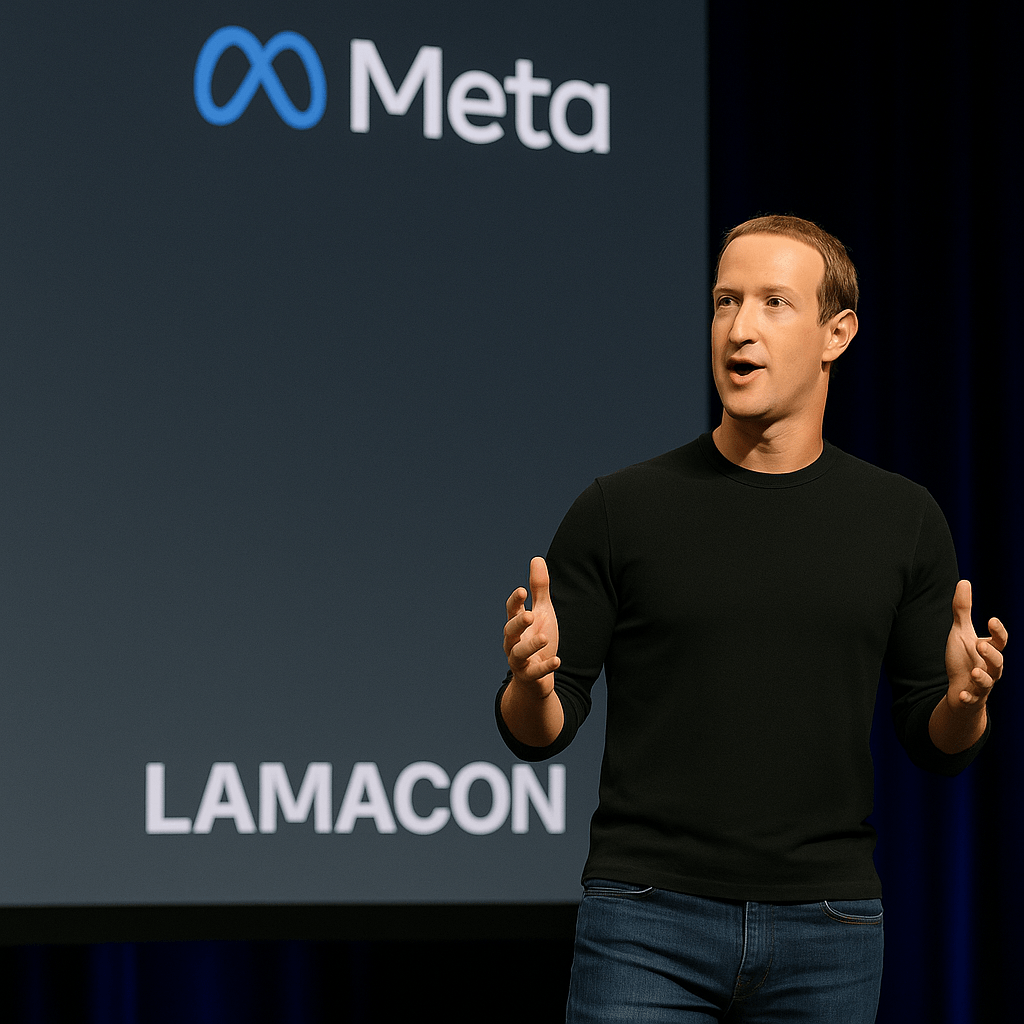
Meta has taken a bold step in the artificial intelligence arms race with its inaugural LlamaCon AI developer conference held at its Menlo Park, California headquarters. In a direct bid to compete with OpenAI, Meta announced two major innovations: a consumer-facing Meta AI chatbot app and a developer-focused Llama API, designed to deliver seamless access to Llama models hosted in the cloud.
These initiatives aim to expand the reach of Meta’s open Llama AI models, but there’s a deeper motive at play — undermining the influence of closed-source competitors like OpenAI. Meta is carving a unique space in the AI landscape by championing transparency, accessibility, and openness, aligning itself with the growing global demand for open-source AI ecosystems.
Meta AI Chatbot: A Socially Integrated ChatGPT Competitor
Meta’s new AI chatbot isn’t just another ChatGPT clone — it introduces a social networking twist. Unlike OpenAI’s offerings, Meta’s app integrates tightly with the broader Meta ecosystem, leveraging data from Instagram, Facebook, and Messenger to provide highly personalized AI interactions.
One standout feature is a shared chat feed, allowing users to publicly display their AI conversations — a possible preemptive move against OpenAI’s rumored social AI platform. This integration brings a unique community-driven dynamic to the AI chatbot landscape, blurring the lines between AI tools and social interaction.
Llama API: Streamlined Cloud Access for Developers
For the developer community, Meta introduced a simplified yet powerful Llama API, offering single-line code integration to tap into the capabilities of Llama models in the cloud. This strategic move eliminates the need for external cloud platforms, enabling developers to build and deploy AI applications more efficiently.
The Llama API not only enhances developer agility but also positions Meta as a direct competitor to OpenAI’s API services. By offering scalable infrastructure and integrated tools, Meta strengthens its appeal to startups, enterprises, and individual developers alike, promoting a self-reliant, open-source development environment.
Meta’s Strategic Vision: Open-Source AI as a Competitive Edge
Meta’s aggressive push into open-source AI is not just technical — it’s philosophical. Documents from legal proceedings reveal an internal drive to outpace OpenAI’s GPT-4 and disrupt the market by making advanced AI more accessible.
In a July 2024 letter, Meta CEO Mark Zuckerberg emphasized a critical distinction between Meta and other AI giants: “Selling access to AI models isn’t [Meta’s] business model.” Instead, Meta is betting on an ecosystem where open innovation outperforms closed development.
During a LlamaCon fireside chat with Databricks CEO Ali Ghodsi, Zuckerberg elaborated on his vision, stating that Meta supports any lab that promotes model openness, including competitors like DeepSeek and Alibaba’s Qwen.
“The value of open source is in adaptability,” said Zuckerberg. “If DeepSeek excels in one area and Qwen in another, developers can combine their strengths to build the most effective solutions.”
This collaborative mindset signals a paradigm shift — one where open-source AI models can evolve faster and more flexibly than proprietary systems.
Regulatory Advantage: Meta Eyes EU AI Act Compliance
Beyond technical and market considerations, Meta may also be pursuing regulatory benefits. Under the EU AI Act, AI systems deemed “free and open source” receive special legal exemptions and privileges. By promoting Llama as an open-source model — despite some dispute over its classification — Meta could position itself for smoother global compliance and greater market penetration.
This strategy could give Meta a dual edge: regulatory leniency and increased developer trust, both essential as global scrutiny around AI governance intensifies.
Falling Short on Cutting-Edge Reasoning Models — For Now
While expectations were high for Meta to unveil an advanced reasoning model rivaling OpenAI’s o3-mini, no such release came during LlamaCon. Still, Meta doesn’t appear overly concerned with winning on benchmarks alone. Instead, the company is focused on building the infrastructure and community to drive long-term AI innovation.
This long play strategy — prioritizing openness, developer utility, and interoperability — could be Meta’s masterstroke. Rather than competing model-for-model, Meta is laying the foundation for a democratized AI future, where developers can cherry-pick the best tools, combine models freely, and escape vendor lock-in.
Conclusion: Meta’s Open-Source AI Gambit Takes Aim at OpenAI’s Monopoly
With LlamaCon, Meta isn’t just launching products — it’s launching a movement. The Meta AI chatbot app and Llama API represent a bold rejection of closed ecosystems, encouraging a developer-first, open-source AI future.
As Meta continues to expand the Llama model family and refine its AI offerings, its strategy becomes clear: decentralize innovation, empower developers, and dilute the dominance of proprietary AI providers like OpenAI.
In doing so, Meta is transforming itself from a social media titan into a trailblazer in open AI infrastructure — a role that could redefine the next era of artificial intelligence.
Cluely’s Controversial AI: The Battle Over Undetectable Cheating Tools and the Future of Anti-Cheat Tech

The Rise of Cluely: AI-Powered Cheating and Its Viral Surge
Cluely, an emerging artificial intelligence startup, recently grabbed widespread attention after its claims of offering a virtually “undetectable” cheating tool spread like wildfire across the internet. The company’s software, which runs discreetly in-browser, boasted capabilities that could assist users in “cheating on everything,” from high-stakes job interviews to academic exams.
Cluely’s viral moment sparked intense backlash — not just from critics of AI misuse, but from competitors aiming to expose and counter its software. As scrutiny builds, Cluely is doubling down on its ambitions, including developing advanced hardware solutions like smart glasses or even neural interface devices to bypass anti-cheating software altogether.
Validia’s Response: Fighting Fire with AI-Powered Detection
One of the first challengers to Cluely’s controversial software came in the form of a San Francisco-based startup named Validia, which swiftly launched a countermeasure titled Truely. This free tool is engineered to detect when Cluely is active and immediately triggers an alert, providing institutions with a way to identify potentially dishonest behavior in real time.
Validia claims its tool is designed for educational institutions and employers looking to uphold integrity in virtual environments. According to company sources, Truely works by detecting signature behaviors and browser activity patterns indicative of Cluely use.
Proctaroo Enters the Arena with Broader Monitoring Capabilities
Joining the opposition is Proctaroo, a Rhode Island-based proctoring startup that asserts its platform can detect a range of hidden tools — including Cluely. CEO Adrian Aamodt emphasized that their AI-driven software can monitor running applications and background processes during active proctoring sessions.
“We see Cluely just like any other unauthorized process. It’s detectable and should be treated as unethical,” Aamodt told TechCrunch. He also criticized Cluely’s business model for encouraging users to exploit AI rather than embrace it responsibly.
Cluely’s Counter: Hardware Ambitions and Shifting Market Focus
Despite mounting resistance, Cluely’s co-founder and CEO, Chungin “Roy” Lee, remains unfazed. He likens anti-cheating technologies to ineffective gaming anti-cheat systems that have struggled for years to curb dishonest behavior. Lee argues that as long as there’s demand, new ways around detection will always emerge.
More provocatively, Lee revealed Cluely’s interest in hardware-based solutions, including:
- AI-powered smart glasses
- Transparent screen overlays
- Recording-enabled necklaces
- Brain-computer interface chips
According to Lee, creating these hardware tools is “technologically trivial,” dismissing skepticism over hardware viability despite notable failures like Humane’s AI Pin. His vision: a future where AI assistance is seamlessly embedded into the user’s experience—whether or not it’s visible to anti-cheating software.
Rebranding Cheating: From Exams to Enterprise Use Cases
Facing increasing scrutiny and likely pressure from legal and ethical watchdogs, Cluely has removed references to exams and job interviews from its website and promotional materials. These scenarios were once core to its marketing.
Now, Cluely’s messaging highlights less controversial — though still ethically gray — use cases such as automated support during sales calls, virtual meetings, and customer interactions. The rebranding suggests a tactical pivot as the company aims to reposition itself in more commercially acceptable territories.
Lee claims this shift reflects a broader strategic goal: “We are redefining our mission to focus on high-impact markets. That means embedding AI in areas where real productivity gains are possible.”
The Bigger Picture: Ethics, Innovation, and the Future of AI in Testing and Work
Cluely’s story highlights a growing ethical dilemma in the rapidly evolving world of AI. On one side are startups leveraging AI to push boundaries and enhance user capabilities. On the other are those attempting to safeguard integrity in education, recruitment, and professional environments.
The arms race between AI cheating tools and anti-cheating tech may just be getting started. With players like Cluely moving toward AI-integrated hardware, the challenge of enforcement becomes more complex — and more urgent.
Innovation or Irresponsibility?
Whether Cluely is viewed as a pioneer of AI enhancement or a catalyst for digital dishonesty largely depends on one’s perspective. As AI tools become increasingly sophisticated, so too must our frameworks for accountability, transparency, and ethical use.
One thing is clear: the clash between AI misuse and detection will define the next chapter of how we learn, work, and interact in digital spaces.
How Agentic AI Is Reshaping Experiential Marketing and Unlocking Deeper Brand Engagement

The Rise of Agentic AI: A New Era of Automation and Human Freedom
In today’s fast-paced world, where every second counts, agentic artificial intelligence (AI) is emerging as a game-changer. These intelligent systems are designed to autonomously manage tasks, make decisions, and adapt in real-time — radically transforming how we live, work, and engage with the world around us.
By automating time-consuming routines like managing schedules, organizing shopping lists, or booking travel, agentic AI is giving people something invaluable: time. Time that can now be spent on authentic experiences, human connection, and meaningful engagement — including deeper interactions with brands.
According to Gartner, agentic AI will account for 15% of all daily decisions by 2028, a significant jump from near-zero in 2024. This signals a future where people will increasingly outsource cognitive labor to intelligent systems, opening up new possibilities for both individuals and businesses.
More Time, More Engagement: A Golden Opportunity for Brands
This newfound freedom creates unprecedented opportunities for brands to connect with audiences. As people find themselves unburdened by everyday chores, they’re more likely to attend events, explore new experiences, and engage with content that resonates.
For experiential marketers, this is a watershed moment. When people aren’t preoccupied with logistics, they have more bandwidth to discover, enjoy, and emotionally invest in the experiences around them.
As one strategist aptly puts it:
“When people are freed from planning, seeking, and managing, they have more capacity to conquer, enjoy, and engage.”
But there’s a twist. This abundance of time and opportunity doesn’t automatically translate into higher brand engagement. Why? Because in a world overflowing with experiences, not everything leaves a mark.
Navigating the Experience Paradox: Cutting Through the Noise
Welcome to the Experience Paradox — a challenge confronting every brand and experiential agency today. Despite a constant stream of activities, events, and content, truly memorable experiences are rare. From endless scrolling on social media to live events and virtual meetups, audiences are bombarded with stimulation.
In such an environment, only extraordinary, emotionally resonant, and culturally aligned experiences will break through the clutter.
To win in this landscape, brand storytelling must evolve. It must be bold. It must be hyper-relevant. And above all, it must forge a genuine emotional connection.
Cultural Relevance: The Cornerstone of Experiential Success
At MCH Global, we’ve seen firsthand how cultural authenticity and creativity elevate brand experiences. Take our work with the Sharjah Light Festival — a captivating transformation of public spaces into immersive digital art installations. The fusion of technology, art, and local heritage drew massive engagement by striking a cultural chord with diverse audiences.
Similarly, our Coca-Cola Europe activations celebrated shared values and human moments, creating spaces where people felt both seen and inspired. With Ford, we designed high-energy, adrenaline-fueled events that tapped into the region’s deep-rooted love for automotive culture — a perfect alignment of brand identity and consumer passion.
These case studies highlight a critical truth: the most effective experiences are those that understand and reflect the local culture, making every interaction feel both personal and powerful.
Experiential Marketing in the Age of AI: Turning Time Into Value
The fusion of agentic AI and experiential marketing points to a powerful new truth:
Time is the new currency of brand loyalty.
As AI continues to reclaim people’s hours, it also creates new windows for brand interaction. But to seize these moments, brands must deliver experiences that go beyond novelty. They must offer purposeful engagement that lasts well beyond the event itself.
The payoff?
- Deeper emotional bonds with consumers
- Increased brand advocacy
- Stronger return on investment
But only for those who get it right.
Future Trends: The Exploding AI Agent Market
The numbers are staggering. The AI agent market, valued at $5.29 billion in 2024, is projected to skyrocket to $216.8 billion by 2035. This explosive growth signals a paradigm shift in how individuals interact with technology — and by extension, with brands.
As these systems take over decision-making and daily logistics, brands will have more chances than ever to insert themselves into consumers’ newly available time. Those who deliver immersive, emotionally intelligent, and culturally relevant experiences will thrive.
Experiences for a Brave New World
Agentic AI is not just another tech trend — it’s the foundation of a new human-centric future. One where consumers are more liberated, present, and open to connection than ever before.
But attention is a scarce resource. Brands that want to matter must craft unforgettable experiences that speak to the heart and align with cultural values.
In this age of abundant time and infinite options, the brands that will rise are those that understand the Experience Paradox — and overcome it with bold creativity, real relevance, and meaningful storytelling.
Crypto
21Shares Files for Spot Sui ETF in the U.S., Accelerating Crypto Investment Opportunities
In a significant move toward expanding its footprint in the American financial market, European crypto investment giant 21Shares has filed for a spot Sui ETF (exchange-traded fund) in the United States. The filing, submitted to the U.S. Securities and Exchange Commission (SEC) on April 30, represents a strategic step in bridging the gap between blockchain innovation and traditional finance.
The proposed fund, named the 21Shares Sui ETF, will issue common shares of beneficial interest that directly track the performance of Sui (SUI) tokens. This ETF would be managed by 21Shares’ U.S. subsidiary and would aim to provide investors with exposure to SUI cryptocurrency without engaging in derivatives or speculative trading instruments.
The Sui ETF: A Direct, Non-Leveraged Exposure to Digital Assets
The 21Shares Sui ETF is structured to hold actual SUI tokens, rather than rely on futures contracts, leverage, or any synthetic exposure. According to the firm’s 128-page Form S-1 registration, the fund is designed for transparency and long-term digital asset investors seeking direct participation in the growth of the Sui blockchain ecosystem.
However, details about the ETF’s launch remain limited. The filing does not specify a trading ticker or the U.S. exchange where it will be listed. This uncertainty echoes a broader trend in the crypto ETF space, where approval timelines and listing details often remain unclear due to ongoing regulatory scrutiny.
“There is no certainty that there will be liquidity available on the exchange or that the market price will be in line with the NAV [net asset value],” the document states, underscoring the inherent volatility and evolving infrastructure of crypto-related ETFs.
Building on a Strong European Foundation
This U.S. filing follows 21Shares’ successful European launch of the 21Shares Sui Staking ETP in July 2024. Initially listed on Euronext Paris and Euronext Amsterdam, the product has gained traction among European institutional and retail investors looking for passive income through staking rewards.
The momentum in Europe provides a strong foundation for 21Shares’ U.S. ambitions. The company’s decision to expand its Sui-based financial products to the American market reflects growing institutional interest in Layer-1 blockchain solutions like Sui, which offers high scalability and fast transaction throughput.
Competitive Landscape: Canary Capital’s Early Filing
21Shares isn’t the first to aim for a Sui-focused ETF in the U.S. Canary Capital, a U.S.-based crypto asset management firm, filed its own spot Sui ETF application with the SEC on March 17, 2025. Shortly afterward, the Cboe BZX Exchange submitted a request to list Canary’s ETF, signaling strong competition in this niche corner of the ETF market.
This growing interest from multiple asset managers highlights Sui’s rising prominence in the blockchain sector. Unlike legacy networks, Sui is designed for high-performance decentralized applications and offers a compelling use case for institutions seeking alternative blockchain exposures.
Sui-Based ETPs Show Strong Growth in Europe
Data from CoinShares shows that Sui exchange-traded products (ETPs) are already experiencing robust growth across Europe. As of April 25, 2025, these products had $400 million in assets under management (AUM). Notably, $72 million in net inflows have been recorded year-to-date, with $20.7 million added in just the last week of April.
This strong capital movement signals a bullish sentiment around Sui investment products, driven by its growing ecosystem, developer activity, and staking yields. Products such as the VanEck Sui ETP and 21Shares’ own staking-focused ETP have attracted wide investor interest, reflecting a rising appetite for altcoin ETFs beyond Ethereum and Bitcoin.
The Race for Crypto ETF Approval Continues
21Shares’ application adds to a growing list of crypto-focused ETFs awaiting SEC review. According to Bloomberg ETF analysts Eric Balchunas and James Seyffart, the SEC is currently reviewing at least 72 crypto ETF applications as of May 1, 2025. These range from spot Bitcoin and Ethereum ETFs to newer, niche tokens like SUI.
While regulatory uncertainty remains, momentum is building. The increasing number of digital asset ETF filings suggests that asset managers are preparing for a potential breakthrough in crypto financial product approvals—particularly if the SEC softens its stance in the face of institutional demand and international competition.
A Strategic Play in a Growing Market
The 21Shares Sui ETF filing marks a pivotal moment in the evolution of cryptocurrency-based financial products in the U.S. market. By offering a physically-backed Sui ETF, 21Shares is not only reinforcing its role as a leader in the global digital asset space but also paving the way for broader adoption of Layer-1 blockchain investments among traditional investors.
As institutional interest accelerates and regulatory clarity improves, Sui ETFs could play a significant role in the next wave of crypto adoption—bringing blockchain exposure to mainstream investment portfolios in both Europe and the United States.
Morgan Stanley to Launch Cryptocurrency Trading on E*Trade by 2026 Amid Pro-Crypto Regulatory Wave

Morgan Stanley is preparing to offer cryptocurrency trading on its E*Trade platform by 2026. This initiative marks a significant expansion of the banking giant’s digital asset strategy as it seeks to capitalize on a rapidly evolving regulatory environment in the United States.
According to a May 1 report by Bloomberg, the firm is currently in the early stages of development, with plans to introduce crypto assets to retail investors via E*Trade. Internal discussions reportedly began in late 2024, and the bank is now actively exploring strategic partnerships with established cryptocurrency firms to power the new trading infrastructure.
Crypto Momentum Builds in Traditional Finance
While this will be the first time E*Trade users can directly trade cryptocurrencies, it’s far from Morgan Stanley’s first foray into digital assets. The bank has long provided its ultra-wealthy clients with access to crypto ETFs and Bitcoin futures, and as of August 2024, its financial advisers were cleared to recommend Bitcoin exchange-traded funds.
The planned E*Trade integration signals Morgan Stanley’s intention to democratize crypto access, opening the door for a broader base of investors. By leveraging its well-known retail brokerage platform, the bank is poised to bring mainstream exposure to digital currencies in a user-friendly and regulated environment.
A Favorable Regulatory Shift Fuels Adoption
Morgan Stanley’s deeper dive into crypto coincides with a broader regulatory transformation under the Trump administration, which has taken a more accommodating stance toward digital assets. Following Trump’s election, the crypto industry has seen a notable shift in tone from regulators, with many now anticipating a more growth-oriented framework for blockchain innovation and decentralized finance.
The appointment of Paul Atkins as Chair of the U.S. Securities and Exchange Commission (SEC) has further strengthened this trend. Known for his pro-crypto views, Atkins brings a fresh perspective to the SEC, which began easing its enforcement actions against crypto companies even before his swearing-in.
In late February, the SEC paused multiple high-profile enforcement cases, signaling a move away from aggressive litigation toward clearer regulatory guidance. For major financial institutions like Morgan Stanley, this shift offers a more predictable environment in which to launch new crypto services.
Political Ties to Crypto Stir Debate
While the new regulatory direction has sparked optimism across the crypto sector, it hasn’t come without controversy. President Trump’s own involvement in the industry—through personal investments in blockchain ventures and promotion of the TRUMP memecoin—has drawn scrutiny from lawmakers.
Senator Elizabeth Warren has called for an investigation into potential conflicts of interest tied to Trump’s crypto-related businesses. Meanwhile, Senator Jon Ossoff recently advocated for impeachment proceedings, citing ethical concerns about Trump’s alleged meetings with major holders of his memecoin.
Ossoff claimed that these interactions amount to “selling access” and likened them to direct financial contributions, calling the behavior an “impeachable offense.”
Despite the political drama, many in the financial world see the Trump administration’s pro-crypto stance as a net positive for innovation, with institutional players like Morgan Stanley moving quickly to position themselves ahead of the next wave of crypto adoption.
Institutional Entry Could Signal a Bullish Future for Crypto
The significance of Morgan Stanley’s move cannot be overstated. With over 7 million E*Trade clients, the integration of cryptocurrency trading on a mainstream brokerage platform could unlock a new influx of retail investment into Bitcoin, Ethereum, and other leading digital assets.
Moreover, the bank’s effort to partner with established crypto infrastructure providers ensures that the rollout will be secure, scalable, and in line with evolving compliance requirements. By prioritizing security and investor education, Morgan Stanley is poised to become a trusted gateway for everyday investors to enter the digital asset economy.
Crypto Trading in 2026: What Investors Can Expect
If the rollout proceeds as planned, E*Trade users in 2026 can expect access to a variety of cryptocurrency trading pairs, likely including Bitcoin (BTC), Ethereum (ETH), and possibly select altcoins. The platform may also feature real-time market data, educational resources, and integration with existing portfolios, helping investors navigate the volatile but potentially rewarding world of digital assets.
The integration could also open the door to future innovations, such as:
- Staking services for earning yield on crypto holdings
- Access to DeFi protocols through custodial integrations
- Tokenized asset trading, including digital real estate or equities
Wall Street’s Crypto Future Looks Bright
With Morgan Stanley preparing to offer crypto trading on E*Trade by 2026, the financial landscape is undergoing a pivotal transformation. As traditional finance and decentralized technologies continue to converge, investors of all sizes will soon have more seamless access to the crypto economy.
Backed by a more favorable U.S. regulatory climate and the growing involvement of institutional giants, the future of cryptocurrency adoption looks increasingly mainstream. Whether this leads to a new bull cycle or simply greater legitimacy, one thing is clear: Wall Street is going all in on crypto—and Morgan Stanley is leading the charge.
Tether Boosts U.S. Treasury Exposure While Profits Dip in Q1 2025
Tether, the world’s leading stablecoin issuer, significantly increased its exposure to U.S. government-backed assets in the first quarter of 2025, reaffirming its commitment to maintaining a low-risk reserve strategy. According to its April 30 attestation report, Tether’s total holdings in U.S. Treasury bills, reverse repurchase agreements, and money market funds with Treasury exposure surged to nearly $120 billion by March 31—up from $116.7 billion at the end of 2024.
The bulk of these holdings consisted of:
- $98.5 billion in U.S. Treasury bills
- $15.1 billion in overnight reverse repurchase agreements
- $6.3 billion in money market funds, with $4.9 billion indirectly tied to Treasuries
This strategic asset allocation highlights Tether’s pivot towards short-term, low-risk government instruments to back the supply of USDT, its flagship stablecoin.
USDT Reserves Lean Heavily on Cash and Cash Equivalents
As of Q1 2025, Tether reported that 81.5% of its $149.3 billion in total reserves are comprised of cash, cash equivalents, and short-term deposits. The overwhelming majority of these are linked to U.S. government debt, positioning Tether as one of the largest private holders of Treasury instruments globally.
Tether CEO Paolo Ardoino emphasized the firm’s evolving strategy:
“Q1 2025 showcases Tether’s continued leadership in stability, strength, and vision. With record U.S. Treasury exposure, growing reserves, strong profits, and increased adoption of USD₮ worldwide, we remain focused on delivering trust, transparency, and value to hundreds of millions of users.”
He also reaffirmed Tether’s mission to support the digital economy responsibly and enhance the global influence of the U.S. dollar through secure stablecoin infrastructure.
Quarterly Profits Decline Despite Larger Asset Base
While Tether’s reserves expanded, its operating profits took a significant hit, falling to $1 billion in Q1 2025 compared to $4.52 billion in Q1 2024.
In 2024, Tether benefited from:
- $1 billion in net operating income from U.S. Treasuries
- Strong mark-to-market gains on Bitcoin and gold
In contrast, the latest quarter presented a less favorable investment environment:
- Bitcoin prices dropped from $93,812 to $82,704 per BTC
- Treasury yields remained stable, offering limited upside
- Gold holdings rose from $5.3 billion to $6.7 billion, offering only partial offset
Despite the downturn, Tether maintained $5.6 billion in excess reserves as of March 31. This was a decrease from $7.1 billion in the previous quarter, largely due to a $2.3 billion dividend distribution.
USDT Supply and Wallet Adoption on the Rise
Even amid declining profits, Tether experienced substantial growth in USDT circulation, adding $7 billion in new supply during Q1. The number of wallets holding USDT increased by 46 million, marking a 13% quarterly rise.
This expansion reflects continued adoption of stablecoins for cross-border payments, decentralized finance (DeFi), and on-chain financial applications, particularly in emerging markets.
Strategic Investments Support Long-Term Vision
In addition to reserve management, Tether has been allocating funds toward strategic investments through its Tether Investments division. Now exceeding $2 billion, these investments are focused on:
- Renewable energy
- Artificial intelligence (AI)
- Peer-to-peer infrastructure
These non-reserve assets signal Tether’s commitment to diversifying its financial footprint and fostering innovation across sectors critical to the future of digital finance.
Regulatory Compliance and Expansion in El Salvador
Q1 2025 also marked Tether’s first full quarter under regulatory oversight in El Salvador. Following its official relocation, Tether is now licensed as a stablecoin issuer under the country’s digital assets framework and reports directly to El Salvador’s Financial Investigation Unit.
This move strengthens Tether’s regulatory positioning and aligns it with jurisdictions that support digital asset innovation with compliance oversight.
Tether’s Treasury Strategy Balances Safety with Growth
Tether’s increased exposure to U.S. Treasuries highlights its ongoing effort to maintain financial stability and liquidity for its USDT token amid volatile macroeconomic conditions. While profits dipped due to weaker performance in crypto markets, Tether’s continued wallet growth, strategic diversification, and firm regulatory standing suggest a resilient path forward.
As the stablecoin sector matures, Tether remains a key player bridging traditional finance with blockchain-based ecosystems—anchoring digital transactions with real-world asset backing and financial transparency.
SEC Urged to Clarify Crypto Staking Regulations: Blockchain Industry Calls for Clearer Guidelines
Blockchain Leaders Demand SEC Clarity on Crypto Staking Rules
A coalition of leading U.S. blockchain companies is calling on the Securities and Exchange Commission (SEC) to provide definitive regulatory guidance on cryptocurrency staking. In an open letter dated April 30, the Crypto Council for Innovation emphasized the urgent need for regulatory clarity—particularly around staking in proof-of-stake (PoS) networks, arguing that staking should not be treated as a securities transaction.
What Is Crypto Staking and Why It Matters
Crypto staking is a fundamental process in proof-of-stake blockchain networks. Unlike proof-of-work mining, which relies on energy-intensive computational power, PoS networks incentivize participants to lock up or “stake” tokens to validate transactions, secure the network, and maintain its decentralized integrity.
According to the Crypto Council, staking is not an investment contract but rather a technical function critical to blockchain operations. Participants who stake their tokens perform key administrative roles, including transaction validation and block production. In exchange, they receive rewards automatically distributed based on the protocol’s rules—not by any centralized body.
Staking vs. Securities: Understanding the Core Distinction
The Council argued that staking should be evaluated in the same light as mining under the SEC’s recent March 2025 statement. In that statement, the SEC Division of Corporation Finance confirmed that proof-of-work mining does not constitute a securities transaction when conducted on decentralized networks.
By that logic, the Council maintains that staking deserves the same treatment. Both stakers and miners contribute to blockchain ecosystems without engaging in profit-sharing arrangements or contractual obligations that define traditional securities.
The letter clearly outlined that:
“Staking incentivizes base-layer participants to contribute to network security, reduce opportunities for manipulation, uphold data integrity, and foster trust within the community.”
Slashing and Other Risks: Not Grounds for Securities Classification
While acknowledging certain risks—like slashing, where stakers may lose part of their tokens for violating network rules—the Council emphasized that these risks are minimal and rare. More importantly, they do not define staking’s core economic model.
Slashing exists to deter bad behavior and ensure compliance with the protocol—not to mimic the risks associated with traditional investments. As such, the Council firmly believes that staking should not fall under SEC securities laws.
Why Regulatory Clarity on Staking Is Essential
The Crypto Council for Innovation argued that formal SEC guidance on staking would deliver significant benefits across the crypto ecosystem:
- Developers would gain confidence in building staking-based protocols without fear of regulatory backlash.
- Service providers could offer staking services without navigating uncertain compliance landscapes.
- Retail and institutional investors, especially those engaging through crypto ETFs, would operate in a more transparent and secure environment.
Without clear rules, platforms offering staking face legal ambiguities that stifle growth and innovation. The Council warned that unclear policies might also drive businesses overseas, where jurisdictions like the EU and Singapore have already taken steps to support digital asset development.
The U.S. Risks Falling Behind in the Global Crypto Race
As global competitors advance their regulatory frameworks to accommodate Web3 and decentralized finance (DeFi), the U.S. risks losing its edge in blockchain innovation. The Crypto Council emphasized that regulatory overreach or outdated interpretations of securities law could hinder progress and investment in the country’s digital economy.
They urged the SEC to adopt a balanced, modernized approach that protects consumers while fostering innovation in a fast-moving sector.
A Call to Action for the Future of U.S. Blockchain Regulation
The message from blockchain leaders is clear: crypto staking is a critical, non-security process that deserves regulatory clarity. Treating staking similarly to proof-of-work mining would establish a coherent framework for innovation, compliance, and industry growth.
As the digital asset ecosystem evolves, U.S. regulators have a pivotal opportunity to ensure that America remains at the forefront of blockchain development—provided they embrace progressive, informed rule-making.
Aligning Policy with Blockchain Innovation
With blockchain technology shaping the future of finance, governance, and digital infrastructure, regulatory clarity is more than a legal necessity—it’s a strategic imperative. The SEC has the chance to lay down thoughtful, innovation-friendly rules that align with how blockchain truly works. The ball is now in the regulator’s court.
 Powerbuilding Digital