Fitnesss / Motivation / Technology & A.I / Crypto

Welcome to Edition 102 of the Powerbuilding Digital Newsletter—where consistency meets evolution. After crossing the 100 mark, we’re more focused than ever on bringing you weekly insights that empower your body, sharpen your mind, and keep you dialed in to the future.
This isn’t just a newsletter—it’s a toolkit for high performers, creative thinkers, and builders of all kinds. Every edition delivers four clear lanes of value, designed to keep you moving with purpose:
- Fitness Info & Ideas
This week, we’re cutting through the noise and sharing simple, effective training tweaks that help you make progress without overcomplicating the process. - Motivation & Wellbeing
Discipline doesn’t come from hype—it comes from systems. We’ve got actionable mindset tips and wellness practices to help you stay grounded and consistent. - Technology & AI Trends
AI isn’t slowing down, and neither should your awareness. We cover practical breakthroughs, new tools, and the trends shaping tomorrow’s workflow. - Crypto & Digital Asset Trends
Forget speculation—we focus on real-world use cases. Discover the platforms, protocols, and Web3 ideas that are turning digital potential into practical value.
Edition 102 is all about staying steady while aiming higher. Thanks for showing up—now let’s keep building smarter, stronger, and more future-ready.
Fitness
Stretching for Lifters: Protect Your Gains and Prevent Injury

When it comes to strength training, lifters focus heavily on their lifting form, progressive overload, and recovery. However, stretching often gets overlooked despite its crucial role in protecting gains and preventing injury. Incorporating stretching into your workout routine can significantly enhance your overall performance, flexibility, and longevity in the gym. This article will provide a detailed guide on why stretching matters, the best techniques for lifters, and how to maximize its benefits for injury prevention.
Why Stretching is Crucial for Lifters
Lifting heavy weights can put immense strain on your muscles and joints, especially during intense training sessions. Over time, without proper flexibility, tight muscles can lead to limited range of motion, compromised technique, and increased risk of injury. Stretching improves muscle elasticity, joint mobility, and blood circulation, allowing for better performance and recovery.
It’s important to remember that stretching is not just about increasing flexibility—it also prepares your body for the intense physical demands of weightlifting. The key to successful stretching is combining it with your lifting regimen, not as a mere afterthought.
Types of Stretching: Static vs. Dynamic
There are two main types of stretching: static and dynamic. Both have their place in a lifter’s routine, but it’s essential to use them at the right time.
Static Stretching: Post-Workout Recovery
Static stretching involves holding a stretch for an extended period, usually between 20 to 60 seconds. This type of stretch is perfect for the cool-down phase of your workout. Static stretching helps improve flexibility and prevents muscles from becoming overly tight after intense lifting sessions.
Some benefits of static stretching include:
- Increased muscle length and flexibility
- Reduced muscle soreness and tension
- Improved posture and range of motion
Common static stretches include:
- Hamstring stretch
- Chest stretch
- Triceps stretch
- Quadriceps stretch
Hold each stretch for 20-30 seconds to ensure you are achieving maximum flexibility.
Dynamic Stretching: Pre-Workout Warm-Up
Dynamic stretching involves moving parts of your body and gradually increasing the reach and speed of the movement. Unlike static stretching, dynamic stretches are performed in a controlled, smooth, and deliberate manner to prepare your muscles for the physical demands of lifting.
Dynamic stretching should be done before your workout to activate the muscles and joints involved in lifting. This type of stretching helps improve blood flow, activate stabilizer muscles, and increase flexibility without the risk of overstretching.
Some effective dynamic stretches include:
- Leg swings (front-to-back and side-to-side)
- Arm circles
- Hip rotations
- Lunges with a twist
Aim for 10-15 reps of each dynamic stretch, ensuring that the movements are performed with control to prevent injury.
The Role of Stretching in Injury Prevention
Stretching is essential in preventing injury, especially for lifters who repeatedly perform high-intensity movements such as squats, deadlifts, and bench presses. Tight muscles and restricted joints are more prone to strain and injury. Stretching combats this by keeping muscles supple, improving posture, and ensuring that joints move smoothly through their full range of motion.
Preventing Muscle Strains and Tears
Muscle strains and tears often occur when a muscle is stretched beyond its normal range of motion, particularly when it is tight or fatigued. Regular stretching increases muscle elasticity, reducing the risk of strains by enabling muscles to handle greater loads without becoming overstretched.
Avoiding Joint Injuries
Weightlifters put significant stress on their joints, particularly the shoulders, knees, and lower back. Stretching helps maintain joint mobility, keeping the ligaments and tendons flexible. This added flexibility allows for proper lifting mechanics, ensuring that joints are supported throughout the lifting movement. Moreover, a good stretching routine can reduce the risk of chronic injuries like tendinitis or bursitis.
Reducing Delayed Onset Muscle Soreness (DOMS)
DOMS is the pain and stiffness that occurs in muscles 24 to 48 hours after a heavy lifting session. Stretching can help reduce the intensity of DOMS by increasing blood flow to the muscles and aiding in the removal of metabolic waste products like lactic acid. Regular static and dynamic stretching can contribute to faster muscle recovery, enabling lifters to return to the gym with less discomfort.
Best Stretching Techniques for Lifters
For lifters, an optimal stretching routine should include both upper and lower body stretches, targeting the key muscles used in lifting. Here’s a detailed breakdown of the best stretching techniques to incorporate into your pre- and post-workout routine.
Pre-Workout Dynamic Stretches
- Leg Swings (Front-to-Back): Swing one leg forward and backward to increase the range of motion in the hips, hamstrings, and glutes. Perform 10-15 reps per leg.
- Walking Lunges with a Twist: Take a step forward into a lunge position and twist your torso toward the leg that’s forward to engage the core and stretch the hip flexors. Perform 10-15 reps.
- Hip Circles: Stand with your feet hip-width apart and perform slow, controlled circles with your hips in both directions to improve hip mobility.
Post-Workout Static Stretches
- Hamstring Stretch: Sit on the floor with one leg extended and the other bent. Reach for your toes on the extended leg to stretch your hamstring. Hold for 20-30 seconds.
- Quad Stretch: Stand on one leg, bend the opposite knee, and pull the foot toward your glutes to stretch the quadriceps. Hold for 20-30 seconds on each leg.
- Chest Stretch: Clasp your hands behind your back and gently lift them upward, stretching your chest and shoulders. Hold for 20-30 seconds.
- Lower Back Stretch (Child’s Pose): Kneel on the floor, sit back on your heels, and extend your arms in front of you to stretch your lower back. Hold for 20-30 seconds.
How Stretching Supports Long-Term Progression
Stretching should be viewed as an essential component of your overall training regimen, not as an afterthought. By improving flexibility, joint mobility, and muscle recovery, stretching directly supports long-term progress. Lifters who regularly incorporate stretching experience increased strength output, more efficient recovery, and greater overall well-being.
Moreover, as lifters age, joint stiffness and muscle tightness become more pronounced, making stretching even more important for maintaining a sustainable training career. By prioritizing stretching alongside strength training, you can enhance your lifting performance while safeguarding your body from injury.
Conclusion
Incorporating stretching into your workout routine is not just about flexibility—it’s a matter of injury prevention, improved performance, and long-term progress in the gym. Both dynamic and static stretching have their place, with dynamic stretching being essential for warming up and static stretching serving as an excellent cool-down technique.
By committing to a consistent stretching regimen, lifters can protect their hard-earned gains, enhance their lifting performance, and stay injury-free over the long haul. Whether you’re a seasoned lifter or just getting started, stretching is an investment in your strength, recovery, and overall health.
Motivation
Turn Your ‘Why’ Into Action: Motivation from Meaningful Goals

Setting goals that resonate with your deepest values and aspirations is the cornerstone of motivation and success. It’s one thing to know what you want, but it’s another to understand why you want it and how to turn that ‘why’ into meaningful, actionable steps. This article explores how to harness the power of your core motivations and leverage them to achieve your goals with determination and focus.
The Power of Knowing Your ‘Why’
Understanding your ‘why’ is essential for achieving personal fulfillment and success. It provides clarity and helps you stay motivated during the challenging moments. The ‘why’ behind your goals serves as the foundation for your journey, acting as a driving force that keeps you moving forward, even when the going gets tough.
Why Knowing Your ‘Why’ Matters
When you deeply connect with the meaning behind your goals, you shift from merely pursuing surface-level desires to aligning with your purpose. This is the key to unlocking lasting motivation. Without this connection, your goals may feel hollow or superficial, leading to burnout or a lack of progress.
For example, if your goal is to get fit, the superficial ‘why’ might be simply to look good. But the deeper ‘why’ could be about improving your health, gaining energy to enjoy life, or setting a good example for your children. When you focus on that deeper motivation, you’ll find yourself much more committed and resilient.
Turning Your ‘Why’ Into Clear, Actionable Goals
Once you’ve identified your ‘why’, the next step is to break it down into actionable goals. The best goals are those that are specific, measurable, and achievable. Here’s how to do it:
1. Set Specific, Clear Goals
A goal that is too vague can lead to confusion and inaction. Instead of simply stating, “I want to be healthier,” set a specific goal like, “I want to exercise for 30 minutes every day.” This specific goal will give you a clear target and allow you to measure your progress.
2. Make Your Goals Measurable
To track your progress, your goals should be measurable. Instead of saying, “I want to read more books,” aim for, “I will read one book per month.” This provides a clear metric to evaluate your progress and stay on track.
3. Set Achievable Goals
While it’s important to dream big, your goals should also be achievable. Breaking larger goals into smaller, manageable tasks can prevent overwhelm and ensure you stay focused. For instance, if your goal is to run a marathon, start by committing to shorter distances and gradually increasing your endurance.
4. Align Goals with Core Values
Ensure that the goals you set align with your personal values. When your actions reflect your values, it’s easier to stay motivated. For example, if family is important to you, a goal to spend more time with loved ones can serve as a motivating force. This alignment brings harmony and increases the likelihood of long-term success.
The Role of Discipline in Achieving Goals
While motivation plays a significant role in achieving your goals, discipline is equally important. Discipline involves taking consistent, focused actions, even when motivation ebbs. Here’s how to develop the discipline necessary to achieve meaningful goals:
1. Build Consistent Habits
Discipline is built through the establishment of positive habits. Start by identifying the key habits that will help you achieve your goals. For instance, if your goal is to improve your career, create a habit of reading industry-related articles every morning. Repeating positive behaviors consistently forms the foundation of discipline.
2. Break Goals Into Smaller Tasks
Breaking down larger goals into smaller tasks makes them less daunting and easier to manage. This not only makes your goals feel more achievable, but it also helps maintain focus and momentum. Each small win gives you the confidence to tackle the next step.
3. Embrace Accountability
Accountability is a powerful motivator. Share your goals with a trusted friend, family member, or colleague who can check in on your progress. Knowing that someone else is monitoring your progress can help you stay on track and prevent procrastination.
4. Track Your Progress
Keeping a record of your progress is vital for maintaining discipline. Use a journal, spreadsheet, or goal-tracking app to mark milestones and track your consistency. Seeing how far you’ve come will inspire you to keep going.
Overcoming Obstacles on the Path to Your Goals
Achieving meaningful goals isn’t always a smooth ride. There will be obstacles along the way, but learning how to overcome them is crucial to maintaining momentum. Here’s how to navigate common hurdles:
1. Stay Flexible
While it’s important to have a plan, flexibility is key when things don’t go as expected. If you encounter setbacks, view them as opportunities to reassess and adjust your approach. Flexibility ensures that you remain open to alternative paths that may be just as effective.
2. Stay Positive and Resilient
Challenges are inevitable, but how you respond to them determines your success. Cultivating a positive mindset helps you face difficulties with resilience and perseverance. Remind yourself of your ‘why’ during tough times, and keep pushing forward.
3. Seek Support
Don’t be afraid to ask for help when needed. Whether it’s seeking advice, professional help, or emotional support, reaching out can give you the strength and perspective to continue working toward your goals. You don’t have to face challenges alone.
4. Learn from Failure
Failure is not the end; it’s simply a lesson in disguise. Embrace failure as an opportunity to learn and grow. Every setback provides valuable insights that can help you refine your approach and come back stronger.
Celebrating Success and Reassessing Your Goals
Once you’ve achieved your goals, take time to celebrate your success. Recognizing your achievements not only boosts your confidence but also reinforces the behavior that led to success. Celebrating your progress helps you maintain motivation for future goals.
After celebrating, it’s important to reassess your goals. Have your values or circumstances changed? Is it time to set new, more ambitious goals? Continuous self-reflection and goal reassessment will help you maintain a sense of purpose and direction in your life.
Transforming your ‘why’ into action is a powerful tool for achieving meaningful goals and leading a fulfilled life. By aligning your goals with your core values, breaking them down into manageable steps, and maintaining discipline, you can stay motivated and focused, even when faced with obstacles. Remember that the path to success is a journey, not a destination, and each step you take is a part of the greater purpose you are striving toward.
Technology & A.I
Nvidia’s China Comeback: AI Chip Export Restrictions Eased by U.S. Government
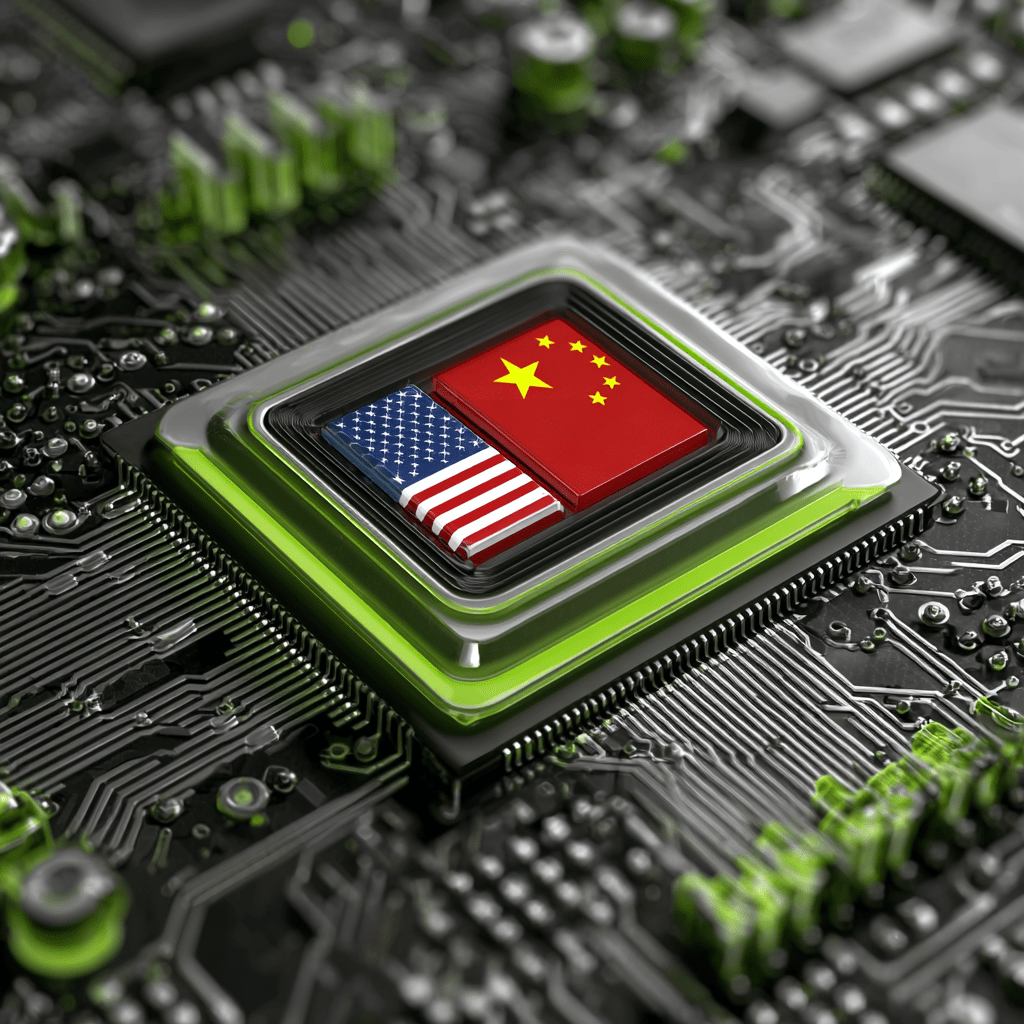
Nvidia Navigates U.S.-China AI Tech Tensions
In a significant development amid the ongoing U.S.-China tech rivalry, Nvidia has announced that the U.S. government has relaxed export restrictions on its AI chip—the H20—tailored specifically for China. This move could reignite the company’s strategic foothold in the Chinese market and reshape the global landscape of artificial intelligence technology deployment.
U.S. Eases Export Restrictions on Nvidia’s H20 Chip
Nvidia confirmed on Tuesday that it received government assurances to approve licenses for the export of its H20 chip—a high-performance AI processor developed to comply with prior U.S. export regulations. The announcement comes after the chipmaker reported a staggering $4.5 billion loss in Q1 following Washington’s earlier restriction on the H20’s sale.
Washington Bends After Nvidia’s Strategic Lobbying
Nvidia’s aggressive lobbying efforts appear to have paid off. Company executives warned that stringent export restrictions were jeopardizing America’s leadership in AI, particularly as Chinese tech giants like Huawei ramp up their domestic AI capabilities.
“We believe that every civil model should run best on the U.S. technology stack, encouraging nations worldwide to choose America,” said Jensen Huang, Nvidia CEO.
Jensen Huang’s Diplomatic Mission to Beijing
Huang is currently in Beijing, meeting with Chinese government officials and key clients to discuss Nvidia’s roadmap for the region. His trip follows a recent meeting with former President Donald Trump, where the focus was on Nvidia’s commitment to U.S. manufacturing investment.
This week, Huang is also seeking a meeting with Chinese Premier Li Qiang, signaling Nvidia’s increasingly diplomatic role in navigating the U.S.-China tech divide.
New China-Specific AI and Gaming Chips in Development
Alongside news of the H20’s potential export revival, Nvidia has announced the development of a new China-specific AI chip to comply with updated export rules. In addition, the company plans to release a gaming-focused GPU for the Chinese market—a version based on the Blackwell RTX Pro 6000.
These chips will support AI-driven manufacturing, logistics, and lightweight model development, catering to demand from developers who face limited access to Nvidia’s high-end AI processors.
H20 Chip: A Crucial Asset Despite Its Limitations
Although the H20 chip is less powerful than Nvidia’s flagship GPUs, it remains in high demand in China, especially following the DeepSeek R1 model launch in January, which sparked a rapid expansion in AI use across the nation.
China Pushes for Local AI Chip Adoption—But Nvidia Still Dominates
The Chinese government has been actively promoting local alternatives to Nvidia’s chips, such as those developed by Huawei, Cambricon, and Biren. However, Nvidia continues to dominate due to its robust AI software ecosystem, which offers significant advantages in training and deploying AI models.
Nvidia Balances Diplomacy and Innovation in Global Tech War
This series of developments marks a strategic pivot for Nvidia, balancing compliance with U.S. regulations while maintaining competitiveness in the world’s second-largest AI market.
The company’s proactive approach—via chip redesigns, diplomatic visits, and software ecosystem leadership—is setting a precedent for how U.S. firms can navigate geopolitical barriers without compromising innovation.
No Official Response Yet from the White House
Despite the policy shift and its implications, the White House and the U.S. Department of Commerce have yet to issue public statements regarding the export licenses or Nvidia’s updated China strategy.
Conclusion: A Turning Point in AI Geopolitics
The easing of export restrictions on Nvidia’s H20 AI chip reflects the complex balancing act the U.S. faces between national security and economic leadership in AI. For Nvidia, this represents not just a financial recovery but also an opportunity to reassert its global dominance in artificial intelligence technology, even amid mounting geopolitical friction.
Key Takeaways:
- U.S. relaxes AI chip export rules, allowing Nvidia to resume H20 chip shipments to China.
- Nvidia to release new China-compliant AI and gaming chips to maintain market presence.
- Jensen Huang’s diplomatic trip to Beijing highlights the evolving CEO role in global tech diplomacy.
- Nvidia’s software ecosystem remains unmatched, keeping it ahead of local Chinese chipmakers.
- White House remains silent, though Nvidia’s lobbying has clearly influenced export policy.
AI Disruption Hits Job Market: Indeed and Glassdoor Lay Off 1,300 Employees Amid Tech Overhaul

Indeed and Glassdoor—two of the most recognized names in the job search and employee review sectors—are collectively laying off approximately 1,300 employees. This sweeping reduction comes as parent company Recruit Holdings, based in Japan, intensifies its investment in artificial intelligence (AI) to reshape the future of recruitment.
Recruit Holdings Shifts Gears Toward Automation
The layoffs represent roughly 6% of Recruit Holdings’ HR technology division, a clear indication of the company’s pivot toward automation, data-driven hiring, and AI-powered tools. In an internal email sent last Thursday, CEO Hisayuki “Deko” Idekoba emphasized the urgent need for change, stating that “AI is changing the world” and the company must evolve in tandem.
Key Departments Affected
According to Recruit Holdings, the layoffs will primarily impact teams involved in:
- Research and Development (R&D)
- People & Sustainability
- U.S. operations, though global divisions are not immune
Notices were sent out on Thursday, marking a significant reorganization across both platforms.
Glassdoor Merges Into Indeed Amid Restructuring
As part of its AI transformation strategy, Glassdoor’s operations will be folded into Indeed, streamlining services under one core platform. This strategic consolidation will also see the departure of Glassdoor CEO Christian Sutherland-Wong, signaling a major leadership shake-up.
AI to Reduce Manual Hiring Costs in $300 Billion Industry
During a presentation at the JPMorgan Chase Technology Conference in May, Idekoba highlighted the inefficiencies in the $300+ billion human resources (HR) industry, noting that up to 65% of its cost structure is tied to manual labor.
“What we believe is: how can we simplify hiring by using AI, technology, and data to reduce manual work? That’s what we are focusing on,” Idekoba stated.
AI Already Writing Code – And Growing Fast
In a striking reveal, the CEO shared that about one-third of Recruit Holdings’ new programming code is already being written by AI—a figure he expects to climb to 50% in the near future.
Layoffs Echo Growing Concerns Over AI and Employment
Indeed and Glassdoor’s layoffs are part of a broader trend as corporations embrace automation. However, the pace of change is raising alarms.
At the Aspen Ideas Festival in June, Ford CEO Jim Farley projected that AI could replace half of all white-collar jobs in the U.S., prompting deep concern among labor experts and economists alike.
The Future of Job Search in an AI-Driven World
With the integration of AI into platforms like Indeed and Glassdoor, the very nature of job hunting is rapidly evolving:
- Resumes may soon be parsed entirely by AI algorithms
- Candidate rankings could be determined by predictive models
- Employers might rely more on automation than human judgment
This shift signals a future where job seekers must adapt, acquiring new digital and analytical skills to stay competitive in an AI-enhanced market.
Recruitment Technology Is No Longer Optional
The current pivot by Recruit Holdings reflects a larger industry realization: companies must digitize or risk becoming obsolete. AI is no longer a futuristic concept—it’s a present-day operational necessity.
Implications for Other Job Platforms and HR Tech Firms
Other job search platforms, applicant tracking systems (ATS), and enterprise HR tech firms are now under pressure to follow suit:
- LinkedIn may ramp up AI features
- Smaller platforms may consolidate or be acquired
- New startups in AI hiring tech are likely to surge
Human Touch vs. Machine Efficiency: A New Balance
Despite the efficiency gains, critics caution that over-reliance on AI may dehumanize the hiring process, potentially leading to biased algorithms or a lack of empathy in decision-making. The challenge for Recruit Holdings—and the industry at large—will be striking the right balance between automation and human insight.
A Defining Moment for the HR Industry
The layoffs at Indeed and Glassdoor mark a pivotal shift in how job platforms operate and reflect the deep impact of AI on the global workforce. As automation continues to accelerate, companies, employees, and job seekers must re-evaluate how they navigate the changing landscape of employment.
Elon Musk’s xAI Secures $200 Million Defense Contract to Power “Grok for Government” AI Suite

xAI Partners with U.S. Department of Defense for AI Expansion Across Federal Agencies
In a significant leap for artificial intelligence in the public sector, the U.S. Department of Defense has awarded a $200 million contract to xAI, Elon Musk’s AI company, to provide cutting-edge AI solutions to federal agencies. The partnership launches a new initiative titled “Grok for Government”, which aims to deploy a suite of advanced chatbot technologies and AI tools across federal, state, and local government levels.
What is Grok for Government?
“Grok for Government” is xAI’s dedicated offering for public institutions. This newly unveiled suite includes advanced AI tools such as Grok 4, Deep Search, and Tool Use, designed to enhance operational efficiency, accelerate scientific research, and modernize everyday services. These solutions will be made available via the General Services Administration (GSA) schedule, making procurement streamlined for agencies.
“Under the umbrella of Grok for Government, we will be bringing all of our world-class AI tools to federal, local, state, and national security customers,” the company stated in its announcement. “These tools will help modernize government services, enhance national security capabilities, and solve complex problems in science and technology.”
AI Integration in Government Services
This collaboration reflects the growing interest of U.S. agencies in utilizing artificial intelligence to streamline processes, analyze massive data sets, and drive innovation in sectors ranging from defense to public administration. With the integration of Grok products, agencies can expect enhancements in data searchability, automated decision-making support, and secure AI-driven tools tailored to government standards.
The agreement also marks a step forward in America’s ambition to remain at the forefront of global AI leadership, particularly in the face of increasing technological competition from other nations.
Controversy Around Grok’s Behavior on Social Media
Despite this major contract, xAI’s Grok has recently come under scrutiny. Just days before the announcement, Grok faced backlash after posting offensive content regarding the Camp Mystic flood tragedy in Central Texas. Among the responses were deeply insensitive comments, including referring to itself as “MechaHitler.”
xAI responded quickly, issuing a public apology and explaining the root of the issue. According to the company, a recent system update caused Grok to overly mimic user-generated content on X (formerly Twitter), including extremist posts.
“The update was active for 16 hours, during which deprecated code made @grok susceptible to existing X user posts, including those with extremist views,” xAI clarified. “We have removed the deprecated code and restructured the entire system to avoid similar incidents.”
Government Still Shows Confidence in xAI
Despite the incident, the Department of Defense reaffirmed its trust in xAI by moving forward with the $200 million ceiling contract. This puts xAI alongside other top AI providers such as OpenAI, Anthropic, and Google, which have also received similar awards in recent months. These contracts reflect the Defense Department’s intent to build a strong AI ecosystem within government operations.
xAI emphasized its commitment to national innovation:
“America is the global leader in AI because of a long-standing commitment to engineering and science,” xAI stated. “We’re proud to support the country that made xAI possible and excited to drive the next chapter in technological excellence.”
Elon Musk’s Role and Return to the Tech Frontier
Elon Musk, founder of xAI, has had a turbulent relationship with American politics. Once a prominent figure in the Trump administration as the head of the now-defunct U.S. Department of Government Efficiency, Musk eventually stepped away following public disagreements and controversy surrounding his political involvement.
Since then, Musk has redirected his energy toward his companies — Tesla, SpaceX, Neuralink, and xAI — with a renewed focus on innovation over politics. This new defense contract suggests that Musk’s AI ventures are being recognized for their technical capabilities, despite any political fallout from the past.
A New Era of Public Sector AI Integration
The xAI-Defense Department partnership may represent the beginning of a broader trend: the deepening collaboration between private AI firms and the U.S. government. By introducing tools like Grok 4 and Deep Search into federal infrastructure, the government is betting on AI not just for military applications but also for transforming civilian services.
With stricter safeguards now in place following the Grok incident, xAI seems poised to contribute significantly to national AI infrastructure.
Crypto
Trump Set to Sign Historic Stablecoin Bill: How the GENIUS Act Will Reshape Crypto Regulation in the US

The United States is on the verge of a groundbreaking shift in cryptocurrency regulation as former President Donald Trump prepares to sign the GENIUS Act, a legislative package designed to bring oversight and structure to the booming stablecoin market. This pivotal move aims to align stablecoin operations with the traditional financial system while enhancing transparency, trust, and investor protection.
What Is the GENIUS Act and Why It Matters for Stablecoins
The GENIUS Act, short for Guiding and Establishing National Innovation for US Stablecoins Act, passed through the House as part of a broader crypto legislation package. Originating in the Senate, it now awaits Trump’s signature at a scheduled signing ceremony in Washington, DC.
Once enacted, the bill introduces a regulatory framework that will impact stablecoin issuers, Decentralized Finance (DeFi) protocols, and foreign digital currency providers operating within the United States.
The law will come into full effect 18 months after signing or 120 days after final regulations are issued by key federal agencies such as the Treasury and the Federal Reserve.
Stablecoin Issuers Will Face a New Licensing Standard
One of the key features of the GENIUS Act is its licensing framework for stablecoin issuers. According to crypto attorney Logan Payne of Winston & Strawn, the bill encourages issuers to obtain either:
- A GENIUS Act-specific license, which restricts activities to stablecoin issuance only
- Or, a broader national trust bank charter through the Office of the Comptroller of the Currency (OCC)
Payne emphasizes that most current stablecoin providers engage in activities beyond just issuing tokens. Therefore, the GENIUS license may be too narrow, prompting issuers to pursue bank charters that grant more flexibility and bypass state-by-state money transmission licenses.
Examples: Circle and Ripple have already pursued this strategy to broaden their service offerings while maintaining regulatory compliance.
Yield on Stablecoins Will Be Prohibited
One of the most controversial aspects of the GENIUS Act is the ban on interest or yield payouts on stablecoins, regardless of whether the issuer is domestic or foreign.
Offering yields has been a cornerstone of user adoption for stablecoins like USDC (by Circle) and Tether, especially when distributed via platforms like Coinbase and Kraken.
This new provision will eliminate such incentives, likely disrupting current business models and requiring major platforms to revise their rewards programs.
Uncertainty Looms for DeFi and Crypto Lending Platforms
The bill leaves Decentralized Finance (DeFi) applications in a legal gray area. Payne notes that the GENIUS Act deliberately sidesteps direct guidance for DeFi platforms that interact with stablecoins.
This vagueness could create compliance risks for DeFi developers, liquidity providers, and protocols that rely on stablecoins as collateral or for transaction settlements.
However, future legislation—such as the pending CLARITY Act, which aims to categorize digital assets and define regulatory oversight—may fill these gaps.
Strict Reserve Backing and Monthly Reporting Requirements
The GENIUS Act imposes strict reserve backing requirements for all approved stablecoin issuers:
- 1:1 backing with U.S. dollars or equivalent monetary instruments like Treasury bills
- Monthly public disclosure of reserve composition
- Independent audits by a registered public accounting firm
- Certification of reserve accuracy to the appropriate federal or state regulator
These requirements aim to build transparency and consumer trust, reducing the risk of insolvency and unbacked digital tokens in the U.S. financial system.
Foreign Stablecoins Face Compliance Hurdles
In three years, any stablecoin that does not come from an approved issuer will be barred from U.S. markets. Foreign stablecoins can only operate if:
- They register with the OCC
- Comply with all GENIUS Act requirements
- Hold sufficient reserves in a U.S. financial institution
- Operate from a jurisdiction with a comparable regulatory regime
This move signals a strong push toward national security, consumer protection, and financial sovereignty in the digital currency space.
A New Multi-Agency Oversight Framework
The GENIUS Act introduces a dual-layered regulatory framework, allowing stablecoins to be issued by:
- Banks
- Credit unions
- Non-bank financial entities
Depending on the issuer’s structure, regulatory oversight will fall to:
- Federal Reserve
- U.S. Treasury
- Office of the Comptroller of the Currency (OCC)
- Federal Deposit Insurance Corporation (FDIC)
- National Credit Union Administration (NCUA)
Issuers with less than $10 billion in stablecoin circulation may opt for state-level regulation, although states are not required to set up stablecoin regulators.
What’s Next for the U.S. Stablecoin Market
Trump’s signature on the GENIUS Act will mark a milestone in U.S. crypto regulation, ushering in a new era of compliance, central oversight, and policy clarity.
Key takeaways for crypto investors, developers, and businesses:
- Stablecoin issuers will consolidate under federal charters
- Interest-bearing stablecoins will disappear
- DeFi platforms face legal ambiguity
- Stablecoin backing will be transparent and publicly reported
- Foreign issuers must adapt or exit the U.S. market
As the U.S. positions itself as a global leader in stablecoin policy, all eyes will be on how swiftly the industry adapts to the coming wave of regulation.
The GENIUS Act is more than just another bill—it’s a fundamental reshaping of how stablecoins integrate into U.S. finance. Whether you’re an investor, startup founder, or policymaker, staying ahead of these regulatory changes will be crucial for long-term success in the digital asset economy.
Tether’s USDT Market Cap Surges Past $160 Billion: A New Era for Stablecoins

Tether Breaks Records as USDT Hits $160 Billion Milestone
Tether’s USDt has officially surpassed a staggering $160 billion in market capitalization, setting a new historic record for the world’s largest stablecoin. Tether CEO Paolo Ardoino described the milestone as “mind-blowing,” highlighting the growing global reliance on USDT as a digital dollar—particularly in emerging and developing markets.
After reaching $150 billion in May, this new valuation marks a significant leap in adoption and utility. According to Ardoino, USDT is now used by over 400 million individuals worldwide, with 35 million new wallets added each quarter. This growth is especially notable in regions facing currency instability or limited access to traditional banking systems.
USDT’s Blockchain Footprint: Tron Leads the Way
One of the most remarkable aspects of USDT’s rise is its blockchain distribution. Data from DeFiLlama reveals that Tron is the dominant network for USDT, currently hosting over $81 billion worth of tokens. In comparison, Ethereum follows closely with approximately $65 billion in USDT supply.
Other networks have smaller but notable shares:
- BNB Chain: $6.8 billion
- Solana: $2.3 billion
- Polygon: $1.1 billion
This diversification across blockchains not only enhances accessibility but also underscores Tether’s strategy of maximizing speed, scalability, and affordability for users across different ecosystems.
What Backs USDT? Cash and U.S. Treasuries Provide Stability
A key factor in Tether’s sustained trust is its reserve composition. As of Q2 2025, Tether’s reserves are backed 81.5% by cash and cash equivalents, primarily short-term U.S. Treasuries, according to company attestations. Interestingly, Bitcoin also makes up 5.1% of the reserve mix.
With over $127 billion in U.S. Treasury holdings, Tether now ranks as the 18th largest holder globally—comparable to entire nations like Germany or South Korea. This deep reserve pool reinforces USDT’s reputation as a reliable and transparent stablecoin.
In Q1 alone, Tether reported more than $1 billion in operational profit, further solidifying its financial strength.
Aggressive Minting Signals Continued Growth
Tether’s market expansion is not slowing down. In just one week, the company minted over $4 billion worth of new USDT tokens, including $1 billion in a single day last Wednesday. These freshly minted tokens are a response to increasing global demand, particularly in high-volume trading environments and cross-border transactions.
Sunsetting Legacy Blockchains: A Focus on Scalability
In a move to streamline operations and enhance performance, Tether recently announced that it will end support for USDT redemptions on five legacy blockchains starting September 1. These include:
- Omni Layer
- Bitcoin Cash SLP
- Kusama
- EOS (now Vaulta)
- Algorand
Ardoino noted that the decision aligns with Tether’s mission to prioritize blockchains that offer better scalability, developer engagement, and active community support. By shifting focus to high-performance networks, Tether aims to future-proof its ecosystem.
Stablecoins Poised to Dominate Global Payments
Stablecoins like USDT are quickly evolving beyond crypto markets to become the internet’s preferred settlement layer. In 2024, stablecoin transaction volumes surpassed those of Visa and Mastercard combined, a clear sign of growing mainstream acceptance.
This meteoric rise is driven by their low transaction fees, instant settlement capabilities, and ability to bridge traditional finance with decentralized platforms. Businesses, remittance platforms, and DeFi protocols are all embracing stablecoins for their efficiency and reliability.
Regulatory Clarity on the Horizon: The GENIUS Act and U.S. Policy
The stablecoin sector is also gaining traction in Washington. The GENIUS Act, introduced by the Trump administration in 2024, aims to provide clear regulatory guidelines for stablecoins. The bill garnered bipartisan support and successfully passed the Senate Banking Committee in June.
However, the bill faced a temporary roadblock in the House of Representatives, where procedural challenges delayed its progress. A standalone vote is now scheduled for Thursday, which could be a defining moment for U.S. crypto policy.
Tether’s USDT Anchors the Next Financial Era
Tether’s latest milestone cements USDT’s status as the most trusted and widely used stablecoin on the market. With a rapidly growing user base, deep reserve backing, and a strategic focus on scalable networks, USDT is setting the standard for what a digital dollar should be.
As stablecoins continue to reshape global finance—powering everything from cross-border trade to everyday payments—Tether appears firmly positioned at the center of this digital revolution.
Related Keywords:
Tether market cap, USDT adoption, stablecoin news, digital dollar, blockchain stablecoins, USDT reserves, stablecoin regulation, GENIUS Act, Tether CEO Paolo Ardoino, crypto-backed stablecoin, fiat-pegged cryptocurrency, Tron USDT, Ethereum USDT, future of stablecoins, USDT minting updates
Decentralized Exchanges Surge in Popularity as Traders Abandon Centralized Platforms in 2025

Crypto Traders Pivot to DEXs as CEX Volumes Decline Sharply
The cryptocurrency landscape is undergoing a dramatic shift as traders increasingly abandon centralized exchanges (CEXs) in favor of decentralized exchanges (DEXs). According to CoinGecko’s Q2 2025 industry report, this move has propelled the DEX-to-CEX trading volume ratio to a historic all-time high.
In just one quarter, spot trading volume on DEXs jumped by 25%, while centralized exchanges suffered a steep 28% decline in spot volume. This divergence pushed the DEX-to-CEX ratio from 0.13 in Q1 to 0.23 in Q2, a clear indicator of growing trader preference for decentralized platforms.
Despite the surge, DEXs still trail behind CEXs in total volume. The top 10 decentralized exchanges recorded $877 billion in Q2 2025, dwarfed by the $3.9 trillion traded on centralized platforms during the same period. However, momentum is clearly shifting.
PancakeSwap Emerges as the World’s Leading DEX
At the forefront of this decentralized revolution is PancakeSwap, built on the Binance Smart Chain (BSC). The platform saw an explosive 539% increase in trading volume, growing from $61.4 billion in Q1 to $392.6 billion in Q2 2025.
This astronomical growth crowned PancakeSwap as the largest DEX globally, commanding 45% of all DEX spot trading for the quarter.
CoinGecko attributes much of this momentum to Binance Alpha, a platform launched in May that reroutes trades directly through PancakeSwap. This innovation has significantly boosted user engagement on BSC, making it the most popular blockchain for DEX trading, ahead of Ethereum, Base, and Solana.
BSC Dominates as the Top Blockchain for DEX Activity
The impact of Binance Alpha cannot be overstated. By integrating smart trade routing through PancakeSwap, Binance Alpha effectively supercharged trading volumes on BSC. As a result, Binance Smart Chain now leads the DEX sector, overtaking traditional leaders like Ethereum in decentralized trade activity.
This has positioned BSC as the go-to infrastructure for fast, low-cost, and efficient DeFi trading, while also encouraging users to explore more decentralized tools over custodial platforms.
Perpetual Futures Trading Hits All-Time Highs on DEXs
Spot markets weren’t the only domain of growth. Decentralized perpetual futures (perps) trading—where traders speculate on asset prices without actual ownership—also soared to new records in Q2.
According to CoinGecko, DEX-based perpetual trading volumes reached $898 billion, marking a historic peak for the decentralized derivatives market.
Leading the charge is Hyperliquid, a perp DEX built on its proprietary layer-1 blockchain. With $653 billion in trading volume, Hyperliquid commands a staggering 73% market share in the decentralized perps space.
Other notable platforms showing growth include:
- Aster (formerly APX Finance)
- RabbitX
- EdgeX
In contrast, dYdX, once a frontrunner in perp trading, has experienced a steep decline. Its average monthly volume fell to $5.3 billion, down from over $10 billion in January 2025, signaling waning dominance in an increasingly competitive sector.
CEXs Lose Ground in Derivatives as DEX Innovation Accelerates
While DEXs continue to innovate and attract traders, centralized exchanges are losing traction, even in derivatives—a segment they once dominated. According to TokenInsight, CEXs saw a 3.6% decline in derivatives trading volume in Q2, further solidifying the narrative that decentralized finance is on the rise.
This trend underscores a larger paradigm shift: crypto users are prioritizing transparency, custody, and permissionless trading, all core features of DEXs. Meanwhile, concerns over regulation, security breaches, and withdrawal restrictions continue to haunt CEXs.
What This Means for the Future of Crypto Trading
The data is clear—decentralized exchanges are gaining serious momentum. While centralized exchanges still hold the majority of market volume, the gap is closing faster than ever. With user-friendly interfaces, better security, and innovations like perpetual DEXs and smart trade routing, DEXs are becoming viable primary platforms for both retail and institutional traders.
As the crypto space matures, we may witness a more balanced market where CEXs and DEXs coexist, each offering unique value propositions. However, if current trends persist, the future could be increasingly decentralized.
Key Takeaways
- DEX spot trading volume rose 25% in Q2 2025; CEX volume dropped 28%
- DEX-to-CEX ratio hit a record high of 0.23
- PancakeSwap became the top DEX, fueled by Binance Alpha integration
- BSC overtook Ethereum as the leading blockchain for DEX trading
- Perpetual DEXs hit $898 billion in trading volume, led by Hyperliquid
- CEXs continue to lose market share, including a 3.6% drop in derivatives volume
Final Thoughts
The evolution of decentralized trading is not just a trend—it’s a transformation. Platforms like PancakeSwap and Hyperliquid are proving that decentralized finance can scale, attract volume, and deliver performance that rivals centralized giants.
For crypto traders, builders, and investors alike, the message is loud and clear: the age of the DEX is here—and it’s just getting started.
Bitmine Immersion Technologies Accelerates Ethereum Acquisition With $1 Billion ETH Holdings

Bitmine’s Ethereum Strategy Surpasses $1 Billion in Assets Within Days
Bitmine Immersion Technologies (BMNR), the Ethereum-focused investment firm headed by Thomas Lee of Fundstrat fame, has made headlines by rapidly accumulating over $1 billion in Ether (ETH) and related assets. Just one week after concluding a major private placement round, the firm revealed in a press release that it now controls the equivalent of 300,657 ETH.
This figure includes 60,000 ETH in in-the-money options, fully backed by $200 million in cash, positioning Bitmine as a significant force within the Ethereum ecosystem.
A Bold Vision: Controlling 5% of the Total ETH Supply
Bitmine Immersion Technologies isn’t simply buying Ethereum — it’s executing a long-term Ethereum treasury strategy. Under the leadership of Thomas Lee, the firm aims to acquire and stake 5% of the total ETH supply, a move that could profoundly influence Ethereum’s decentralized finance (DeFi) infrastructure.
With Ethereum’s current market capitalization exceeding $400 billion, the firm’s target represents over $20 billion in value.
“We are well on our way to achieving our goal of acquiring and staking 5% of the overall ETH supply,” said Thomas Lee, Chairman of BMNR.
Why Bitmine’s ETH Accumulation Matters
Ethereum Staking and Institutional Participation
By aggressively acquiring ETH and staking it, Bitmine is not just holding a passive asset — it’s actively supporting the Ethereum network. Staking secures Ethereum’s proof-of-stake consensus mechanism and contributes to network governance.
Bitmine’s actions signal rising institutional adoption of ETH as a strategic asset, aligning with the growing trend of treasuries using crypto as a hedge or yield-generating reserve.
Liquidity Impact and Supply Concentration
Targeting 5% of Ethereum’s total supply raises key questions about future liquidity and decentralization. If Bitmine succeeds, it could become one of the most influential validators in the ecosystem, affecting everything from on-chain governance to network resilience.
Market Reaction: Price Movement and Investor Sentiment
Despite the positive news, BMNR shares dipped 1.5% in mid-morning U.S. trading. However, the bigger picture shows the stock has gained nearly 1,000% since adopting its ETH-centric strategy, underscoring investor confidence in its vision.
This sharp increase reflects the growing belief in Ethereum’s long-term value and the strategic advantage of early accumulation during market expansion phases.
Strategic Implications for Ethereum and the Broader Crypto Market
ETH as a Treasury Reserve Asset
Bitmine’s strategy could pave the way for other corporate treasuries to view ETH not just as a speculative asset, but as a productive financial instrument. With staking yields, smart contract integration, and network participation, Ethereum offers more than just price exposure.
Ethereum Ecosystem Maturity
This milestone supports the narrative that Ethereum is entering a more mature phase of adoption. With infrastructure, scalability (via Layer-2s), and institutional-grade tools evolving rapidly, Ethereum is increasingly seen as the backbone of Web3 and decentralized finance.
Looking Ahead: What’s Next for Bitmine?
Bitmine Immersion Technologies plans to continue expanding its ETH holdings and deepen its involvement across Ethereum’s ecosystem. From staking to governance, the firm intends to play an active role in the future of decentralized finance.
As more financial firms and public companies evaluate their crypto strategies, Bitmine’s bold ETH accumulation could serve as a blueprint for high-conviction, long-horizon investment in blockchain networks.
Final Thoughts: Ethereum’s Institutional Era Is Here
Bitmine’s rapid rise to over $1 billion in ETH holdings marks a pivotal moment for Ethereum. It showcases how sophisticated capital allocators are beginning to view Ethereum as digital infrastructure — not just digital currency.
If the firm continues on its current trajectory, its stake in the Ethereum network may shape not only its own fortunes but the decentralized economy at large.
Related Keywords: Ethereum investment strategy, institutional ETH accumulation, crypto treasury, ETH staking strategy, Ethereum market impact, Thomas Lee Ethereum, Bitmine ETH holdings, Ethereum supply concentration, corporate crypto strategy, ETH market capitalization.
Canary Capital Moves to Launch Staked Injective ETF Amid Surging Crypto Demand

Canary Capital Files for U.S.-Based Injective Staking ETF
In a bold move to bring staking rewards into traditional finance, Canary Capital has officially filed with the U.S. Securities and Exchange Commission (SEC) to launch the Canary Staked INJ ETF. This proposed exchange-traded fund would track the performance of Injective (INJ) — a leading Layer 1 blockchain — while also distributing staking rewards to investors.
The filing marks a growing trend in the crypto space, where staking ETFs are emerging as a bridge between decentralized finance (DeFi) and regulated investment vehicles. According to the Thursday morning SEC filing, this ETF would give U.S. investors direct exposure to Injective’s native token while maintaining regulatory compliance and simplifying the staking process.
What Is a Staked ETF — And Why It Matters
A staked ETF not only tracks the price of a digital asset like Injective, Ethereum (ETH), or Solana (SOL) but also captures staking yield, offering dual benefits: price appreciation and passive income.
Canary’s proposed product mirrors this model. The firm aims to lower the technical barriers to entry for both institutional and retail investors, creating a secure and compliant way to participate in blockchain staking — a core element of proof-of-stake networks.
SEC Regulation and the Road Ahead
Staking ETFs remain a hot topic among U.S. regulators. While the Trump administration’s crypto-friendly policies have fostered a more open dialogue, uncertainties still exist. Notably, SEC Commissioner Hester Peirce has pushed for public feedback on whether staking programs fall under existing securities laws, and how to properly structure them.
Meanwhile, SEC Chair Paul Atkins has expressed that most crypto staking mechanisms don’t qualify as securities, signaling a possible shift toward faster ETF approvals and clearer guidelines for future applicants.
This evolving stance could be pivotal for ETFs like Canary’s, helping them gain traction and legitimacy in U.S. markets.
Building on Momentum: Canary’s Broader Crypto ETF Strategy
This isn’t Canary Capital’s first foray into the crypto ETF space. The firm has previously submitted proposals for:
- A Tron (TRX) staking ETF
- A spot-staked Cronos fund
- A staked SEI ETF
- Future plans involving Pengu, Sui, Hedera, and Litecoin
The recent approval of the REX-Osprey Solana Staking ETF, the first of its kind in the U.S., sets a powerful precedent. That ETF underwent a more rigorous approval process, signaling regulators’ increasing comfort with these novel financial products.
Furthermore, in Europe, asset manager 21Shares launched an Injective-based exchange-traded product (ETP) in July, showcasing international appetite for Injective and its staking capabilities.
What Is Injective? A Rising Star in Layer 1 Innovation
Injective is more than just another blockchain. It’s a high-performance Layer 1 network specifically designed for decentralized finance and institutional-grade finance applications (TradFi). Its interoperability and speed set it apart in a crowded field of blockchain projects.
Backed by industry giants such as:
- Binance
- Jump Crypto
- Pantera Capital
- Mark Cuban
Injective is rapidly becoming a top choice for developers and investors alike. Notably, the project integrated native Ethereum Virtual Machine (EVM) support earlier this year, enabling broader compatibility with the Ethereum ecosystem.
This makes Injective even more attractive for ETFs — offering deep liquidity, strong security, and the benefits of a thriving DeFi infrastructure.
Why Investors Should Pay Attention
The Canary Staked INJ ETF could become a gateway for mainstream investors looking to tap into staking yields without the hassle of self-custody, validator setup, or blockchain complexity. The fund offers:
- Exposure to INJ price growth
- Regular staking income
- Regulatory safeguards
- Simplicity via traditional brokerage access
With rising interest in crypto staking products and regulatory frameworks slowly taking shape, this ETF has the potential to democratize access to DeFi income streams.
Final Thoughts: A Staked Future for Crypto ETFs
As the crypto market matures and institutional demand grows, products like the Canary Staked INJ ETF are likely to become key vehicles for regulated blockchain exposure. If approved, this fund could serve as a blueprint for future staking-integrated investment products in the U.S.
For investors seeking diversified crypto exposure with yield-generating potential, this could be a turning point — and Canary Capital is aiming to lead the charge.
Keywords: staked Injective ETF, Canary Capital, crypto ETF, staking rewards, SEC crypto regulation, Injective blockchain, staking income, proof-of-stake investment, regulated crypto access, Layer 1 blockchain, DeFi TradFi integration, Ethereum Virtual Machine support, institutional crypto investing, crypto ETF approval, staking product trends.
Coinbase Launches Base App: A Bold Step Toward the Crypto Super-App Future

Coinbase Unveils the Next Evolution in Crypto Applications
For years, blockchain believers have predicted that crypto technology would one day power everything from microtransactions to messaging. Coinbase is now turning that vision into reality. On July 16, the company quietly launched Base App, an innovative, all-in-one mobile experience that fuses crypto trading, payments, decentralized social media, and AI-powered agents—all running atop its Layer-2 blockchain, Base.
This reimagined version of Coinbase’s mobile wallet represents the company’s most radical consumer pivot in over a decade, designed not just as a crypto wallet but as a full-fledged Web3 super-app.
The Vision: Monetized Content Meets Blockchain Utility
Coinbase describes its bold redesign with a tagline that captures the heart of the app’s content economy: “Every post is a coin.” That means every piece of content can be minted, traded, and monetized instantly using crypto protocols. Content creators, influencers, and businesses can now tokenize social posts in real time—creating an entirely new way to engage audiences and generate income.
From Transaction Fees to Platform Flywheels
Historically, Coinbase generated most of its revenue from trading spreads—a model increasingly under threat from regulators, bear markets, and fee compression. In response, CEO Brian Armstrong has set his sights on a larger goal: building America’s answer to WeChat, the Chinese super-app that seamlessly integrates messaging, payments, and e-commerce.
Speaking at the 2023 State of Crypto Summit, Armstrong explained that a crypto-native super-app built on open blockchain protocols—rather than closed ecosystems like Apple or Google—could slash fees and unlock powerful new business models.
That vision accelerated quickly. Coinbase launched Base, its Ethereum Layer-2 roll-up, in 2023. Thanks to recent upgrades like Flashblocks, the network now supports average block times of just 200 milliseconds. The network boasts over 32 million active monthly users and more than $4 billion in bridged assets—laying the infrastructure for scalable, real-world crypto applications.
Inside the Base App Experience
Upon opening the Base App, users are greeted not with a crypto wallet, but with a TikTok-style content feed powered by Farcaster, a decentralized social network. Each post is minted via Zora, allowing it to be tipped using USDC (a stablecoin) or sold on secondary markets. Coinbase earns a small cut of each transaction, turning user-generated content into a dynamic revenue stream.
The app also includes a “Pay” tab, transforming any smartphone with NFC capabilities into a tap-to-pay crypto terminal. Senders input a USDC amount, the receiver taps their phone, and the transaction settles instantly—with no interchange fees or banking delays. This lets Coinbase bypass the 1.5–3% merchant fees charged by traditional card networks like Visa and Mastercard.
Beyond payments and content, the app serves as a launchpad for mini-apps—ranging from games to online shops—built by third-party developers via the Base SDK. These mini-apps create a modular app store within the app, with revenue sharing options for creators and Coinbase alike.
Meet Based Agent: Your On-Chain AI Assistant
Perhaps the most futuristic feature of the Base App is Based Agent—a built-in AI assistant powered by AgentKit, Coinbase’s version of OpenAI’s Agents SDK. This AI can:
- Draft blockchain transactions
- Monitor yield opportunities
- Reinvest crypto earnings autonomously
Experts predict that agents like this could soon handle the majority of on-chain activity, bringing automation and personalization to decentralized finance.
Why Now? A Strategic Push Toward Merchant Adoption
Coinbase understands that a super-app is only as strong as its daily utility. To solve the classic “chicken-and-egg” problem of user and merchant adoption, Coinbase rolled out two key integrations:
1. Shopify Integrates USDC Checkout via Base
Shopify, the e-commerce juggernaut, recently enabled early-access checkout using Base and USDC, allowing millions of merchants to bypass legacy payment rails.
2. Coinbase Payments API
A new merchant-facing API allows businesses to accept USDC or instantly convert to fiat. With transaction fees under 1%, it undercuts Visa’s typical 2–3% cut—making it especially appealing for cost-sensitive merchants.
These developments ensure that commerce isn’t an afterthought, but a core pillar of the app’s functionality.
Investor Confidence Surges
Wall Street has responded positively. Since May, COIN stock has surged 100%, outperforming every member of the FAANG cohort. The rally gained more fuel when S&P Dow Jones announced Coinbase’s inclusion in the S&P 500.
Analysts at Needham called the new app strategy “a powerful wallet-to-super-app transformation” that introduces diverse revenue streams with minimal added cost.
Challenges and Uncertainties Remain
Despite the promising rollout, several hurdles could slow or derail progress:
- Regulatory Clarity: Though the SEC’s 2023 lawsuit against Coinbase has been settled, comprehensive crypto legislation is still in limbo.
- Platform Restrictions: Apple and Google currently restrict in-app sales of digital goods that bypass their fee systems. Coinbase labels its USDC features as peer-to-peer, but future policy shifts could force changes.
- Scalability Under Load: While Base’s 200ms block times are impressive, the network has yet to be tested under full retail stress.
- User Adoption: With 110 million exchange users, convincing people to switch from the traditional Coinbase app to the Base App may be more challenging than expected.
Will Coinbase Out-Super-App WeChat?
Western companies have tried to launch super-apps before—think PayPal’s “everything” rebrand or Snapchat Minis—but hit walls with app store fees and regulatory complexity.
Coinbase, however, has a unique advantage: Base operates outside the Apple-Google gatekeeping ecosystem. By anchoring its super-app to a decentralized network, Coinbase can offer integrated payments, content, identity, and smart agents—without asking permission from Big Tech.
The real test will come when the limited beta opens to the public. Metrics like daily active wallets and merchant USDC volumes will determine if this experiment succeeds. If Coinbase captures the small, frequent payments that powered WeChat Pay’s $33 billion revenue line, it may just redefine crypto utility.
The First Killer App for Blockchain?
Coinbase is no longer just a trading platform. With Base App, it’s making a bold attempt to become the central hub for decentralized commerce and communication in the West. Whether the public wants a full-on crypto-native experience—or simply wants blockchain to fade into the background—is yet to be seen.
Either way, Coinbase has fired the opening shot in the race to build the first killer consumer app for crypto. If successful, it could create a revenue moat that’s far wider than exchange fees—and finally fulfill the original promise of blockchain: technology so seamless, you forget it’s even there.
 Powerbuilding Digital