
Fitness / Motivation / Technology & A.I / Crypto

Powerbuilding Digital Newsletter (Edition 107)
Welcome to Edition 107 of the Powerbuilding Digital Newsletter—your weekly guide to staying strong, sharp, and ahead of the curve. Whether you’ve been with us since the early editions or are just jumping in, this is your space to grow across fitness, mindset, technology, and the digital frontier.
Here’s what we’ve lined up this week:
- Fitness Info & Ideas
Practical training strategies and performance insights designed to help you push harder, recover smarter, and keep your progress consistent. - Motivation & Wellbeing
Tools for sharpening your mindset, protecting your energy, and staying locked in—even when life tries to pull you off track. - Technology & AI Trends
Fresh updates on AI and emerging tech that are shaping industries and daily life, with a focus on tools you can actually use. - Crypto & Digital Asset Trends
No market chatter—just real innovations, new platforms, and use cases that show how blockchain and Web3 continue to evolve.
Edition 107 is about precision—cutting out the noise and focusing on what really drives results. Let’s dive in and keep building stronger, smarter, and future-ready together.
Fitness
Top Strength Workouts to Improve Balance and Posture

Strength training isn’t just for athletes chasing PRs or bodybuilders chasing muscle size. Done correctly, it’s one of the most effective ways to improve balance, posture, and functional movement.
Whether you sit at a desk all day, play sports, or simply want to age gracefully, strength workouts build the stability, alignment, and muscular endurance your body needs to move freely and confidently.
Why Strength Training Is Key for Balance and Posture
Balance and posture are directly tied to muscular strength. Without strong stabilizers and proper muscular symmetry:
- Shoulders round forward
- Hips tilt unevenly
- The spine compensates, leading to back pain
- Small imbalances compound into injuries
Strength training addresses these weaknesses head-on by reinforcing the muscles that hold your body upright.
The Science: How Strength Impacts Stability and Alignment
Research published in Frontiers in Physiology (2018) shows that resistance training improves not only muscle mass but also neuromuscular control, which directly influences postural stability. Strong muscles communicate more effectively with the nervous system, reducing sway and improving coordination.
Core vs. Strength Work—What’s the Difference?
- Core training: Focuses specifically on the muscles surrounding the spine and pelvis.
- Strength training: Builds entire movement patterns (push, pull, hinge, squat, carry) to create structural alignment and resilience.
Both matter—but for lasting posture and balance improvements, strength training is non-negotiable.
Key Muscle Groups for Posture and Balance
- Glutes: stabilize hips, prevent pelvic tilt
- Hamstrings: balance quad dominance, support hip hinge
- Upper back (traps, rhomboids, rear delts): keep shoulders from rounding
- Core stabilizers: protect the spine during movement
- Calves and ankles: essential for balance and gait control
Best Practices Before Strength Training
- Warm up with mobility drills (hip openers, shoulder dislocates, ankle mobility)
- Use light activation work (banded walks, scapular retractions)
- Prioritize form over load
Top Strength Workouts for Balance and Posture
1. Squats and Squat Variations
Benefits: Strengthens quads, glutes, hamstrings, and core while reinforcing upright posture.
- Goblet Squat for beginners
- Front Squat for upright torso alignment
- Split Squat for unilateral balance
2. Deadlifts (Conventional, Romanian, Trap Bar)
Benefits: Builds posterior chain strength, spinal alignment, and hip hinge mechanics.
- Romanian Deadlift emphasizes hamstrings and glutes
- Trap Bar Deadlift reduces spinal load, improving form
3. Overhead Press
Benefits: Reinforces shoulder stability and teaches spinal bracing.
- Standing version is best for posture since it trains the whole body under load.
4. Rows (Barbell, Dumbbell, Inverted)
Benefits: Strengthens rhomboids, traps, and rear delts—counteracting forward-shoulder posture.
- Face Pulls (variation) specifically target posture correction.
5. Step-Ups and Bulgarian Split Squats
Benefits: Improve unilateral balance, hip alignment, and ankle stability.
6. Farmer’s Carries
Benefits: Build grip, core stability, and spinal alignment during walking.
- Variations: Suitcase carry (one side), overhead carry.
7. Single-Leg Romanian Deadlift
Benefits: Enhances balance, coordination, and glute/hamstring activation while training hip stability.
8. Hip Thrusts and Glute Bridges
Benefits: Strengthen glutes, a critical foundation for pelvic alignment and lower back support.
9. Face Pulls
Benefits: Correct rounded shoulders, strengthen external rotators, and build healthy posture.
10. Pallof Press
Benefits: Anti-rotation core drill that builds spinal stability during dynamic movement.
Functional Strength Movements for Everyday Balance
Incorporate strength patterns into daily life:
- Carry groceries in one hand (suitcase carry style)
- Sit-to-stand squats from a chair
- Controlled stair climbs
The Role of Unilateral Training in Posture Alignment
Many imbalances come from favoring one side. Unilateral work (split squats, single-arm carries) forces each side to carry its own weight, creating symmetry.
Using Tempo and Control for Postural Gains
Slow, controlled eccentrics (3–5 seconds down) improve muscular awareness and balance. Avoid rushing reps—quality beats speed.
The Importance of Bracing and Breathing Techniques
Learn to brace your core during lifts and breathe diaphragmatically. This stabilizes the spine and reinforces proper posture.
Sample Weekly Strength Plan for Balance and Posture
Day 1 – Lower Body (Squat Focus)
- Goblet Squats 4×10
- Bulgarian Split Squats 3×10/side
- Hip Thrusts 3×12
- Farmer’s Carries 4×30 sec
Day 2 – Upper Body (Posture Focus)
- Overhead Press 4×8
- Barbell Row 4×10
- Face Pulls 3×12
- Pallof Press 3×12/side
Day 3 – Full Body Stability
- Deadlift (Trap Bar) 4×6
- Step-Ups 3×12
- Single-Leg RDL 3×10/side
- Suitcase Carries 4×40 steps
Common Mistakes to Avoid
- Training abs with endless crunches (not functional)
- Ignoring glutes and posterior chain
- Loading heavy before mastering form
- Skipping mobility work before and after sessions
Strength Training for Athletes vs. Desk Workers
- Athletes: Need explosive strength + stability under speed.
- Desk workers: Need corrective strength, especially posterior chain and upper back work to combat sitting posture.
Long-Term Benefits of Strength Training on Aging
According to Harvard Health Publishing, regular resistance training:
- Reduces fall risk by 40% in older adults
- Preserves bone density
- Improves functional independence
Strength Is the Foundation of Stability
Improving balance and posture isn’t about stretching alone—it’s about building strength in the right places. By incorporating squats, deadlifts, rows, carries, and unilateral work into your weekly routine, you develop the muscular foundation to stand tall, move powerfully, and age gracefully.
When you make strength a habit, balance and posture become natural by-products.
Motivation
How to Design a Life Aligned With Your True Self

Most people go through life following scripts they never wrote. Go to school, get a job, buy a house, climb the ladder—yet even after achieving these milestones, many feel restless, unfulfilled, or disconnected.
The truth? Happiness comes from alignment, not achievement. Designing a life aligned with your true self is about peeling away external expectations and creating a lifestyle that reflects your deepest values, strengths, and desires.
What It Means to Live in Alignment With Your True Self
Living in alignment means your actions, relationships, and environment reflect your authentic identity—not the one imposed by parents, culture, or fear.
It’s not perfection. It’s congruence.
- Your values match your decisions
- Your goals reflect your desires, not someone else’s
- Your day-to-day feels like a true extension of who you are
Why So Many People Live Out of Alignment
- Cultural conditioning: chasing external markers of success
- Fear of rejection: molding ourselves to fit in
- Disconnection: ignoring intuition in favor of logic or approval
- Busyness: no time to reflect on what we truly want
Studies in positive psychology show that people who live authentically report higher life satisfaction, resilience, and well-being (Journal of Counseling Psychology, 2015).
Signs You’re Not Living Authentically
- Constantly seeking external validation
- Feeling drained or resentful in daily life
- Saying “yes” when you mean “no”
- A gap between how you act and how you feel
- Success without fulfillment
Step 1: Clarify Your Core Values
Identifying What Truly Matters
Values are your compass. Without them, you drift.
Examples: Freedom, creativity, growth, family, integrity, contribution.
Exercises to Discover Your Values
- Journaling: “When do I feel most alive?”
- Reflect on role models: What traits do they embody?
- Value ranking: Write down 10 values, circle your top 3.
Step 2: Define Your Vision of a Fulfilled Life
Ask yourself: If there were no limitations or judgment, how would I live?
- Where would I live?
- What would my work look like?
- How would I spend my mornings?
Vision gives direction; values keep it authentic.
Step 3: Question Societal Expectations and Conditioning
Challenge assumptions like:
- “I must work 9–5 to be successful.”
- “Marriage is required to be complete.”
- “Security > passion.”
Redesign begins when you dare to question the default blueprint.
Step 4: Align Your Habits With Your Identity
Daily habits shape your reality. If you value health, do your routines reflect it? If you value creativity, is there space for it?
Identity-based habits (James Clear’s Atomic Habits): Instead of “I want to run,” shift to “I am a runner.”
Step 5: Create Environments That Support Your Authentic Self
Environment often shapes behavior more than willpower.
- Design workspaces that fuel focus
- Surround yourself with uplifting, value-driven people
- Limit exposure to draining spaces (both digital and physical)
Step 6: Strengthen Self-Trust and Intuition
Learning to trust your gut requires practice.
- Start with small intuitive decisions
- Journal about times you ignored intuition and paid for it
- Meditation and mindfulness strengthen inner clarity
Step 7: Establish Boundaries to Protect Your Alignment
Boundaries aren’t about walls; they’re about alignment.
- Say no to obligations that conflict with your values
- Limit time with people who drain your energy
- Guard time for what matters most
Step 8: Prioritize Work That Feeds Your Soul
True alignment often requires aligning career with calling.
- Ask: Does my work express my values?
- If not, what shifts (side projects, new roles, entrepreneurship) can bring me closer?
Step 9: Build Relationships That Reflect Who You Are
Authenticity thrives in supportive connections.
- Choose friends and partners who celebrate, not stifle, your growth
- Communicate openly about your values and vision
Step 10: Embrace Continuous Growth and Redesign
Alignment is not a one-time event—it evolves. Reassess regularly:
- Do my values still feel true?
- Have my desires shifted?
- What adjustments do I need now?
Common Challenges and How to Overcome Them
- Fear of disappointing others → Remind yourself: betraying yourself is the bigger loss.
- Uncertainty → Start small; clarity comes from action.
- Resistance from others → Stay grounded in your why.
Tools, Journaling Prompts, and Resources for Authentic Living
- Journaling Prompts:
- “What would my perfect day look like?”
- “Where am I performing instead of living?”
- “If I trusted myself fully, what would I do?”
- Books:
- The Untethered Soul by Michael Singer
- Atomic Habits by James Clear
- The Courage to Be Disliked by Ichiro Kishimi
- Apps:
- Insight Timer (meditation)
- Daylio (values-based journaling)
Designing Your Life as an Ongoing Practice
Living in alignment with your true self is less about achieving perfection and more about choosing authenticity, moment by moment.
Every boundary set, every habit aligned, every “yes” that feels true—these are the bricks that build a life of freedom, fulfillment, and deep peace.
Remember: You don’t need permission to design your life. You only need courage to follow what’s already within you.
Technology & A.I
Fitbit’s AI Health Coach May Finally Get It Right
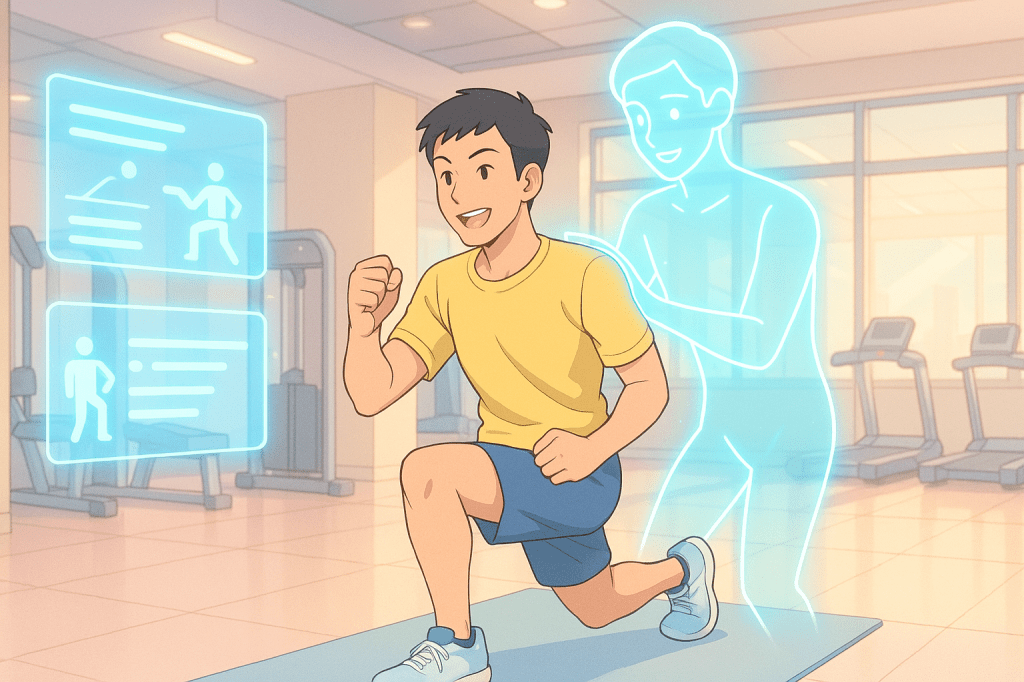
AI health and fitness features have long underwhelmed. Most deliver surface-level summaries and “insights” so generic they’re barely more useful than a basic search. But Fitbit’s upcoming AI-powered personal health coach—powered by Google’s Gemini—may mark a shift. After a hands-on preview, the offering appears more promising than previous attempts.
Moving Beyond Metrics to Real Coaching
“We really want to move towards this world of coaching,” said Andy Abramson, Google’s Director of Product Management for Fitbit and Health. Unlike other platforms that overwhelm users with data, Fitbit aims to deliver contextual guidance, closer to what a real coach might provide.
Professional athletes have entire teams managing their training. Fitbit’s question was simple: What if everyone could access something similar?
Powered by Gemini, Personalized by You
The new Fitbit coach is built directly into a redesigned app—complete with dark mode—and engages users in dynamic, conversational interactions. Using real-time biometrics, the system adjusts its suggestions based on:
- Sleep quality
- Recovery needs
- Travel and schedule constraints
- Personal goals and injuries
Unlike other AI fitness tools, this one adapts. Poor night of sleep? It scales back the intensity. Traveling? It builds a workout using hotel equipment. Suffering from an injury? It pauses certain exercises and checks back later.
Integrated Throughout the Fitbit App
This isn’t a feature bolted on at the last minute. The AI coach is integrated across the app. The Today tab now includes:
- A streamlined data dashboard
- An AI chatbox beneath your daily metrics
- Prompts to explore detailed insights on sleep, activity, and more
What sets this coach apart is its proactive interactivity. For example, a staff member with a finger injury asked the coach to remove strength workouts. A week later, the coach followed up to check on recovery and whether to reintroduce those exercises.
Weekly Goals Over Daily Targets
Fitbit is also abandoning rigid daily goals in favor of weekly targets, more in line with traditional coaching methods.
- Cardio Load, once a daily goal, now works as a weekly metric.
- Sleep insights will evaluate broader trends and suggest rest adjustments.
- The new model allows for life’s curveballs—a long flight, illness, or unexpected schedule shifts.
This approach provides greater flexibility and more meaningful tracking over time.
Data Accuracy and Cross-Platform Support
To support this real-time adaptability, Fitbit is improving how data is collected and interpreted:
- Sleep tracking algorithms are being enhanced across Fitbit and Pixel Watch devices.
- Pixel Watch 4 adds retroactive activity logging—so you get credit even if you forget to log.
- AI tagging allows the system to learn and better recognize specific activities over time.
- Fitbit’s AI will also process data from Health Connect and HealthKit, allowing full integration across Android and iOS platforms.
The goal: to evolve Fitbit into a centralized AI wellness hub, eventually expanding into nutrition and mental health.
Available in October – With Caveats
The AI coach will launch as an opt-in preview in October 2025, exclusive to Fitbit Premium users. It will work with any Pixel Watch or Fitbit device—not just the latest hardware.
However, there are still concerns:
- Large language models (LLMs) remain limited and prone to hallucinations.
- The line between wellness support and medical advice needs careful management.
- Data privacy remains a critical issue in any health-tech development.
Still, compared to previous AI health tools—many of which felt like investor-pleasing add-ons rather than user-first features—this effort by Fitbit and Google seems closer to delivering genuinely helpful and adaptive guidance.
Stanford Researchers Decode Inner Monologue Using Brain-Computer Interface

Scientists at Stanford University have developed a brain-computer interface (BCI) capable of capturing and decoding a person’s inner speech — the silent internal voice we use to think.
The breakthrough could offer a powerful new communication method for individuals with severe speech and motor impairments, such as those caused by stroke or amyotrophic lateral sclerosis (ALS).
Decoding Thought, Not Speech
Unlike traditional speech-based BCIs, which often require users to physically attempt speech, the new system decodes language directly from thought — bypassing the need for any muscle movement.
“This is the first time we’ve managed to understand what brain activity looks like when you just think about speaking,” said Erin Kunz, electrical engineer and co-author of the study published in Cell on August 14.
How It Works
The research team worked with four participants who had electrodes implanted in their brains as part of a clinical trial. These individuals, paralyzed by stroke or ALS, participated in sessions where they either attempted to speak or engaged in pure inner speech.
AI models were trained to interpret the neural signals picked up from the motor cortex — the area responsible for voluntary muscle movements — during both activities.
- Inner speech and attempted speech produced similar neural patterns, though inner speech signals were generally weaker.
- The models achieved up to 74% accuracy in decoding inner speech.
- Real-time tests also demonstrated the system’s ability to identify natural inner dialogue, such as remembering directional sequences.
Privacy Safeguards and Ethical Considerations
One of the most pressing concerns surrounding BCIs is the potential for them to decode thoughts not intended for communication. To address this, researchers implemented a password-protected activation feature.
The BCI only began decoding inner speech after participants mentally said the phrase:
“Chitty chitty bang bang.”
“The differences in brain signals between attempted and inner speech suggest that future BCIs could be trained to ignore inner speech entirely unless specifically triggered,” said Frank Willett, assistant professor of neurosurgery at Stanford.
Future Implications
While this BCI cannot yet decode free-flowing thoughts or complete sentences not intentionally formed, researchers believe this is only the beginning. As AI models and neurotechnology evolve, BCIs could one day offer fully fluent and natural communication for those unable to speak.
“This work gives real hope that speech BCIs can one day restore communication that is as fluent, natural, and comfortable as conversational speech,” Willett added.
Source: Cell, August 14, 2025
Institutions involved: Stanford University, Neurosurgery & Electrical Engineering Departments
OpenAI Nears $500 Billion Valuation, Poised to Become World’s Most Valuable Private Company

OpenAI, the creator of ChatGPT, is reportedly in talks to sell $6 billion worth of shares, potentially pushing its valuation to $500 billion — a figure that would make it the most valuable privately held company in the world.
According to multiple reports, the stock sale would involve secondary shares from current and former employees, rather than new issuance. The deal is still in early stages, and the valuation figures could shift, sources told Bloomberg.
Surpassing SpaceX and Setting New Benchmarks
If finalized, OpenAI’s $500 billion valuation would eclipse SpaceX, which is currently valued at approximately $350 billion. The company has seen meteoric growth since 2023, with major investors such as Microsoft, SoftBank, and Thrive Capital backing its rapid expansion. As of March 2025, OpenAI’s valuation stood at $300 billion — nearly double its October 2024 valuation of $157 billion.
OpenAI’s rise has come amid a broader AI boom, where big tech companies are pouring unprecedented resources into artificial intelligence infrastructure and talent. Microsoft alone has invested over $13 billion into OpenAI, while Meta, Google, Amazon, and Microsoft collectively spent $155 billion on AI development in 2025.
GPT-5 Launch Met With Mixed Reactions
Despite the surging valuation and institutional support, OpenAI’s recent GPT-5 launch drew mixed feedback. Many users noted that while the model is technically more powerful, it lacked the personality and creativity of its predecessors. Some even said it performed worse in creative writing tasks.
At the launch event, CEO Sam Altman described GPT-5 as “generally intelligent,” but admitted that it still cannot learn continuously, a key benchmark in the pursuit of artificial general intelligence (AGI) — AI systems that can outperform humans across most domains.
What’s Next for OpenAI?
While OpenAI continues to dominate headlines and break records, questions remain about the sustainability of its growth, the trajectory of AI development, and how the company will handle rising expectations from users, developers, and regulators.
Still, the upcoming share sale — and its record-breaking valuation — positions OpenAI as a central player in what many believe is the defining technological race of the century.
Notion Finally Adds Full Offline Mode for Desktop and Mobile Users

Notion users can finally breathe a sigh of relief: the popular productivity platform now supports offline mode — one of its most requested features since launch.
For years, Notion’s cloud-first architecture meant that working without an internet connection was either unreliable or impossible. That changes today.
Offline Editing and Viewing Now Available
In an official update released Tuesday, Notion announced that users can now view, edit, and create content offline across both desktop and mobile apps. The new feature allows you to download pages in advance, ensuring critical notes or workspaces are accessible even when your connection drops.
Changes made offline will automatically sync once you’re back online, making the transition between connected and disconnected work seamless.
What Works — and What Still Requires Internet
While the new offline functionality covers most core features — including text, databases, and to-do lists — there are still limitations:
- Blocks that rely on live data or third-party integrations (such as embeds, forms, or buttons) will remain inaccessible or inactive when offline.
- Syncing remains a background process and is initiated as soon as a connection is reestablished.
Still, the offline experience now brings Notion much closer to being a true all-in-one workspace for on-the-go productivity, even in low-connectivity environments like flights, subways, or remote areas.
A Long-Awaited Upgrade
This update isn’t just welcome — it’s overdue. For years, power users and casual note-takers alike have criticized Notion’s dependence on the cloud, especially compared to more established offline-first note apps like Evernote, Obsidian, and Apple Notes.
With this release, Notion takes a major step toward meeting the expectations of mobile-first and travel-heavy users, cementing its place as a serious contender in the note-taking and productivity space.
Final Thoughts
Whether you’re a student working from a campus with spotty Wi-Fi or a remote worker hopping between airports, Notion’s new offline mode finally brings peace of mind. It’s not perfect yet — some dynamic features still need an internet connection — but for most users, this is the game-changing improvement they’ve been waiting for.
Crypto
Asia’s Wealthy Are Quietly Embracing Crypto

High-net-worth investors across Asia are making a quiet but significant push into crypto, marking a shift from a region once dominated by retail users. Wealth managers and crypto funds are reporting a wave of interest from family offices, institutional investors, and second-generation decision-makers—particularly in Singapore, Hong Kong, and mainland China.
A New Class of Crypto Investors Emerges
According to a recent report from Reuters, wealthy families and family offices are increasingly allocating up to 5% of their portfolios to digital assets.
- Jason Huang, founder of NextGen Digital Venture, said his firm raised over $100 million in a few months for a new crypto equity fund launched in Singapore in May. His previous fund delivered a 375% return in less than two years.
- UBS also reported growing allocations from overseas Chinese family offices, particularly as second- and third-generation members drive interest in digital assets.
Cryptocurrency exchanges are seeing this shift reflected in rising trading volumes, and crypto-native hedge funds are experiencing a surge in demand.
A Market Once Powered by Retail Users
Until recently, Asia’s crypto boom was largely retail-led. According to Chainalysis, the Central and Southern Asia and Oceania (CSAO) region saw more than $750 billion in inflows between mid-2023 and mid-2024, accounting for 16.6% of global volume. This was driven by:
- India, which ranked first globally for crypto adoption.
- Indonesia, where grassroots DeFi activity is rising.
- Vietnam, with strong participation across both CEXs and DeFi.
- Philippines, where crypto is widely used for remittances and play-to-earn games.
In Singapore, crypto payments and merchant services saw major growth, with nearly $1 billion in transactions processed in Q2 2024, largely driven by stablecoin transfers.
East Asia’s Institutional Shift
Meanwhile, East Asia’s growth has skewed institutional and high-net-worth:
- South Korea received approximately $130 billion in crypto over the past year, driven by professional traders, altcoin strategies, and arbitrage trading around the kimchi premium.
- Hong Kong recorded the region’s fastest growth, with crypto activity rising 85.6% year-on-year. The approval of three spot Bitcoin and Ether ETFs in April 2024 significantly boosted institutional participation.
- China’s crypto activity, though constrained by the 2021 ban on exchanges, has moved to OTC and P2P platforms. Wealthy citizens are using crypto to preserve wealth and bypass capital controls, particularly as traditional markets weaken.
HashKey Exchange in Hong Kong reported an 85% increase in registered users year-over-year as of August 2025. Similarly, CryptoQuant noted that trading volumes at South Korea’s top exchanges are up 17% year-to-date, with average daily volume rising over 20%.
Asia’s Growing Crypto Developer Base
Asia’s influence isn’t limited to investment capital. According to the 2024 Electric Capital Developer Report, the region now accounts for 32% of active crypto developers, up from just 12% in 2015. Notably, 41% of new crypto developers now originate from Asia, signaling a robust pipeline of innovation and technical talent.
A Quiet Power Shift
While much of the crypto spotlight has focused on Western institutional adoption and regulatory shifts, Asia is quietly building a new power base. With wealthy investors, family offices, and technical talent all entering the space, the region is poised to play a major role in the next wave of crypto innovation and infrastructure.
Bybit 2025 Keynote: Growth, Security, and a Bold Leap Into Web3

Bybit’s latest keynote, themed “Rewrite Your Success, Reshape the Standard,” gave the crypto world a front-row seat to how one of the fastest-growing exchanges is tackling security, regulation, and the future of decentralized finance. CEO Ben Zhou and senior executives offered a detailed look at how the platform has scaled, responded to crisis, and laid the foundation for global expansion.
From Growth to Global Infrastructure
- User Base: 74 million users in six years — that’s 1 in 8 crypto investors globally.
- Performance Stats:
- 3.5M transactions/sec
- 200B daily orders (up 75% YoY)
- 99.99% uptime
- Sub-10ms response time
Bybit’s reliability has become a core strength. The exchange boasts zero downtime for upgrades, instead using hot patches and rolling deployments. This same philosophy drives their Rapid Price Improvement (RPI) system, now extended from spot markets to perpetual contracts, enhancing liquidity by 150% and reducing spreads for all traders.
Turning Crisis Into Credibility
The February 2025 Lazarus Group hack — which compromised $1.5B in ETH from a third-party custodian — became a defining moment for Bybit. Though its own systems remained untouched, Bybit:
- Released on-chain evidence in real-time
- Commissioned 9 independent audits
- Implemented 50+ new security measures
- Froze 5% of stolen funds
- Recovered and actively tracked over 30% of the total loss
- Fully audited all wallet systems
Bybit’s response became a benchmark in transparency and resilience.
Compliance as a Competitive Edge
Regulatory wins continue to pile up:
- MiCAR license secured for full access across all 29 EEA countries
- Launch of Bybit.eu with local fiat ramps and MiFID-regulated derivatives coming soon
- New offices in Poland, Portugal, Spain (with France, Germany, Italy, and Romania next)
- UAE: In-principle approval from Abu Dhabi SCA
- India: Registered with FIU for compliant operations
Zhou positioned this proactive compliance as a core growth strategy, rather than a limitation.
Mantle 2.0 and the Web3 Roadmap
Bybit is doubling down on decentralized finance with its backing of Mantle 2.0. Co-CEO Helen Liu and Head of Spot & Web3 Emily Bao will serve as ecosystem advisors to guide institutional-grade DeFi infrastructure.
Key product announcements:
- bbSOL: A Solana-based liquid staking token with leverage options
- TradeGPT: AI-generated insights based on on-chain, sentiment, and social signals
- Megadrop: Token launches tied to savings commitments and point-based claims
- Listing Billboard: Enforces post-listing performance disclosure by projects
- Tokenized Stocks: Spot trading pairs for companies like Apple, Tesla, and Coinbase
- On-Chain Bybit: DeFi trading, yield, and liquidity mining—all within the exchange UI
Derivatives, Payments & Institutional Expansion
Trading Upgrades:
- RPI applied to perpetuals
- 3x deeper BTC & ETH order books than competitors
- Launch of TradFi Hub with gold, indices, commodities, FX, and stock CFDs—all tradable against USDT
Payments & Retail Reach:
- Bybit Card:
- 2M+ users
- 68% growth in transaction volume
- Up to 10% cashback
- New VIP dual-card coming
- Local QR support across Southeast Asia & LATAM (719% QoQ usage spike)
Private Wealth Management:
- Over $150M AUM
- Custom strategies, relationship managers, AML bots
- Hosted 40+ in-person VIP events in H1 2025
Bybit App 5.0 Updates:
- New Lite Mode
- Unified asset & transaction view
- Earn section: Easy, On-Chain, Advanced
- Institutional RFQ trading
- Full redesign of the asset management UI
A Bigger Vision for Impact
Ben Zhou closed the keynote with initiatives from the Blockchain for Good Alliance, plus upcoming cultural and social programs spanning UN awards, Cannes, and a Crypto Creator Campus in Lisbon.
“From first-time users to institutional investors, crypto should be usable, secure, and powerful enough for everyone,” Zhou said. “Together, we’re rewriting the rules.”
MetaMask to Launch Its Own Stablecoin, mUSD

MetaMask, the world’s most widely used self-custodial wallet, is preparing to roll out its own stablecoin — MetaMask USD (mUSD) — later this year.
Launch Details
- Chains: mUSD will debut on Ethereum and Linea L2, where it will anchor Linea’s growing DeFi ecosystem.
- Partners: Development is in collaboration with Bridge (a Stripe-owned issuer) and M0, a decentralized on-chain liquidity platform.
- Backing: Fully collateralized, 1:1 with high-quality liquid dollar-equivalent assets.
Integration & Use Cases
- Seamless use inside the MetaMask wallet for swaps, transfers, and bridging.
- DeFi integrations across lending platforms, DEXs, and custodial services to deepen liquidity and expand TVL.
- MetaMask Card support by the end of 2025, enabling real-world spending.
Gal Eldar, MetaMask’s Product Lead, framed the launch as part of a bigger mission:
“mUSD will let users bring their funds on-chain, make them productive, and use them wherever they want — creating value in wallets and beyond.”
Stablecoins: A Growing Battleground
The announcement comes amid a changing U.S. regulatory landscape. The newly approved GENIUS Stablecoin Act signals greater support for digital dollar alternatives, opening the door for projects like mUSD to gain traction.
Currently, stablecoin adoption remains heavily concentrated on centralized exchanges. Analysts at Castle Labs argue that long-term success will depend on three factors:
- Liquidity depth
- Real-world usability
- Seamless wallet and DeFi integration
With MetaMask’s user base and direct wallet integration, mUSD could become one of the first mainstream stablecoins to be natively embedded into everyday Web3 activity.
Tidal Trust II Files for Leveraged XRP and Solana ETFs

Tidal Trust II has submitted an application to the SEC to launch two new ETFs offering leveraged long exposure to XRP and Solana (SOL).
Key Details
- Leverage: Daily exposure of 150% to 200%.
- Strategy: Combines growth potential with options-based techniques (e.g., credit call spreads) to enhance returns while mitigating risk.
- Assets: Rather than holding XRP or SOL directly, the funds would invest in derivatives such as swaps, options, cash-settled futures, and other exchange-traded products.
- Objective: Deliver both capital appreciation and current income, giving traditional investors a structured way to access crypto exposure without margin trading.
Market Context
The filing comes as optimism grows around altcoin ETF approvals. Bloomberg analysts expect the SEC could greenlight some by October 2025, expanding beyond Bitcoin and Ethereum.
Investor demand is already strong:
- The Teucrium 2x Long Daily XRP ETF (XXRP) recently crossed $400M in assets, a first for a U.S.-traded XRP fund.
- The REX Shares Solana Staking ETF (SSK), launched less than two months ago, has already drawn $160M in inflows.
With Tidal’s application, leveraged crypto ETFs may soon become a bigger part of the mainstream investment landscape.
DBS Brings Tokenized Structured Notes to Ethereum

Asia’s largest bank, DBS, has launched tokenized structured notes on Ethereum, opening up a new chapter in institutional finance on public blockchains. The move expands the bank’s digital asset program beyond permissioned pilots, bringing regulated investment products directly onto Ethereum’s settlement rails.
What’s New
- Public-chain expansion: The structured notes are issued on Ethereum and sold in $1,000 units, much smaller than traditional private-bank minimums.
- Target investors: Accredited and institutional clients, distributed via licensed platforms under Singapore’s regulatory perimeter.
- On-chain servicing: Issuance, transfers, and lifecycle events (like redemptions) are now handled natively on Ethereum.
From Pilots to Production
DBS has spent years building tokenization infrastructure:
- 2021: Launched its first security token offering (SGD 15M bond on DDEx).
- 2023: Joined Project Guardian, completing a live cross-border repo with UBS and SBI using digital bonds and payment tokens.
- 2024: Rolled out crypto-linked structured notes and launched DBS Token Services, a permissioned EVM blockchain for treasury and settlement use cases.
This Ethereum launch extends that timeline, shifting structured notes from pilots and private ledgers into public blockchain markets with deeper liquidity and standardized tooling.
Why It Matters
- Regulated RWA milestone – A major global bank is now issuing structured notes directly on Ethereum, strengthening the network’s role in the real-world asset (RWA) space.
- Lower barriers – Smaller ticket sizes ($1,000 vs. high traditional minimums) enable more flexible portfolio construction and secondary market activity.
- Policy alignment – The rollout sits within the Monetary Authority of Singapore’s Project Guardian framework, which is drafting industry standards for tokenized fixed income and funds.
- Future-ready infrastructure – The use of Ethereum’s EVM toolset ensures interoperability with DeFi protocols, custodians, and marketplaces as tokenized finance scales.
The Bigger Picture
For Ethereum, DBS’s move is a major vote of confidence in public blockchains for institutional finance. For banks, it’s a practical step toward tokenized fixed income markets that combine regulatory compliance, lower friction, and on-chain settlement.
As DBS packages structured products on Ethereum, it signals a shift: regulated banks are no longer just experimenting with blockchain—they’re operationalizing it.
Kerberus Acquires Refract, Maker of Pocket Universe, in Seven-Figure Deal

Kerberus, a leading crypto security firm, has acquired Refract, the company behind the popular Pocket Universe anti-fraud wallet extension, in a seven-figure deal. The acquisition strengthens Kerberus’ position in Web3 security by combining two of the most trusted consumer protection products in the industry.
What This Means for Users
- Pocket Universe integration: Its anti-fraud extension will be integrated into Kerberus’ Sentinel3 security suite, extending coverage across all Ethereum Virtual Machine (EVM) chains and Solana.
- Seamless UX: Kerberus confirmed Pocket Universe’s user experience will remain unchanged, ensuring its 200,000 users continue to enjoy the same simplicity with added layers of protection.
- Proven track record: Kerberus CTO Danor Cohen highlighted that the company’s detection algorithm has prevented any user losses in nearly three years, a rare milestone in crypto security.
Industry Context
- This marks Kerberus’ second major acquisition in about a year, following its 2024 purchase of Fire, another Web3 security firm.
- Crypto-related crime remains a significant risk. Chainalysis reported that illicit addresses received over $40 billion in misappropriated crypto in 2024, while losses in 2025 are projected to exceed $4 billion.
- Although ransomware attacks are showing signs of decline, social engineering and malware remain persistent threats for both retail users and institutions.
Why It Matters
Security remains one of the biggest barriers to mass adoption of Web3. By consolidating leading consumer security tools under one umbrella, Kerberus is positioning itself as a clear market leader in wallet protection, transaction safety, and fraud detection.
The deal signals a growing trend: security-first infrastructure is becoming as critical as trading platforms and wallets in the next phase of crypto adoption.
 Powerbuilding Digital