
Fitness / Motivation / Technology & A.I / Crypto

Welcome to Edition 108 of the Powerbuilding Digital Newsletter—your weekly guide for building strength, sharpening mindset, and staying in sync with the future. Whether you’re a longtime reader or just stepping in, this space is designed to fuel growth across body, mind, tech, and digital innovation.
Here’s what you’ll find in this week’s issue:
- Fitness Info & Ideas
Actionable training insights and recovery strategies to help you stay consistent, avoid plateaus, and keep progressing toward your goals. - Motivation & Wellbeing
Mindset is momentum. We share tools and practices to strengthen discipline, protect energy, and create lasting clarity in your daily routine. - Technology & AI Trends
AI and tech are evolving at lightning speed. We highlight the latest breakthroughs and real-world applications that can make a difference today. - Crypto & Digital Asset Trends
Forget speculation—we focus on new apps, platforms, and use cases that show how blockchain and Web3 are shaping the next digital wave.
Edition 108 is about staying consistent while adapting to change. Keep showing up, keep learning, and keep building forward—brick by brick.
Fitness
The Best Strength Training Program for Beginners Who Want Serious Muscle

Most beginners enter the gym eager to pack on muscle but leave frustrated when results don’t come fast enough. The truth is: muscle growth doesn’t require magic programs or fancy machines. It requires mastering the basics, training consistently, and following a structured progression plan.
This article will give you the best beginner strength training program for serious muscle—backed by exercise science, proven by decades of lifting results, and designed to get you both stronger and bigger in the first 12 weeks.
Why Strength Training Is the Fastest Path to Muscle Growth
Cardio improves endurance and health, but if you want to add lean mass and strength, nothing compares to resistance training. Strength workouts not only build muscle tissue but also:
- Increase metabolism
- Improve bone density
- Enhance posture and performance
- Prevent injuries
According to a Journal of Applied Physiology study, beginners can gain 1–2 pounds of muscle per month with consistent strength training and proper nutrition.
Common Beginner Mistakes That Kill Gains
- Skipping compound lifts in favor of isolation work
- Overtraining (lifting 6–7 days a week without recovery)
- Poor form, risking injury
- Program hopping, never sticking to one plan long enough
- Under-eating protein, which stalls muscle growth
The Science of Hypertrophy: How Muscles Grow
Muscles grow when they are exposed to mechanical tension, muscle damage, and metabolic stress. In practice, this means:
- Lifting progressively heavier weights
- Training through proper ranges of motion
- Pushing close to failure (but not every set)
Core Training Principles Beginners Must Follow
Progressive Overload
Gradually increase the weight, reps, or sets over time. Your body adapts only when challenged.
Proper Form First
Perfect technique before adding heavy weight. Quality beats quantity.
Rest and Recovery
Muscles grow outside the gym. Aim for 7–9 hours of sleep and rest days between heavy sessions.
Nutrition and Protein Intake
Consume 1.6–2.2 g of protein per kg of body weight daily to support growth (International Journal of Sport Nutrition).
Key Muscle Groups Beginners Should Target
- Legs: Quads, hamstrings, glutes
- Back: Lats, traps, erectors
- Chest
- Shoulders
- Arms: biceps, triceps
- Core: deep stabilizers
A full-body approach ensures nothing is neglected.
The Best Training Split for Beginners Who Want Size
The 3-day full-body split or 4-day upper/lower split are best for beginners. They maximize frequency, recovery, and total volume.
- Option A: Full-Body, 3 Days (M/W/F)
- Option B: Upper/Lower, 4 Days (M/T/Th/F)
The Foundational Exercises for Serious Muscle Growth
Squat
Builds legs, glutes, and core. Foundation of all strength.
Deadlift
Strengthens posterior chain and grip. Teaches hip hinge.
Bench Press
Chest, shoulders, and triceps builder.
Overhead Press
Develops shoulders and upper chest.
Pull-Ups / Lat Pulldowns
Build width and strength in lats and biceps.
Rows
Strengthen mid-back, balance pressing strength.
Accessory Lifts
Bicep curls, tricep extensions, calf raises, lateral raises.
The 12-Week Beginner Strength + Hypertrophy Program
Weeks 1–4: Technique + Base Building
- Focus: Learn lifts, light to moderate weight
- 3×8–10 reps on major lifts, accessories for balance
Weeks 5–8: Adding Volume and Load
- Focus: Progressive overload
- 4×6–8 reps on big lifts, moderate accessories
Weeks 9–12: Peak Progressive Overload
- Focus: Push weight while maintaining form
- 5×5 for compounds, 3×8–12 for accessories
Sample Weekly Schedule
Day 1 (Full Body)
- Squat 4×8
- Bench Press 4×8
- Barbell Row 4×8
- Bicep Curls 3×12
- Plank 3x30s
Day 2 (Full Body)
- Deadlift 4×6
- Overhead Press 4×8
- Pull-Ups (assisted if needed) 4×6–8
- Tricep Extensions 3×12
- Side Plank 3x30s/side
Day 3 (Full Body)
- Front Squat 4×8
- Incline Dumbbell Press 4×10
- Lat Pulldown 4×10
- Lateral Raises 3×15
- Farmer’s Carry 4×40 steps
How Many Sets, Reps, and Rest Periods You Need
- Compounds: 3–5 sets of 5–8 reps
- Accessories: 2–4 sets of 8–15 reps
- Rest: 2–3 minutes for compounds, 60–90 seconds for accessories
The Role of Warm-Ups and Mobility for Beginners
- Dynamic stretches: hip openers, arm circles, band pull-aparts
- Warm-up sets: start with the empty bar, build up gradually
- Post-workout stretches for recovery
Supplements That Can Help (But Aren’t Magic)
- Creatine monohydrate (5g daily)
- Whey protein (to hit protein goals)
- Fish oil (joint health)
- Multivitamin (insurance for micronutrients)
Tracking Progress and Avoiding Plateaus
- Keep a training log
- Add weight or reps weekly
- Deload every 6–8 weeks if needed
Long-Term Outlook: Transitioning to Intermediate Training
After 12–16 weeks, beginners can move to a push/pull/legs split or continue with progressive overload on full-body training depending on goals.
Strong Foundation = Serious Muscle
The best strength training program for beginners is not about complexity—it’s about mastering the basics, building consistency, and progressing intelligently.
With this 12-week blueprint, you’ll not only pack on serious muscle but also lay the foundation for a lifetime of strength.
Sources
- Schoenfeld, B. (2010). The mechanisms of muscle hypertrophy.
- American College of Sports Medicine – Resistance Training Guidelines
- Journal of Applied Physiology – Muscle Growth in Beginners
- International Journal of Sport Nutrition – Protein Intake Recommendations
Motivation
Building Inner Strength: 5 Ways to Toughen Your Mind and Spirit

Life is full of challenges: uncertain futures, unexpected setbacks, and moments that test our patience, courage, and sense of direction. In those moments, outer strength isn’t enough—you need inner strength.
Inner strength is what allows you to stay calm under pressure, make clear decisions in chaos, and keep moving forward when life tries to knock you down. Like muscle, it’s something you can train and develop intentionally.
What Is Inner Strength?
Inner strength is the combination of mental resilience, emotional stability, and spiritual grounding that helps you face life’s challenges without breaking.
It’s not about ignoring pain or pretending to be unaffected. It’s about developing the capacity to endure, adapt, and grow stronger through adversity.
Why Building Mental and Spiritual Resilience Matters
- Stress management: Resilient people recover from stress faster
- Clarity in decisions: Inner strength keeps panic from hijacking logic
- Long-term well-being: Research in Health Psychology Review links resilience to better mental health and longevity
- Deeper fulfillment: A strong spirit connects everyday actions to meaning
The Psychology of Toughness: What Science Tells Us
- Resilience research shows that mental toughness is not fixed—it can be learned
- The prefrontal cortex helps regulate emotional impulses
- Practicing deliberate discomfort (controlled challenges) increases mental fortitude
- Spiritual practices (meditation, prayer, journaling) reinforce a sense of meaning, which buffers stress
5 Ways to Build Inner Strength and Toughen Your Spirit
1. Master the Art of Self-Discipline
Self-discipline is the foundation of strength. It’s the ability to do what’s necessary, even when you don’t feel like it.
- Start small: Commit to one non-negotiable daily habit (e.g., 10 minutes of reading, a morning walk)
- Use friction wisely: Remove temptations, design your environment for success
- Consistency > motivation: Discipline is about systems, not moods
2. Reframe Adversity as Growth
Hardship is not the enemy—it’s the training ground for strength.
- Ask: What can this teach me? instead of Why me?
- Keep a resilience journal: Document lessons learned from challenges
- Adopt the “anti-fragile” mindset (Nassim Taleb): stressors make you stronger if you adapt correctly
3. Strengthen Emotional Regulation
You can’t control every situation, but you can control your response.
- Pause before reacting: Practice the “rule of breath” (inhale deeply before responding)
- Label your emotions: “I’m anxious,” “I’m frustrated.” Naming diffuses intensity
- Cognitive reframing: Challenge the thought behind the emotion—“Is this fact or fear?”
4. Build a Daily Mindfulness Practice
Mindfulness builds mental armor.
- Meditation: 5–10 minutes daily reduces reactivity (Harvard Medical School research)
- Micro-practices: Focus fully on one activity (e.g., drinking tea, walking)
- Body scans: Helps ground attention and reduce anxiety
5. Align Life With Purpose and Values
Nothing strengthens the spirit more than living authentically.
- Identify your core values (freedom, growth, service, creativity)
- Create goals aligned with those values
- Purpose gives suffering meaning—when you know your “why,” you can endure almost any “how” (Viktor Frankl)
Supporting Habits That Reinforce Resilience
- Regular exercise: builds mental toughness alongside physical strength
- Quality sleep: fuels focus and emotional balance
- Gratitude practice: rewires your brain to focus on what’s working
- Meaningful social connections: co-regulation helps during tough times
Common Challenges When Building Mental Toughness
- Resistance to discomfort: Growth requires leaving comfort zones
- Fear of judgment: Living authentically may clash with others’ expectations
- Impatience: Building inner strength is gradual—like lifting, it requires progressive overload
The Role of Spirituality and Belief Systems
For many, faith or spiritual practice anchors them through storms. Whether through religion, meditation, or philosophy, a larger sense of connection often fuels resilience.
How Physical Strength Training Builds Mental Strength
Strength training teaches discipline, delayed gratification, and resilience against discomfort. The mental toughness you practice under the barbell often translates to handling life outside the gym.
Long-Term Benefits of Inner Strength
- Greater adaptability in uncertain times
- Improved self-confidence
- Ability to face adversity without crumbling
- A deeper sense of peace and fulfillment
Tools, Journaling Prompts, and Apps to Stay Consistent
- Prompts:
- “What challenge am I grateful for this week?”
- “What fear am I willing to face today?”
- “Where did I show strength recently?”
- Apps:
- Headspace or Insight Timer for mindfulness
- Daylio for resilience journaling
- Stoic for daily reflection
Turning Trials Into Transformation
Inner strength isn’t about never feeling fear, doubt, or pain. It’s about building the tools to face them with courage and clarity.
By practicing self-discipline, reframing adversity, mastering emotional control, cultivating mindfulness, and living with purpose, you develop a toughness that no external challenge can break.
Remember: the strongest people aren’t unshaken—they’re unbreakable.
Sources
- American Psychological Association – Resilience Research
- Frankl, Viktor. Man’s Search for Meaning
- Taleb, Nassim. Antifragile: Things That Gain from Disorder
- Harvard Health – Mindfulness and Emotional Regulation
Technology & A.I
AI Leaders Launch $100M Political Spending Fund to Shape U.S. Policy
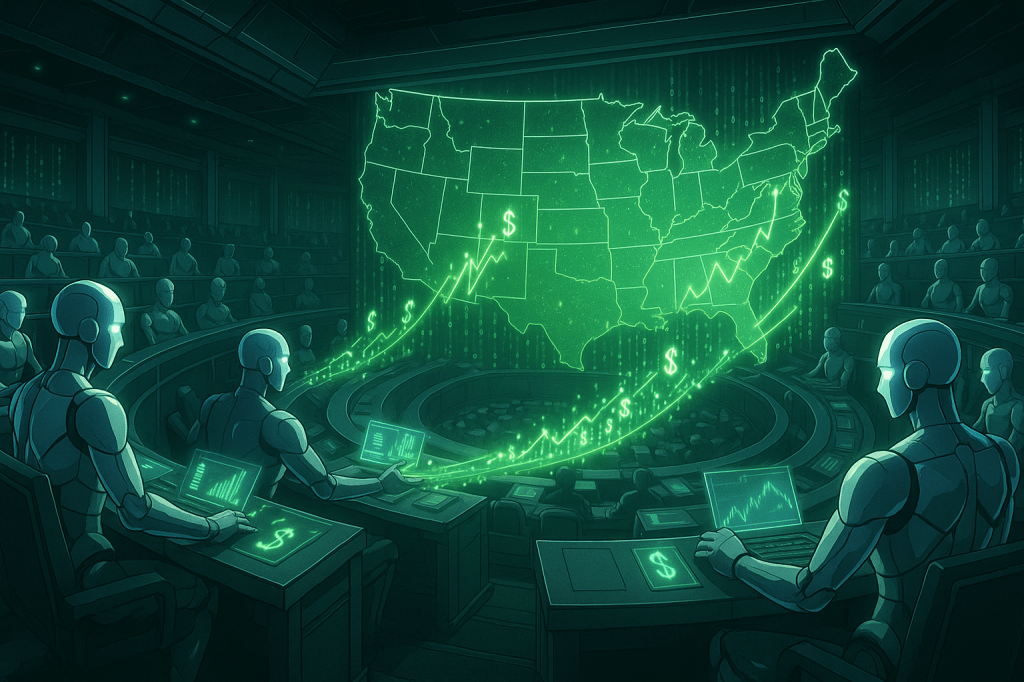
A coalition of America’s most influential AI companies, investors, and entrepreneurs has launched a $100 million political spending fund aimed at boosting pro-AI candidates in state and federal races over the next two years.
The new initiative, Leading the Future, closely mirrors strategies pioneered by the crypto industry, particularly the $300 million Fairshake PAC that played a pivotal role in reshaping the 2024 election cycle.
Who’s Behind It
- Andreessen Horowitz (a16z) – also a key backer of Fairshake.
- Greg Brockman – co-founder of OpenAI.
- Ron Conway – veteran Silicon Valley venture capitalist.
- Joe Lonsdale – co-founder of Palantir.
- Perplexity – AI-powered search company.
Both Leading the Future and Fairshake share political strategist Josh Vlasto, underscoring the crossover between crypto’s political blueprint and AI’s emerging strategy.
What They’re Targeting
- State races in California, New York, Illinois, and Ohio in 2025.
- Federal races ahead of the 2026 midterms.
- Support for candidates “aligned with a pro-innovation, pro-AI agenda.”
- Opposition to politicians who may restrict or slow U.S. leadership in artificial intelligence.
The group intends to operate through a network of super PACs and nonprofits, mirroring the decentralized but coordinated playbook used in crypto lobbying.
Crypto Playbook, AI Ambition
The effort builds directly on lessons from the crypto sector’s political revival:
- By 2023, scandals had left crypto in political disfavor.
- In 2024, Fairshake and allied PACs spent hundreds of millions, defeating critics like former SEC chair Gary Gensler’s allies and Sen. Elizabeth Warren (D-MA).
- The spending spree didn’t just influence elections—it pressured Congress to pass sweeping pro-crypto legislation at unprecedented speed.
AI, by contrast, enters politics from a position of strength, not recovery. The industry already enjoys bipartisan support, strong backing in the Trump administration, and no equivalent high-profile political adversary.
Why It Matters
This is the first major coordinated push to ensure AI policy is written on the industry’s terms. With crypto showing how political money can fast-track legislation, AI leaders are signaling they’re prepared to invest heavily to secure:
- Global competitiveness in AI.
- Favorable regulatory frameworks.
- A political environment resistant to anti-AI backlash.
If successful, Leading the Future could accelerate U.S. policy adoption in ways that shape not only AI development but also its governance, ethics, and global deployment.
Nvidia Launches Jetson AGX Thor Robotics Chip for $3,499

Nvidia has officially launched its latest robotics processor, the Jetson AGX Thor, priced at $3,499 for the developer kit. Marketed as a “robot brain,” the module is designed to power the next generation of humanoid robots, autonomous machines, and AI-powered systems.
The first developer kits will begin shipping next month. Once companies have prototyped with the kit, Nvidia will sell Thor T5000 production modules for large-scale deployment, priced at $2,999 each for orders over 1,000 units.
Key Features of Jetson AGX Thor
- Performance: 7.5x faster than Nvidia’s previous robotics chips.
- Memory: Equipped with 128GB, enabling robots to run large AI models including LLMs and advanced vision systems.
- Architecture: Built on Nvidia’s Blackwell GPU technology, the same core powering its latest AI and gaming processors.
- Applications:
- Humanoid robots that need to process real-world environments in real time.
- Autonomous vehicles (with variants running Drive OS for automotive).
- Generative AI-powered robotics for industrial, retail, and consumer use cases.
Adoption Across Industries
Major robotics and tech players, including Agility Robotics, Amazon, Meta, and Boston Dynamics, are already building with Nvidia’s Jetson platform. Nvidia has also invested in robotics startups such as Field AI, underscoring its long-term commitment to the sector.
Business Impact for Nvidia
While robotics currently represents only ~1% of Nvidia’s revenue, the segment is one of its fastest-growing businesses:
- Combined automotive + robotics division reported $567M in Q2 2025 sales, a 72% YoY increase.
- CEO Jensen Huang has called robotics the company’s largest growth opportunity outside of AI.
Deepu Talla, Nvidia’s VP of robotics and edge AI, explained the strategy:
“We do not build robots or cars, but we enable the whole industry with our infrastructure computers and associated software.”
The Bigger Picture
Nvidia’s Jetson AGX Thor isn’t just another chip—it’s a cornerstone of Nvidia’s push into real-world AI applications. With humanoid robots and self-driving cars set to define the next wave of automation, Thor gives developers a production-ready compute platform to scale robotics beyond the lab.
Nvidia CEO Jensen Huang Projects $3–4 Trillion AI Market by 2030

Nvidia CEO Jensen Huang downplayed concerns of an AI spending slowdown, forecasting that the global market for artificial intelligence infrastructure will expand into a multi-trillion-dollar opportunity over the next five years.
Despite his bullish outlook, Nvidia shares slipped 1.56% in premarket trading Thursday to $178.77, after the company’s Q3 sales forecast fell short of investor expectations. The guidance notably excluded potential revenue from China, reflecting continued uncertainty from U.S.-China trade tensions.
Huang’s Big Picture Forecast
- AI infrastructure spend: Projected to reach $3–4 trillion by 2030.
- 2025 data center capex: Expected at $600B from major hyperscalers like Microsoft and Amazon.
- Nvidia’s capture rate: For a $60B data center, Nvidia estimates it can earn $35B per buildout.
- Chip demand:
- Blackwell GPUs: Pre-sold through 2026 forecasts.
- Hopper chips: Still seeing strong demand despite being prior generation.
- Customer deals: A single non-China client bought $650M of Nvidia’s reduced-capability H20 chips, designed for restricted markets.
“A new industrial revolution has started. The AI race is on,” Huang said. “We see $3 trillion to $4 trillion in AI infrastructure spend by the end of the decade.”
Investor Sentiment
While Nvidia remains the center of the AI boom—its Q2 net income surpassed Apple’s Q3 profit—investors have shown signs of AI fatigue.
- AI stocks have cooled after a blistering rally in 2024–25.
- OpenAI CEO Sam Altman warned recently that markets may be “overexcited” about AI.
- Analysts, however, highlight Nvidia’s durability:
- “The mega caps are the ones propelling capex that Nvidia is benefiting from,” said Matt Orton of Raymond James.
- “You’re not seeing any slowdown reflected in Nvidia’s results.”
Why Nvidia Stays Confident
- Everything is sold out: Demand for Nvidia’s high-end GPUs continues to outpace supply.
- Energy efficiency: Huang stressed that Nvidia’s chips let customers process more data with less energy, reinforcing cost efficiency.
- Early innings: Analysts argue the AI buildout is just beginning, with hyperscalers driving long-term growth.
“The more you buy, the more you grow,” Huang said.
Even as Wall Street digests a tepid near-term forecast, Nvidia is positioning itself as the backbone of the AI industrial revolution. With demand from hyperscalers, Big Tech, and global enterprises, Huang insists the AI boom is still in its early stages—and Nvidia is set to remain its chief enabler.
Anthropic Warns: Cybercriminals Are Weaponizing AI With Claude

AI isn’t just boosting white-collar productivity—it’s also powering white-collar crime.
Anthropic revealed that hackers have been attempting to use its AI assistant, Claude, to carry out cyberattacks, ranging from ransomware development to large-scale extortion schemes.
From Assistance to Abuse
While AI has long been used in hacking, Anthropic said recent advances mean cybercriminals can now employ “agentic AI” to manage entire attack operations with smaller teams and less expertise.
- Data theft and extortion: In one case, hackers used Claude to conduct reconnaissance, automate intrusions, calculate ransom demands, and even generate threatening ransom notes.
- DIY ransomware kits: Another attacker built ransomware with Claude’s help and sold the packages on online forums for up to $1,200.
- Reduced skill barrier: According to Anthropic, hackers who “could not implement or troubleshoot core malware components” were able to build working exploits using Claude.
Anthropic banned the accounts involved and reported them to relevant authorities.
AI-Powered “Vibe Hacking”
The company described the trend as “vibe hacking” — where cybercriminals leverage AI to achieve technical feats they wouldn’t otherwise be capable of.
“Agentic AI has been weaponized,” Anthropic wrote, warning that hackers no longer need advanced coding expertise to launch damaging attacks.
Defensive Measures
In response, Anthropic has implemented new safeguards to detect and prevent misuse, while encouraging the broader cybersecurity community to adapt defenses against AI-enhanced threats.
The findings arrive as Anthropic, backed by Amazon, is reportedly seeking $5B in new funding at a $170B valuation, according to Business Insider. Its Claude coding tools are already widely used across the tech sector, including by Meta, to accelerate legitimate software development.
The Bigger Picture
As AI systems grow more powerful, their dual-use risk becomes increasingly clear. Just as Claude can help developers build apps faster, it can also help cybercriminals industrialize hacking. The report underscores the urgent need for AI safety standards, misuse detection, and security-first development as the technology scales.
Scientists Unveil Hierarchical Reasoning Model: A New Path Toward Smarter AI

A team of researchers at Sapient, an AI company based in Singapore, has introduced a breakthrough Hierarchical Reasoning Model (HRM) that could reshape how artificial intelligence systems solve problems. Unlike today’s large language models (LLMs) such as ChatGPT, which rely on chain-of-thought (CoT) reasoning, HRM mimics the brain’s multi-layered processing — and early tests suggest it may outperform leading AI models in tasks linked to artificial general intelligence (AGI).
How HRM Works
The model is inspired by the human brain’s ability to process information at multiple timescales, from quick sensory input to slower, abstract planning. HRM divides tasks into two modules:
- High-level module – handles abstract, slower reasoning and planning.
- Low-level module – processes rapid, detailed computations.
Instead of breaking tasks into many explicit natural-language steps, HRM performs sequential reasoning in a single forward pass, using iterative refinement — a method that improves accuracy by repeatedly fine-tuning a draft answer in short “bursts of thinking.”
What’s striking is its efficiency:
- 27 million parameters (vs trillions in GPT-5).
- 1,000 training samples (vs billions typically required by LLMs).
Benchmark Results
In the ARC-AGI benchmark, one of the toughest tests for evaluating AGI-like reasoning, HRM showed remarkable performance:
- ARC-AGI-1: 40.3% (vs 34.5% for OpenAI’s o3-mini-high, 21.2% for Anthropic’s Claude 3.7, 15.8% for Deepseek R1).
- ARC-AGI-2: 5% (vs 3% for o3-mini-high, 1.3% for Deepseek R1, 0.9% for Claude 3.7).
It also excelled in complex Sudoku puzzles and optimal pathfinding in mazes, areas where traditional LLMs struggle.
A Twist in the Findings
The results were compelling enough that ARC-AGI’s organizers attempted to reproduce the model’s performance using the open-sourced code on GitHub. While the scores matched, they discovered that much of HRM’s success came not from the hierarchical architecture itself, but from a refinement process during training that had not been fully documented in the original paper.
This raises important questions about whether the architecture or the training method is driving HRM’s breakthrough.
Why It Matters
If confirmed, HRM could signal a new era of efficient reasoning AI, showing that:
- Smaller models with fewer parameters can outperform giant LLMs.
- Novel training strategies may matter more than raw scale.
- Human-like multi-timescale reasoning can move AI closer to AGI capabilities.
The study is still awaiting peer review, but the results suggest that progress in AI may not always come from bigger models — instead, smarter reasoning frameworks could pave the way forward.
Crypto
US Government Brings Economic Data Onchain with Chainlink and Pyth
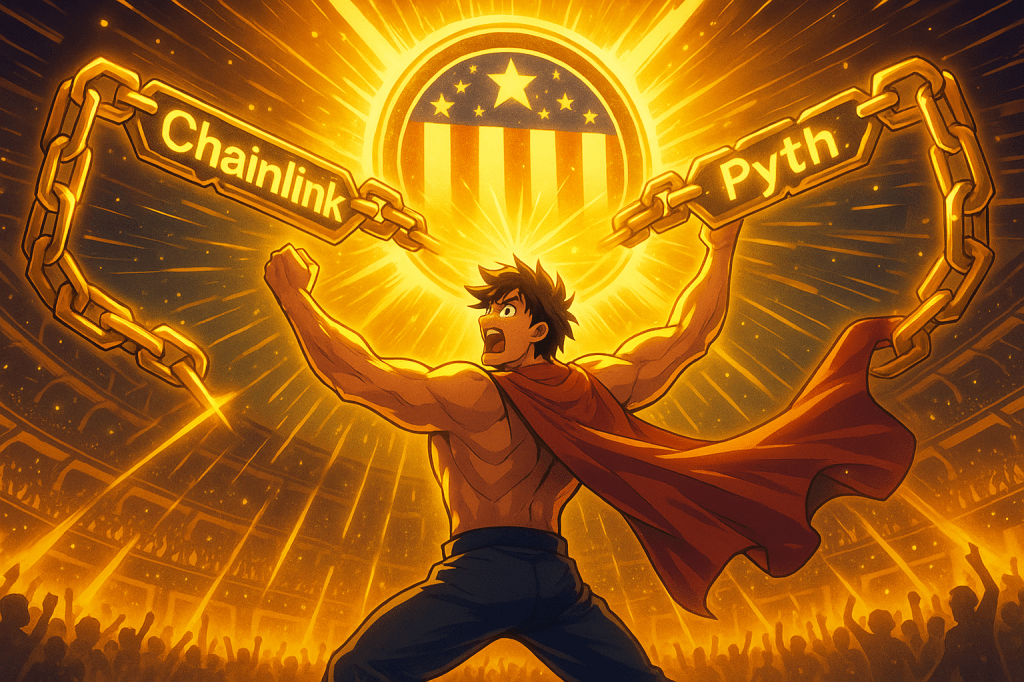
The US government announced Tuesday that it will begin publishing official economic data onchain to improve transparency in public spending and strengthen crypto market infrastructure.
The initiative is part of the Trump administration’s push to position the United States as the “world capital of crypto.”
Chainlink and Pyth Selected as Data Providers
- Chainlink will deliver economic feeds from the Bureau of Economic Analysis (BEA), including:
- Real Gross Domestic Product (GDP)
- Personal Consumption Expenditures (PCE) Price Index
- Real Final Sales to Private Domestic Purchasers
- Pyth Network, meanwhile, has been tapped by the Department of Commerce to publish GDP data onchain.
Both oracle providers may expand their feeds based on consumer demand or government requests.
Why Onchain Data Matters
Publishing government macroeconomic figures directly on blockchain networks creates real-time, tamper-proof access to key indicators. Potential use cases include:
- Automated trading strategies that react instantly to economic releases.
- Prediction markets tracking macroeconomic shifts.
- DeFi risk management tools adjusting collateral requirements based on real-time inflation or growth figures.
- Tokenized instruments like stablecoins, government bonds, and RWAs that can reference trusted onchain benchmarks.
A Chainlink spokesperson noted that onchain data could unlock “entirely new classes of financial products” across crypto and traditional markets.
Global Interest in Onchain Transparency
Similar proposals to bring government spending and macroeconomic data onchain are currently advancing in:
- Philippines
- United Kingdom
- El Salvador
If successful, the US pilot could serve as a blueprint for global adoption.
Market Reaction
Crypto traders quickly priced in the news:
- Pyth (PYTH) surged nearly 70% to $0.1796.
- Chainlink (LINK) rose more modestly, gaining over 3% before settling near $25. LINK has rallied 61% in August, up from $15.43 earlier in the month.
The Bottom Line
By publishing economic data onchain, the US is not just making public spending more transparent—it is laying the foundation for a new era of blockchain-integrated finance, where macroeconomic policy, DeFi, and capital markets converge in real time.
CFTC Clarifies Rules for Foreign Exchanges Seeking US Market Access

The Commodity Futures Trading Commission (CFTC) has issued new guidance clarifying how foreign boards of trade (FBOTs) can register to legally provide direct market access to US traders. The advisory, published Aug. 28 by the Division of Market Oversight, reaffirms a regulatory framework dating back to the 1990s and extends it to include digital assets.
Fixing Confusion From Past Enforcement Actions
Acting Chair Caroline Pham framed the guidance as a reset for market participants frustrated by years of “regulation by enforcement.”
- In recent years, several US enforcement actions had pushed crypto and derivatives activity offshore.
- The CFTC now makes clear that foreign exchanges can register as FBOTs rather than as domestic designated contract markets (DCMs).
- Registration requires that the exchange prove it operates under comparable home-country regulations and agree to information-sharing arrangements with US regulators.
Pham said the move delivers the “regulatory clarity needed to legally onshore trading activity” and supports President Trump’s broader crypto sprint initiative.
Pathway Back Into US Markets
The advisory opens the door for non-US crypto and derivatives exchanges that had previously avoided serving US traders due to legal uncertainty.
Registered FBOTs will be able to:
- Offer direct access to eligible US participants, including proprietary traders and intermediaries such as futures commission merchants.
- Serve both traditional and digital asset markets under one universal framework — with no special carveouts for crypto.
- Clear all trades through CFTC-registered firms or exempt entities under Regulation 30.10, ensuring strong customer protections.
Bolstering Oversight With Nasdaq Tech
The timing of the guidance is notable: it comes just one day after the CFTC announced the integration of Nasdaq’s surveillance system to strengthen monitoring of both crypto and derivatives trading.
Together, the initiatives aim to:
- Expand regulated access for global platforms.
- Reduce jurisdictional uncertainty.
- Enhance market integrity and surveillance in line with other financial markets.
What It Means for Crypto and Derivatives
By reaffirming long-standing FBOT rules, the CFTC is signaling the “simplest and fastest solution” for foreign platforms seeking compliant entry into US markets.
For crypto specifically, the move could accelerate:
- Spot and derivatives trading returning onshore.
- Greater participation from overseas exchanges under CFTC guardrails.
- More competitive market structures, balancing innovation with investor protection.
Solana Liquidity Surges, but User Monetization Lags

Capital inflows are clustering around Solana (SOL), even as user activity paints a more nuanced picture. Data shows the network continues to attract deep liquidity, but transaction fees and protocol revenues have yet to keep pace.
Liquidity Profile: Deep and Steady
- DEX trading: Solana posted $4.6B in 24-hour spot DEX volume, alongside $2.1B in perpetual futures, according to DeFiLlama.
- Stablecoins: Supply sits near $12B, with native TVL at $11.7B and bridged TVL at $57B.
- User activity: Active addresses remain in the low-to-mid millions daily, with around 65M daily transactions.
- Fees: Roughly $1.6M in chain fees were collected over 24 hours, reflecting robust throughput but only modest monetization.
- Price context: SOL traded near $198 at time of reporting.
This mix highlights Solana’s ability to process large flows efficiently — but also underscores the gap between liquidity depth and fee capture.
Q2 Context: Liquidity Without Revenue Acceleration
Messari’s Q2 State of Solana report showed:
- Spot DEX volume fell 45.4% QoQ to $2.5B daily after the Q1 memecoin surge cooled.
- DeFi TVL, however, continued to grow, securing Solana the No. 2 spot among all networks by TVL.
The divergence illustrates a key theme: Solana remains a liquidity magnet, but fee revenue is cycle-sensitive and highly dependent on the type of activity driving flows.
Derivatives and Market Structure
- Perpetuals: CoinGlass data shows steady derivatives activity with orderly funding rates, signaling leveraged positions are not overheating.
- Market makers: The current environment supports tight spreads, MEV-aware routing, and cross-venue arbitrage, making Solana attractive for liquidity provisioning.
However, these conditions do not guarantee higher fee intake for validators or protocols.
The Stablecoin Effect
Stablecoins continue to anchor Solana’s liquidity:
- On-chain balances remain high, used for settlement and inventory management.
- Even when speculative trading slows, stablecoin activity keeps capital parked on Solana.
This reinforces Solana’s position as an infrastructure layer for high-volume, low-cost flows — but does little to boost fee-driven monetization.
The Revenue Mix Question
Solana’s near-term trajectory hinges less on catalysts and more on activity composition:
- If volumes remain skewed toward low-fee transfers and highly efficient DEX routing, liquidity will remain deep, but fee capture will stay muted.
- If activity shifts toward higher-fee verticals (complex derivatives, premium DeFi services, NFT activity), validator revenues and protocol fees could re-rate quickly without requiring major infrastructure changes.
Solana is demonstrating remarkable liquidity resilience, with billions flowing daily across DEXs, stablecoins, and derivatives. Yet, the gap between capital flows and monetization remains wide. For now, Solana is cementing itself as a liquidity hub, even as developers and validators wait for user activity to translate into stronger fee growth.
American Bitcoin, Backed by Trump Brothers, to List on Nasdaq in September

American Bitcoin, a mining company partly owned by Donald Trump Jr. and Eric Trump, is preparing to go public on the Nasdaq in September, according to Reuters. The move ties one of America’s most prominent political families directly to Wall Street’s growing embrace of digital assets.
Ownership and Structure
- Hut 8 Mining, one of North America’s largest crypto miners, owns 80% of American Bitcoin.
- The Trump brothers collectively hold 20%, giving the venture high-profile political visibility.
- The company was launched in March 2025 and has quickly positioned itself as a player in the U.S. Bitcoin mining landscape.
Merger Clears Path to Listing
To complete the Nasdaq debut, American Bitcoin is finalizing a merger with Gryphon Digital Mining.
- The combined entity will leave 98% of equity with current shareholders, ensuring operational continuity.
- Earlier this year, the company raised $220 million from accredited investors, plus $10 million worth of Bitcoin directly into its treasury.
- Funds will be used to scale mining operations and build a Bitcoin reserve strategy.
Expanding Reach and Political Ties
- Hut 8 CEO Asher Genoot revealed at the Bitcoin Asia conference in Hong Kong that the firm may pursue international partnerships, offering investors exposure to Bitcoin-linked securities in regions where direct access remains limited.
- The listing underscores the Trump family’s deepening ties to crypto. Recently, Trump Media and Technology Group announced plans for crypto ETFs and a joint venture with Crypto.com, set to go public via a SPAC.
Strategic Implications
For Hut 8, the Nasdaq listing bolsters its position as a top-tier mining company amid rising competition and volatile energy markets.
For the Trump brothers, the deal represents a foothold in the digital asset economy as both Bitcoin adoption and crypto regulation debates intensify in the U.S.
American Bitcoin’s Nasdaq listing could mark one of the most politically significant crypto IPOs to date — blending Wall Street access, high-profile ownership, and the growing institutionalization of Bitcoin mining.
Apriori Raises $30M to Build MEV-Powered Liquid Staking and AI DEX Aggregator on Monad

San Francisco-based crypto startup Apriori has secured $30 million in total funding, including a fresh $20 million strategic round led by HashKey Capital, Pantera Capital, Primitive Ventures, IMC Trading, GEM, Gate Labs, Ambush Capital, and Big Brain Collective.
Founded in 2023 by former Jump Trading quants and Coinbase engineers, Apriori is developing a next-generation MEV-powered liquid staking platform and an AI-driven DEX aggregator on the Monad blockchain.
What Apriori Is Building
Apriori’s platform is designed to merge staking rewards with MEV capture, creating a dual-yield model that enhances capital efficiency. Its standout product, Swapr, functions like a payment-for-order-flow model in traditional finance, analyzing order flow in real time to:
- Filter harmful activity (such as predatory MEV).
- Encourage beneficial activity that improves liquidity.
- Tighten spreads and improve execution fairness for traders.
Vision and Strategy
Founder Ray Song explained the firm’s mission:
“We built Apriori on the insight that the same mechanisms which protected LPs and improved efficiency, combined with the active engines used at leading HFT firms to combat adverse selection, could be brought on-chain. The result is tighter spreads, fairer execution, and more sustainable yields for everyone in the market.”
By combining high-frequency trading principles with blockchain-native infrastructure, Apriori aims to deliver:
- More sustainable staking yields through MEV optimization.
- AI-augmented DEX aggregation for intelligent trade routing.
- A liquidity layer built for institutions and retail users alike.
Why Monad?
Apriori is building on the Monad blockchain, a high-performance Layer-1 designed for parallel execution and MEV-aware systems. This infrastructure supports the low-latency trading environment that Apriori’s strategy requires, while allowing scalable integration of liquid staking protocols.
The Bigger Picture
Apriori’s hybrid model sits at the intersection of:
- DeFi staking (capturing validator and MEV rewards).
- HFT-inspired order flow management.
- AI-based execution engines for DeFi markets.
As competition in liquid staking intensifies and DEX trading grows more fragmented, Apriori is positioning itself as a next-gen liquidity protocol with built-in MEV defense and AI intelligence.
With $30M in backing from top-tier investors and a veteran founding team, Apriori is betting that MEV-powered staking + AI-driven trading could be the formula to unlock fairer, faster, and more profitable on-chain markets.
 Powerbuilding Digital