
Fitness / Motivation / Technology & A.I / Crypto

Welcome to Edition 120 of the Powerbuilding Digital Newsletter—your weekly mix of strength, mindset, technology, and innovation. Whether you’ve been reading since the early days or you’re just joining in, this space is all about progress—built through discipline, knowledge, and adaptability.
Here’s what we’ve got for you this week:
- Fitness Info & Ideas
Smart training methods and performance insights designed to help you move better, lift stronger, and recover faster—because progress thrives on precision. - Motivation & Wellbeing
The strongest foundation starts within. We’re sharing mindset strategies and wellness tools to help you stay balanced, focused, and resilient through every season. - Technology & AI Trends
From AI breakthroughs to emerging tools, we explore the innovations shaping creativity, productivity, and the next wave of digital transformation. - Crypto & Digital Asset Trends
Beyond speculation—discover new blockchain use cases, platforms, and Web3 innovations that are redefining how value moves in the digital world.
Edition 120 is about mastery—refining what works, cutting what doesn’t, and staying committed to the path forward. Let’s lock in and keep building, one week at a time.
Fitness
The Forgotten Factor in Strength Gains: Stability Training for Lifters
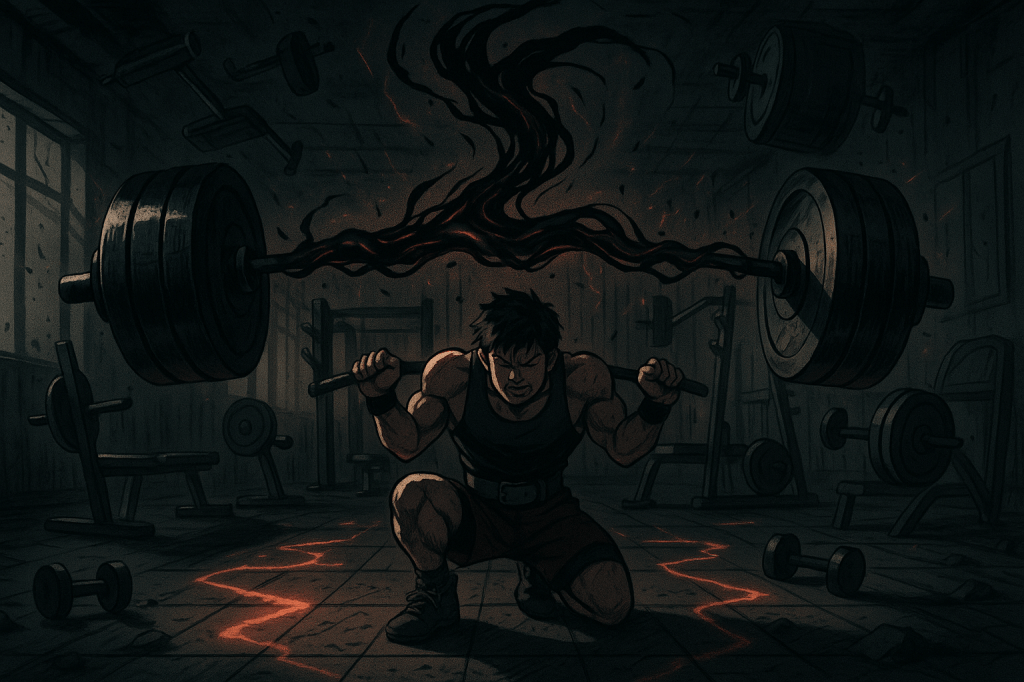
You can’t build strength on a shaky foundation.
Every time you unrack a heavy squat or press a loaded barbell, your nervous system asks one question: “Can I stabilize this safely?”
If the answer is no, it will limit your output—no matter how big your muscles are. That’s why the most overlooked element of true strength isn’t just more weight, more volume, or more intensity. It’s stability.
The Hidden Limiter in Your Strength Progress
Most lifters chase bigger numbers but hit invisible walls. The issue isn’t always programming—it’s that their stabilizing systems can’t handle the load.
Your body has built-in safety mechanisms that restrict force when it senses instability. That means no matter how hard you try, your brain won’t let your muscles fire at 100% if the system can’t stabilize the movement.
What Stability Really Means (and Why Most Lifters Ignore It)
Stability isn’t balance boards or circus tricks—it’s your body’s ability to control force under tension.
It’s the coordination between your muscles, joints, and nervous system that allows you to maintain posture, transfer power, and resist unwanted motion.
A stable athlete doesn’t wobble under pressure—they channel energy efficiently.
The Science of Strength and Stability
Research from the Journal of Strength & Conditioning Research shows that improved neuromuscular stability enhances both force output and lifting efficiency.
When the stabilizers (core, hips, shoulders, grip) fire in sync with the prime movers, you get cleaner reps, faster bar speed, and better joint health.
Stability isn’t an accessory—it’s the interface between strength and control.
Stability vs. Strength: Why You Can’t Have One Without the Other
Strength is the ability to produce force.
Stability is the ability to control that force.
Without stability, force leaks through compensation, misalignment, and hesitation.
The result: slower progress, chronic tightness, and preventable injuries.
The Neural Connection: How the Brain Limits Force Output
Your brain protects you from instability by throttling your strength.
When it detects poor joint control or wobble, it automatically reduces neural drive to prevent injury.
That’s why improving your stability can immediately make you stronger—because you’re teaching your nervous system that it’s safe to go all out.
This is the essence of neural efficiency, the invisible skill elite lifters master.
The Core: Your True Power Transfer System
Your core isn’t just abs—it’s your entire lumbopelvic complex:
- Transverse abdominis
- Multifidus
- Obliques
- Glutes
- Diaphragm
Together, they create the intra-abdominal pressure that stabilizes your spine and allows force to transfer from lower to upper body.
When your core leaks, every lift suffers.
How Weak Stability Sabotages Big Lifts
Squats
Weak core or hip stability causes knees to cave and spine to fold, shifting tension from prime movers to joints.
Bench Press
Lack of scapular control or leg drive kills bar path consistency and pressing power.
Deadlifts
Unstable hips or grip lead to rounding and energy leaks at lockout.
Fix the stabilizers, and strength numbers jump without changing programming.
The Stabilizer Hierarchy — From Ground to Bar
True stability starts from the ground up:
- Feet: Foundation of proprioception and balance.
- Ankles & Knees: Mobility meets control.
- Hips & Core: Power transfer and anti-rotation.
- Shoulders & Scapulae: Upper-body anchor.
- Grip: The neural connection between brain and bar.
Weakness anywhere breaks the chain.
Step 1: Train the Core for Function, Not Just Aesthetics
Forget crunches. Functional core work trains your ability to resist unwanted motion, not just flex.
Examples:
- Plank variations (anti-extension)
- Pallof presses (anti-rotation)
- Bird dogs and dead bugs (core control under movement)
- Weighted carries (total-body stabilization)
These movements teach your core to brace instinctively under load.
Step 2: Build Joint Integrity Through Controlled Tension
Joint stability comes from both muscular co-contraction and tendon strength.
Add controlled tempo lifts—like 3-second eccentrics and paused reps—to teach your body how to maintain tightness throughout the movement.
Slow reps build awareness, control, and connective tissue resilience.
Step 3: Use Unilateral Training to Expose Hidden Imbalances
Single-leg and single-arm movements reveal asymmetries masked by bilateral lifts.
Try:
- Bulgarian split squats
- Single-leg RDLs
- Single-arm dumbbell bench or row
Unilateral work improves balance, coordination, and core activation—all critical for total stability.
Step 4: Strengthen the Small Muscles That Support the Big Moves
Your stabilizers are often small, deep, and under-trained.
Target areas:
- Rotator cuff: External rotations, face pulls
- Scapular stabilizers: Prone YTWs, band pull-aparts
- Hip stabilizers: Clamshells, band walks, cable abductions
- Grip: Fat grips, plate pinches, farmer carries
Train them 2–3x per week with moderate resistance and high control.
Step 5: Add Dynamic Stability Work for Real-World Strength
Stability isn’t static—it’s reactive.
Train it under changing conditions:
- Sled pushes/pulls: Build coordination under tension.
- Landmine presses: Core engagement with directional control.
- Kettlebell work: Offset loading challenges stability dynamically.
- Band-resisted lifts: Reinforce bracing against external forces.
These methods train your nervous system to stabilize under unpredictable stress—just like real life and heavy lifts.
Tools and Methods for Building Stability
- Kettlebells – unmatched for joint stabilization and offset loading.
- Bands – teach reactive tension and anti-rotation control.
- Cables – allow consistent resistance through full ranges of motion.
- Tempo training – reinforces control through every phase.
- Weighted carries – challenge your entire kinetic chain.
Common Mistakes Lifters Make
- Mistaking instability for “core work” (balance toys ≠ strength)
- Ignoring mobility restrictions that cause instability
- Over-fatiguing stabilizers before compound lifts
- Neglecting recovery from CNS and tendon stress
Remember: stability training isn’t fluff—it’s load insurance.
Integrating Stability Into Your Powerbuilding Routine
Here’s how to add it without overhauling your program:
- Warm-Up: 1–2 core and activation drills (Pallof press, band walks)
- Main Lift: Prioritize control and tightness over ego
- Accessory Work: Include 1–2 unilateral or anti-rotation movements
- Finishers: Weighted carries or tempo holds
Over time, your lifts feel smoother, safer, and stronger.
Control Equals Power
Strength without stability is chaos.
The lifter who controls the bar—through every inch of movement—will always outperform the one who just moves it.
True mastery isn’t about how much you lift; it’s how efficiently you do it.
Build stability, and you don’t just get stronger—you unlock your body’s full potential for precision, power, and longevity.
Because in the end, strength isn’t just force—it’s control under pressure.
Sources
- Behm & Anderson – Journal of Strength and Conditioning Research, “The Role of Core Stability in Strength and Performance”
- McGill, S. – Low Back Disorders: Evidence-Based Prevention and Rehabilitation
- NSCA – Essentials of Strength Training and Conditioning
- Schoenfeld, B.J. – Science and Development of Muscle Hypertrophy
Motivation
Rebuilding from Rock Bottom

Rock bottom is the moment life strips away your illusions — the comfort, the control, the identity you once clung to.
It’s not a punishment. It’s a reckoning.
The truth? No one escapes it. Everyone who’s ever built something real has been broken first.
The difference between staying down and rising again isn’t luck or talent — it’s how you rebuild.
The Truth About Rock Bottom
Rock bottom is clarity in its most brutal form.
It reveals what truly matters by taking away everything that doesn’t.
When you’re there, there’s no pretending, no faking strength. You’re forced to face yourself without the noise. That’s where transformation begins — not in comfort, but in confrontation.
Why Collapse Can Be the Catalyst for Change
Every system—physical, emotional, or spiritual—eventually breaks when it’s built on weakness.
The collapse isn’t failure; it’s feedback.
You’re being forced to rebuild on truth, not illusion. Pain isn’t the enemy—it’s the signal that your foundation needs reinforcement.
Step 1: Accept the Fall Without Self-Pity
Acceptance doesn’t mean defeat. It means ownership.
Say it plainly: “I fell. I failed. I lost.” Then add: “But I’m not done.”
The ego wants to deny or dramatize pain. Strength accepts it, studies it, and uses it.
Step 2: Detach From What Died With the Old You
Not everything you lose was meant to stay.
Let go of the identities, relationships, or dreams that were built for who you used to be.
The version of you that’s rising now requires different habits, environments, and standards. Grieve the old—but don’t resurrect it.
Step 3: Reconnect With Reality Through Discipline
When everything falls apart, discipline becomes your rope out of the pit.
You may not control emotion or outcome, but you can control action:
- Wake up early.
- Train your body.
- Eat clean.
- Keep your word.
Small acts of control rebuild inner order. Each one tells your nervous system: “We’re not victims anymore.”
Step 4: Rebuild Structure Before Motivation
Don’t wait to “feel ready.” Structure comes first, motivation follows.
Start with the basics:
- Sleep schedule
- Nutrition
- Daily tasks
- Movement
Structure gives your days shape when purpose feels lost. Without it, emotions run the show—and emotions are unreliable architects.
Step 5: Redefine What “Winning” Means
At rock bottom, your definition of success has to change.
Winning is no longer about status or speed. It’s about integrity—keeping promises to yourself, showing up when it hurts, choosing growth over comfort.
Rebuilding isn’t about reclaiming your old life. It’s about building one that can’t be destroyed the same way again.
The Role of Pain in Spiritual and Psychological Growth
Pain forces introspection. It burns away the parts of you that were performative or weak.
It teaches humility, compassion, and perspective—if you’re willing to listen.
As Carl Jung wrote, “No tree can grow to heaven unless its roots reach down to hell.”
The descent is what gives depth to your strength.
The Difference Between Healing and Escaping
Healing means confronting the wound. Escaping means distracting yourself from it.
You can’t rebuild while avoiding pain—it will resurface in new forms.
Face the discomfort head-on. Reflect, write, move, talk, pray—but don’t numb. True healing is active, not passive.
The Power of Small Daily Victories
When life’s overwhelming, shrink your world down to what you can control.
- One workout.
- One clean meal.
- One honest conversation.
- One promise kept.
Momentum builds from consistency, not perfection.
The comeback is always microscopic before it’s monumental.
Rebuilding Confidence From the Inside Out
Confidence isn’t built by pretending to be strong—it’s built by surviving what should’ve broken you.
Every day you endure, you reinforce belief in yourself.
The more you act in alignment with discipline, the more your mind starts to trust you again.
The Mental Framework: Stoicism Meets Resilience
Adopt the Stoic view: You can’t control what happens, only how you respond.
When everything external collapses, your internal discipline becomes your fortress.
- Control your breath when chaos rises.
- Accept reality without distortion.
- Respond from principle, not emotion.
Resilience isn’t resistance—it’s the art of remaining centered when the world tilts.
Why You Must Forgive Yourself to Move Forward
You can’t rebuild from guilt.
The past can inform you, but it cannot define you.
Forgiveness isn’t saying it was okay—it’s saying, “It’s done.”
You’re not the same person who made those mistakes. Don’t carry their shame into your next chapter.
How to Rebuild Physically, Mentally, and Spiritually
- Physically: Move daily. Strength training grounds the nervous system and rebuilds confidence.
- Mentally: Journal, reflect, and track habits. Awareness turns pain into data.
- Spiritually: Create stillness—through prayer, meditation, or breathwork—to reconnect with your higher purpose.
These three pillars form the new foundation for your rebuild.
The Long Game of Reinvention
Rebuilding isn’t linear. You’ll have days that feel like collapse all over again.
But each time you rise faster, cleaner, wiser.
The key isn’t avoiding the fall—it’s mastering the rebuild.
Every comeback writes a new blueprint for who you are and what you can endure.
Common Mistakes People Make When Rebuilding
- Waiting for perfect conditions.
- Seeking shortcuts or distractions.
- Romanticizing rock bottom instead of learning from it.
- Refusing to let go of old identities.
- Forgetting that rebuilding is a process, not an event.
The climb is hard—but the clarity is worth it.
The Foundation Is Stronger Than Before
Rock bottom isn’t where your story ends—it’s where it starts being real.
When you rebuild from nothing, you stop fearing loss.
You’ve already faced it—and you’re still standing.
Your new life won’t be built on illusions, approval, or comfort—it’ll be built on truth, discipline, and self-respect.
And that’s a foundation no collapse can ever destroy again.
Because the strongest version of you isn’t the one that never fell—it’s the one who learned how to rise every single time.
Sources
- Viktor Frankl – Man’s Search for Meaning
- Marcus Aurelius – Meditations
- Epictetus – Discourses on the Stoic Way of Life
- Jordan Peterson – 12 Rules for Life
- Journal of Positive Psychology – Post-Adversity Growth Studies
Technology & A.I
Agentic AI: Not Just Smarter Tools—The Rise of Self-Improving Digital Teammates

We’ve entered a new phase in the evolution of artificial intelligence—agentic AI. These systems don’t just automate tasks; they plan, adapt, and learn on their own. And they’re not coming soon—they’re already here.
According to new research from MIT Sloan Management Review and BCG, 35% of organizations are actively using agentic AI, with another 44% planning to follow suit. That means nearly 4 out of 5 companies will soon be working alongside AI that acts more like a colleague than a tool.
But while the technology is racing ahead, strategy isn’t keeping up: 47% of organizations admit they don’t have a plan for how to manage or deploy agentic AI.
Why This Is a Paradigm Shift
Agentic AI represents more than efficiency gains—it’s a new class of intelligent systems that evolve over time. Like humans, these agents get smarter the more they work, enabling companies to scale insight, adapt on the fly, and innovate at the edges.
But here’s the challenge: you can’t manage these systems like traditional software, and treating them like human workers doesn’t fit either. This dual identity—part tool, part teammate—creates four critical tensions for leaders:
- Scalability vs. Adaptability
- Cost-cutting vs. Job Creation
- Supervision vs. Autonomy
- Process Optimization vs. Process Reinvention
Most companies aren’t built to handle these paradoxes. But the few that are? They’re shaping the future of work right now.
The Playbook: 5 Steps to Win with Agentic AI
- Design Agentic-First Workflows
Don’t just bolt AI onto old systems. Rethink your workflows from the ground up. Combine AI’s speed with human judgment to create hybrid processes that shift seamlessly between optimization and exploration. - Build Adaptive Governance
These agents live in the gray area—autonomous, but not fully independent. That means you need dynamic guardrails, flexible decision-making, and system-level oversight that evolves with the tech. - Redefine Human Roles
With AI handling more coordination, human managers will need to become orchestrators. Expect flatter org charts, fewer middle layers, and new dual-career paths: AI-augmented specialists and generalist team orchestrators. - Train the Humans—and the AI
These systems aren’t “set it and forget it.” Agentic AI needs feedback loops, retraining, performance reviews, and continuous oversight. And your people need new skills—not just to use AI, but to direct it, critique it, and collaborate with it. - Invest for Exponential Value
Agentic AI isn’t just another IT upgrade. It’s a living system. Smart companies invest not just in deployment, but in long-term evolution—with flexible budgets that support ongoing learning, retraining, and infrastructure adaptation.
What’s at Stake? Everything.
The organizations that thrive in the next decade will be those who understand that agentic AI isn’t here to replace people, but to amplify them.
Those that treat it merely as a cost-saving tool will miss the real value: a scalable system of intelligence that fuels innovation, adaptability, and long-term growth.
The future isn’t tool vs. teammate. It’s both. And the companies that learn to manage that duality will own the next era of business.
AMD’s Redstone Drops December 10—Can It Finally Close the Gap with Nvidia?
After months of teasing, AMD has finally confirmed the launch date for its long-awaited FSR 4 “Redstone” AI upscaling tech: December 10. And yes, it could be the most significant leap forward for Radeon graphics since the launch of RDNA 3.
Redstone is AMD’s next-gen answer to Nvidia’s DLSS—this time with more AI muscle, smarter rendering features, and support for the latest hardware. But let’s break it down.
What Is FSR Redstone, Really?
Think of Redstone as AMD’s AI-powered upscaling engine, designed to boost framerates while preserving image quality—especially at higher resolutions like 1440p and 4K. But unlike earlier FSR iterations, Redstone uses machine learning much more aggressively—a clear pivot toward the territory Nvidia has long dominated.
Key to this leap is AMD’s new RDNA 4 GPUs, such as the Radeon RX 9070 XT, which feature advanced matrix math capabilities needed for neural rendering. But here’s where it gets interesting…
Redstone May Also Work on Nvidia GPUs
Yep. According to AMD’s own Chris Hall, the tech is being developed using their ML2CODE system from the ROCm (Radeon Open Compute) project, allowing the core rendering logic to be translated into compute shader code. That means—even with its AI-first architecture—Redstone may technically run on non-AMD GPUs.
Whether that becomes standard practice or just an interesting footnote remains to be seen.
The Feature Set: Ray Tracing, Neural Learning, and More
AMD isn’t just copying features this time—it’s launching some big ones of its own:
- Ray Regeneration: AMD’s long-overdue answer to Nvidia’s Ray Reconstruction tech. It enhances ray-traced effects using AI, and it’s already live in Call of Duty: Black Ops 7.
- AI Frame Generation: Long lagging behind Nvidia in this area, AMD now includes frame gen in FSR 4 and is expected to further upgrade it with Redstone.
- Neural Radiance Caching: A standout feature that speeds up path tracing by learning how light bounces across a scene and caching it dynamically—yes, it’s as ambitious as it sounds.
Is Redstone Actually FSR 5?
AMD hasn’t officially said if Redstone will be branded as FSR 4.1, FSR 5, or some AI-powered naming flex like “FSR 4.ai Max.” What’s clear is that this is not a minor patch—it’s a fundamental shift in AMD’s approach to real-time rendering.
Will it finally catch Nvidia’s DLSS 3.5? Outperform it? Or just narrow the gap enough to shake up the GPU wars again?
We’ll find out December 10.
The Rise of the Transneuron: A New Frontier in Brain-Like Machines
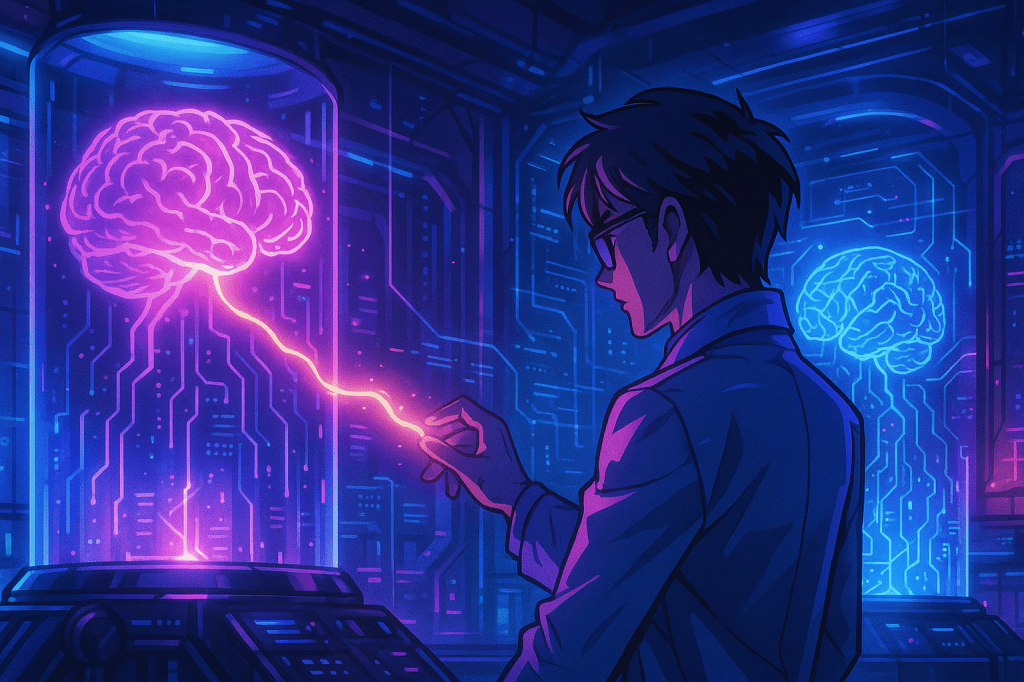
What if a single synthetic neuron could see, plan, and move like a living brain? That future just came closer.
In a breakthrough that blurs the line between biology and hardware, scientists at Loughborough University, in collaboration with the Salk Institute and USC, have developed a “transneuron”—a single artificial neuron capable of mimicking the activity of multiple brain regions, from visual to motor to pre-motor functions.
Unlike traditional artificial neurons, which perform one task at a time, this new device switches roles dynamically, adapting to environmental input and electrical stimuli in real-time—just like biological neurons do.
One Neuron, Many Minds
At the heart of this innovation is a memristor, a nanoscale component where silver atoms form and break electrical bridges, creating pulses that mirror the way neurons fire in the brain.
By tuning temperature, voltage, and resistance, the transneuron seamlessly shifts between behaviors without needing any software updates.
During tests, the device accurately reproduced neural firing patterns from macaque monkeys across three distinct brain areas, handling everything from steady visual input to chaotic bursts of motion planning—with up to 100% fidelity.
Beyond Simulation—Toward Biological Computation
Professor Sergey Saveliev, who led the study, believes this tech could soon underpin compact chips capable of processing complex, brain-like tasks with minimal hardware overhead.
“This work shows one artificial neuron can do what once required many,” he says. “It opens the door to robots and machines that process the world with human-like nuance.”
Even more impressive, the transneuron doesn’t just mimic biology—it behaves like it. When researchers fed it multiple signals, the device prioritized inputs and adjusted firing patterns based on timing—something typically requiring entire neural networks.
Toward Robotic Nervous Systems
The long-term vision? Cortex-on-a-chip systems made of transneurons—capable of sensing, adapting, and learning like a brain. These could become the foundation for autonomous robotics, adaptive prosthetics, or even direct brain-machine interfaces.
Professor Joshua Yang of USC sees it as a foundation for “lifelong learning systems with human-level efficiency and flexibility.”
Dr. Pavel Borisov adds, “These devices could one day interface with the human nervous system—or help us study the deeper mysteries of consciousness itself.”
This is more than another AI milestone. It’s the dawn of neuromorphic hardware that learns, feels, and evolves—not in software, but in silicon.
And that changes everything.
Will AI Replace CEOs? Sundar Pichai Thinks It Might

Could artificial intelligence one day run a $3.5 trillion company better than a human? According to Google CEO Sundar Pichai, the answer might be yes.
In a recent interview, Pichai suggested that the job of a CEO may be among the “easier” roles for AI to eventually take over. While he didn’t outline the exact executive functions AI might outperform, he echoed a broader belief taking hold in the tech world: AI isn’t just a tool—it may become a strategic operator.
He acknowledged that as the technology evolves, it will disrupt jobs, but also reshape them, emphasizing that “people will need to adapt.”
A Growing Chorus of Tech Optimists
Pichai isn’t alone. OpenAI’s Sam Altman has said that one day AI could do his job “better than him”—and he’d welcome it. Klarna CEO Sebastian Siemiatkowski echoed the same sentiment earlier this year, stating plainly that AI could do all of their jobs, his included.
A recent survey by edX found that 49% of CEOs believe most or all of their responsibilities should eventually be automated by AI.
But not everyone agrees.
Nvidia’s CEO Jensen Huang has taken the opposite stance. Last year, when asked if AI could replace his role, Huang responded “absolutely not,” arguing that AI is nowhere near capable of replicating the nuance, creativity, and leadership that define high-level executive work.
Beyond the Boardroom: Everyday AI Decisions
While the CEO debate makes headlines, Pichai also focused on the personal implications of advanced AI. He sees a near future where AI becomes a co-pilot for complex decisions—from evaluating medical treatments to weighing investment choices.
“Should I invest in this stock?”
“What are the pros and cons of this treatment my doctor recommended?”
These are the kinds of questions Pichai believes AI will help everyday people answer, transforming not just industries, but individual lives.
The Road Ahead: Still Under Construction
Despite the vision, Pichai was quick to point out: We’re not there yet. The technology is powerful, but still maturing. Unlocking its full potential remains a work in progress.
“This journey has been so exciting to see,” he said, underscoring that the future of AI isn’t just about what it can do—it’s about how we choose to evolve with it.
Crypto
Crypto Is Going Public Again—And This Time, It’s Infrastructure, Not Hype

The most important development in crypto this year isn’t a new token, protocol, or price breakout—it’s the return of public listings.
Kraken’s confidential IPO filing, revealed November 19, isn’t just a corporate milestone. It represents the next phase of crypto’s evolution: one where the industry’s most mature companies seek legitimacy not through hype cycles, but through capital-market credibility.
The IPO comes on the heels of an $800 million raise at a $20 billion valuation, drawing strategic capital from traditional financial giants like Citadel Securities, DRW, and Oppenheimer. Combined with recent filings by Circle, BitGo, Gemini, Bullish, and Grayscale, it marks the first coordinated public-markets cycle since the 2021 bull run.
And this time, the narrative is different.
Not Speculation—Structure
The companies lining up to go public aren’t chasing meme momentum. They’re building regulated infrastructure:
- Custody for institutional clients
- Tokenized asset platforms
- Fiat rails and payment processing
- Compliance-led derivatives exchanges
Where the last wave of IPOs sold potential, this one sells proof—audited financials, recurring revenue, and operational transparency. Bitwise CEO Hunter Horsley estimates these IPOs could collectively represent $100 billion in market cap—something unthinkable just 24 months ago, in the aftermath of industry scandals.
Inside the Kraken Playbook
Kraken’s growth trajectory sets it apart.
- $1.5B in revenue for 2024, surpassing that in the first three quarters of 2025
- Only $27M in primary capital raised prior to the current round
- Organic cash flow as the engine behind its global expansion
The firm now resembles a traditional exchange group—vertically integrated, highly profitable, and expanding across asset classes. With recent acquisitions like Small Exchange and NinjaTrader, Kraken isn’t just a crypto exchange—it’s positioning as a multi-asset trading house, capable of handling derivatives, equities, tokenized securities, and stablecoin flows.
Citadel’s $200 million strategic investment underscores how closely market structure players are watching this evolution.
From Wild West to Wall Street
The shift happening now is foundational:
Crypto-native firms are integrating deeply with traditional capital markets, shedding their speculative skin, and preparing to operate under public-market scrutiny—quarterly earnings, audited books, and full regulatory oversight.
Circle’s IPO re-opened the window earlier this year. Kraken’s entry confirms the door is staying open.
Together with BitGo and others, these firms are constructing a new category in financial services: digital asset infrastructure companies.
Like ICE, TMX, or Nasdaq before them, they aim to become platform operators—the plumbing beneath a tokenized economy.
The Bigger Picture: Institutionalization at Scale
Let’s not miss the signal here.
This isn’t just about IPOs. It’s about crypto’s shift into institutional territory:
- Stablecoin rails like Circle’s now settle volumes rivaling early fintechs
- BitGo’s custody stack mirrors that of trust banks
- Kraken’s architecture spans trading, clearing, settlement, and wallet infrastructure across global jurisdictions
In short, we’re entering a phase where crypto is no longer defined by coins—it’s defined by infrastructure, compliance, and capital efficiency.
What Comes Next
The implications are twofold:
- Regulated exchanges that operate transparently will attract capital, while others struggle under opaque models.
- Investors will begin treating leading crypto firms not as risky bets, but as strategic pillars in the global financial system.
Kraken’s IPO will be the litmus test. If successful, it will validate the thesis that digital-asset infrastructure is not only investable—it’s foundational.
The road from bull-market mania to public-market discipline has been long. But this new cycle shows one thing clearly:
Crypto’s real utility isn’t hype. It’s infrastructure.
Banks Can Now Hold ETH for Fees — OCC Unlocks the Final Barrier to On-Chain Operations

A quiet regulatory breakthrough just changed the game for U.S. banks exploring blockchain-based services.
In Interpretive Letter 1186, issued November 18, the Office of the Comptroller of the Currency (OCC) clarified that national banks may now hold native crypto assets like ETH—but only in limited amounts necessary to support on-chain operations.
Why it matters? This unlocks direct participation in public blockchains—such as Ethereum—for institutions seeking to run tokenized deposits, custody assets, or settle stablecoin transactions without relying on third parties.
You Can’t Use the Chain Without Paying the Toll
On-chain systems like Ethereum require “gas” (paid in ETH) to settle transactions. Previously, U.S. banks were blocked from holding ETH directly, forcing them to depend on fintech middlemen to process transactions—introducing risk, delays, and added costs.
Now, the OCC says holding these native assets is “incidental to the business of banking,” provided it’s for foreseeable operational needs—such as paying network fees for token custody or facilitating compliant stablecoin transfers.
This is not a green light for speculation—banks aren’t allowed to treat ETH like a portfolio asset. Instead, it’s about infrastructure: banks can now fuel the rails they’ve been authorized to build on.
The Ripple Effect: Stablecoins, Tokenized Deposits, and Custody Services
This move is especially important in the context of the GENIUS Act, which laid out the framework for compliant stablecoin issuance and custody earlier this year. That law cleared the way for regulated institutions to offer on-chain payment solutions—but left one operational gap: you can’t push a stablecoin through Ethereum without ETH.
Letter 1186 fills that gap.
Custody desks and stablecoin platforms can now hold small ETH balances in-house to settle transactions directly, eliminating dependence on third-party liquidity providers and reducing execution friction.
For institutions managing tokenized deposits or compliance-forward DeFi interfaces, it also means faster testing cycles and better control over settlement pipelines.
This Is About Functionality, Not Finance
Let’s be clear—this isn’t about opening the door for banks to become crypto trading desks. The OCC’s guidance limits holdings to “reasonably foreseeable operational needs.”
That includes:
- Small balances of gas tokens like ETH
- Fee buffers for customer transactions
- Platform testing before production rollouts
It does not include speculative positions, long-term investment holdings, or open-ended exposure to price volatility. This is a permission to hold inventory, not to take risk.
Still, for large custodians and banks building tokenization platforms, this ruling means they can finally go full-stack—running their own nodes, processing their own fees, and moving customer assets without external gas wrappers.
Fragmented Regulators, Unified Blockchains?
The OCC oversees national banks—but other regulators, like the Federal Reserve, haven’t fully aligned. The Fed still considers holding crypto “as principal” unsafe for state-chartered member banks.
That split means only certain institutions can leverage this new flexibility, creating a two-tier regulatory environment for U.S. banks pursuing blockchain-based services.
Over time, this could push more crypto-interested banks to seek national charters, consolidating blockchain activity under the OCC’s supervision while others lag behind.
The Bottom Line: A Quiet Unlock With Major Implications
Letter 1186 doesn’t grab headlines, but it’s a pivotal milestone in enabling U.S. banks to participate directly in blockchain infrastructure—without depending on fintech intermediaries.
It also sets the tone for how regulators may approach other operational necessities like:
- Staking on proof-of-stake chains
- Liquidity provisioning for tokenized markets
- Network participation in distributed ledgers
Whether this becomes a nationwide standard or remains an OCC-only position will shape the future of U.S. banking in the digital asset economy.
For now, it’s a green light for those ready to build—as long as they play it safe.
Bitcoin for Taxes? New Bill Proposes a Strategic Reserve Shift in U.S. Crypto Policy

A new bill in Washington could reshape the way Americans interact with digital assets—and the federal government.
The Bitcoin for America Act, introduced by Rep. Warren Davidson (R-OH), proposes allowing both individuals and corporations to pay federal taxes in Bitcoin. But this isn’t just about alternative payment methods—it’s about establishing Bitcoin as a core asset in U.S. fiscal strategy.
At the center of the bill is a Strategic Bitcoin Reserve, which would receive tax payments made in BTC. This reserve would build on approximately 200,000 Bitcoin already held by the federal government, largely from forfeitures in criminal or civil cases, excluding any coins earmarked for restitution to victims.
Davidson frames the bill as a freedom-focused financial reform, offering Americans a choice in how their tax contributions are deployed. “If you pay in Bitcoin,” he said, “that contribution could be directed toward building long-term sovereign reserves instead of foreign aid or unchecked spending.”
The proposal follows a broader trend: Detroit recently became the largest U.S. city to accept crypto for tax payments, signaling a shift in how governments view digital assets—not just as speculative instruments, but as infrastructure.
What This Signals
If passed, the bill could:
- Normalize Bitcoin in federal finance operations
- Open the door for a sovereign digital asset treasury model
- Give taxpayers new ways to express political and economic preferences through payment methods
It also raises long-term questions:
- Will other nations create strategic crypto reserves?
- How might this shift U.S. monetary and fiscal sovereignty in a post-dollarized world?
- Could this set the stage for Bitcoin-denominated bonds, reserves, or spending mechanisms?
For now, the bill remains a proposal—but one with major symbolic weight. It doesn’t just invite Bitcoin into the tax code—it pushes it toward state-backed utility and strategic monetary infrastructure.
And in a digital age where programmable money is evolving faster than policy, that may be the most significant development of all.
Bitwise CIO: Crypto Index ETPs Are About to Take Over

The next wave of crypto adoption may not be driven by tokens or protocols—but by index-based financial products.
Bitwise CIO Matt Hougan told CNBC this week that the crypto investment landscape is on the brink of rapid institutional expansion, driven by a surge in exchange-traded product (ETP) offerings.
“It’s going to be ETF Palooza in Cryptoland,” Hougan said.
“We’ll see 100+ launches. A lot of single-asset ETPs—but more importantly, index-based products.”
According to Hougan, the real opportunity lies in index and staking-based crypto ETPs—products tailored for long-term investors who want exposure to the broader digital asset market without having to pick individual tokens.
Why Index ETPs Matter
Hougan believes this is where the next phase of growth is headed:
- Diversified Exposure – Investors can gain access to baskets of assets, reducing concentration risk.
- Simplicity for Institutions – No need to evaluate Bitcoin vs. Solana vs. Ethereum—just track the market.
- Aligned with Regulation – Index products are easier to standardize and regulate, which fits the current policy climate.
Even as Bitcoin saw a correction from its recent high of nearly $126,000 to below $90,000, Hougan emphasized that these drawdowns don’t shake the broader thesis. The rise of regulated, diversified crypto investment vehicles is about infrastructure, not sentiment.
What Comes Next
If the flood of crypto ETPs does materialize in 2026:
- Expect more retail and institutional capital to enter via retirement accounts and wealth platforms
- Watch for multi-asset crypto indices gaining popularity, similar to S&P or Nasdaq equivalents
- Keep an eye on staking-enabled ETPs offering passive income via on-chain participation
For now, Hougan’s prediction sets the tone: the future of crypto investing may not be about chasing the next coin—it may be about owning the whole ecosystem in one click.
 Powerbuilding Digital