
Fitness / Motivation / Technology & A.I / Crypto

Welcome to Edition 121 of the Powerbuilding Digital Newsletter—your weekly guide to building strength, discipline, and forward momentum in a rapidly changing world. Whether you’re chasing new personal records, mastering your mindset, or keeping pace with the latest in AI and digital innovation, this space is built to keep you evolving.
Here’s what’s inside this week:
- Fitness Info & Ideas
Actionable training insights and recovery strategies designed to help you make consistent gains while staying mobile, strong, and injury-free. - Motivation & Wellbeing
Mindset determines momentum. We share practical tools and daily practices to help you stay calm under pressure and focused on what matters most. - Technology & AI Trends
AI continues to reshape how we work, learn, and create. We break down the latest tools, concepts, and shifts that can help you stay ahead of the curve. - Crypto & Digital Asset Trends
Real innovation over speculation—this section highlights new blockchain projects, applications, and digital ecosystems redefining the modern internet.
Edition 121 is about consistency through evolution—staying grounded while adapting to the future. Keep training hard, thinking sharp, and building with intent. Let’s dive in.
Fitness
The Role of Isometrics in Building Strength and Joint Control

Every lifter knows the feeling — a heavy bar stops cold halfway up, the body shakes, and everything locks. You’ve hit a sticking point, not because your muscles failed, but because your stability and neural control gave out.
That’s where isometrics come in.
They’re not flashy, they don’t make for viral gym clips — but they forge the kind of deep, structural strength that separates casual lifters from truly powerful athletes.
What Are Isometrics?
Isometric training means producing force without movement — holding a position or contracting a muscle against an immovable object.
Unlike concentric (lifting) or eccentric (lowering) actions, isometrics train your muscles to generate maximum tension at specific joint angles.
Think of a paused squat, a plank, or driving a barbell into safety pins that won’t budge — that’s isometric power.
The Science of Static Strength
Studies in the Journal of Applied Physiology show that isometric contractions recruit high-threshold motor units and improve rate coding — the speed at which your nervous system sends firing signals to the muscle.
Because there’s no joint movement, the body can push closer to maximal effort without as much fatigue or soreness. That makes isometrics an efficient way to train intensity safely.
Why Every Lifter Needs Isometric Work
- Greater neural drive: Improves coordination and muscle fiber recruitment.
- Enhanced joint stability: Strengthens ligaments and tendons under load.
- Plateau-breaking potential: Builds force at your weakest joint angles.
- Better body awareness: Trains positional control and bracing.
If you want stronger lifts and healthier joints, isometrics fill the gap most programs ignore.
The Neural Advantage: Teaching the Brain to Fire Harder
Your muscles are only as strong as your brain allows.
Isometrics train the mind-muscle signal directly by letting you focus on tension without the distraction of movement.
When you push or pull as hard as possible against an immovable load, your CNS learns to fire more motor units simultaneously — a key factor in peak strength.
That’s why elite powerlifters often add overcoming isometrics before heavy work: it “primes” the nervous system for maximal output.
How Isometrics Improve Joint Integrity and Control
Joint control isn’t about flexibility — it’s about tension management.
Isometrics strengthen connective tissue at specific angles, improving load tolerance and alignment.
This is crucial for lifters with chronic pain in the knees, shoulders, or lower back.
By teaching your body to stabilize through the entire range, you reduce compensation patterns that cause wear over time.
Overcoming vs. Yielding Isometrics: Two Sides of Static Power
- Overcoming Isometrics: Pushing or pulling against an immovable object (e.g., iso-deadlift against pins). Builds neural drive and maximum force production.
- Yielding Isometrics: Holding a fixed position against gravity or resistance (e.g., wall sit, plank, or pause squat). Builds endurance, joint integrity, and control.
A complete strength program uses both: overcoming for power, yielding for control.
The Force-Curve Connection
Most lifters have “weak spots” along the range of motion — the bottom of a squat, mid-press sticking point, or deadlift lockout.
Isometrics let you train those exact positions at 100 % effort without overloading the joints dynamically.
Over time, the neural and muscular strength gained fills in those force-curve gaps, making the whole lift smoother and stronger.
Using Isometrics to Break Plateaus in Compound Lifts
- Squat: Drive the bar into pins 2–3 inches above your sticking point for 5-6 seconds per effort.
- Bench Press: Pin press isometric at mid-range to improve bar path control.
- Deadlift: Pull into pins at knee height for 5-second max-effort holds.
These short, intense holds teach you to recruit everything instantly — the same skill needed for breaking through heavy-load ceilings.
Time-Under-Tension and Motor-Unit Activation
Holding tension increases intramuscular coordination.
A 5- to 10-second maximal hold can activate up to 10 % more motor units than standard dynamic reps, according to NSCA data.
That extra neural efficiency translates into smoother bar speed and better endurance under maximal loads.
Isometric Training for Injury Prevention and Rehab
Physical therapists use isometrics to restore tendon strength because they strengthen tissue without joint strain.
For lifters, regular isometric work keeps the small stabilizers and tendons conditioned, lowering risk of chronic injuries like tendinopathy or rotator cuff strain.
Practical Methods: From Wall Sits to Iso Deadlift Pulls
- Wall Sits: 30–60 sec holds for quads and hip control.
- Plank Variations: 20–45 sec anti-extension bracing.
- Iso Lunges: Hold bottom position for unilateral balance.
- Iso Rows/Pulls: Max pull against immovable cable.
- Deadlift Iso Holds: Max effort into pins for neural activation.
- Isometric Carries: Hold heavy dumbbells for 20–30 sec for grip and shoulder stability.
Each method reinforces total-body awareness and control.
Core and Grip: The Forgotten Isometric Zones
Your core and hands are constantly performing isometrics — stabilizing your spine and holding the bar.
Training them intentionally pays massive dividends:
- Farmer Carries / Suitcase Holds build anti-rotation power.
- Planks / Hollow Holds reinforce midline tension.
- Static Grip Holds enhance neural feedback through the hands, improving overall lift confidence.
Programming Guidelines for Strength and Stability
- Frequency: 2–3 sessions per week.
- Intensity: Max-effort holds for 3–6 seconds (overcoming) or 20–45 seconds (yielding).
- Sets: 3–5 per exercise.
- Placement: Before main lifts for neural priming, or after for positional reinforcement.
Track by duration, effort, and control — not just load.
Pairing Isometrics with Dynamic Work
Isometrics enhance movement patterning when paired with traditional lifts:
- Iso-Squat Hold → Explosive Jump
- Iso-Press Hold → Speed Bench
- Iso-Pull → Dynamic Deadlift
This contrast pairing improves rate of force development (RFD) — the ability to go from static to explosive instantly.
Common Mistakes and Myths
- Myth: Isometrics don’t build muscle.
Truth: They stimulate hypertrophy through tension and metabolic stress. - Myth: They’re only for rehab.
Truth: Elite lifters use them for peak strength and bar-path control. - Mistake: Holding breath incorrectly. Use bracing and controlled exhalation.
- Mistake: Over-holding to fatigue — quality > duration.
Sample Powerbuilding Isometric Routine
Day 1 – Lower (Overcoming)
- Iso Squat vs Pins – 5×5 sec
- Iso Deadlift Mid-Shin – 5×5 sec
- Split-Squat Hold – 3×30 sec
- Plank Hold – 3×45 sec
Day 2 – Upper (Yielding)
- Wall Handstand Hold – 4×20 sec
- Iso Bench Hold Mid-Range – 4×6 sec
- Isometric Row – 3×10 sec
- Farmer Carry Hold – 4×30 sec
Control Creates Power
Strength isn’t just how much you move — it’s how well you hold.
Isometrics teach the lifter’s greatest lesson: power without control is wasted.
They build the structural integrity and neural command that let you dominate the bar from start to finish.
When you master stillness, you master strength.
And when your body can stay solid under pressure, there’s no limit to what you can lift.
Sources
- NSCA – Essentials of Strength & Conditioning
- Behm & Sale – “Neuromuscular Adaptations to Isometric Strength Training” (J Appl Physiol)
- Schoenfeld B.J. – Science and Development of Muscle Hypertrophy
- McGill S. – Ultimate Back Fitness and Performance
Motivation
Becoming the Architect of Your Inner World

Every person lives inside an invisible architecture — a structure built from thoughts, emotions, beliefs, and habits.
Most never realize they’re living in a building someone else designed: parents, culture, social media, fear.
But at any moment, you can step into the role of architect.
You can redesign the rooms of your mind, reinforce the foundation of your values, and rebuild walls that keep chaos out while letting light in.
That’s the essence of inner power — you become the designer, not the occupant.
The Blueprint of the Inner World
Your inner world dictates your outer life. It’s not mystical — it’s mechanical.
Your thoughts design your perception. Your perception directs your actions. Your actions construct your reality.
If you don’t draft that blueprint consciously, the default programming of society does it for you.
Why Most People Live in a House They Didn’t Design
From childhood, we inherit emotional layouts and mental frameworks we never questioned.
We learn what “success,” “love,” and “strength” mean from others.
Eventually, we outgrow those designs, but instead of renovating, we just endure the cracks.
True self-work begins when you ask: Who built these walls around me, and do they still fit the person I’ve become?
Awareness: Laying the First Brick
You can’t rebuild what you can’t see.
Self-awareness is demolition — tearing down illusion to expose the truth beneath.
Journal, meditate, observe. Watch how you react when triggered.
Each insight is a brick you lay with intention instead of impulse.
The Power of Thought Architecture
Thoughts are blueprints. Repeated ones become structures — neural pathways etched through repetition.
Change the design, and you literally re-wire your brain.
Start with simple reframes:
- From “I have to” → “I choose to.”
- From “I’m behind” → “I’m evolving at my pace.”
- From “This is happening to me” → “This is happening through me.”
These linguistic shifts aren’t fluff — they’re cognitive construction work.
Emotional Engineering — Building Stability Under Pressure
A strong building sways with wind; it doesn’t snap.
Emotional regulation is that flexibility.
You don’t suppress emotion — you channel it.
Anger becomes focus. Fear becomes alertness. Pain becomes depth.
The architect knows: pressure isn’t the enemy. Poor design is.
Belief Systems: The Framework of Perception
Beliefs form the beams that hold your worldview together.
Question them often:
- Who told me this was true?
- Does this belief support the person I want to become?
- What evidence have I ignored that contradicts it?
Upgrading beliefs isn’t arrogance — it’s renovation.
The Role of Discipline in Mental Design
Discipline is the scaffolding that keeps construction stable.
When motivation fades, structure keeps you climbing.
That’s why routines matter: they reduce mental clutter and prove to your mind that your word equals action.
Each disciplined act reinforces the architecture of trust within yourself.
Clearing Out the Mental Clutter
A cluttered room creates noise; a cluttered mind creates chaos.
Detach from the constant influx of digital distraction and emotional baggage.
Minimalism isn’t about emptiness — it’s about clarity.
You can’t design a cathedral on a floor full of debris.
Designing Boundaries That Protect Peace
Boundaries are the walls that protect your mental space.
They don’t isolate — they define.
Say no when it preserves your purpose. Disconnect when conversation drains you.
Every strong structure has limits; so should you.
The Inner Environment: Energy, Focus, and Stillness
Your mind thrives in environments of focus.
Carve out stillness daily — five minutes of silence, deep breathing, or mindful observation.
Stillness isn’t absence of movement; it’s controlled design.
When you master focus, you stop reacting to noise and start building with intention.
Turning Adversity Into Construction Material
Setbacks are raw materials — heavy, unrefined, and uncomfortable.
But when processed correctly, they become the foundation of resilience.
Every failure gives you new bricks: awareness, humility, and patience.
The key is not to curse the material — but to learn how to shape it.
The Connection Between Body, Mind, and Space
Your body is part of your architecture.
A weak body drains the mind’s power; a strong body fortifies it.
Training, posture, breathing, and nutrition are the pillars supporting your mental design.
Treat your body like the temple that houses your consciousness — it’s not decoration, it’s infrastructure.
Rituals That Reinforce Structure
Rituals are repeatable actions that fortify identity.
Morning workouts, journaling, reading, cold exposure — each is a brick in your temple of discipline.
Consistency turns ritual into rhythm, rhythm into character, and character into structure.
The Daily Blueprint Practice
Each morning, ask:
- What kind of structure am I building today?
- Which materials—thoughts, emotions, habits—support that design?
- What cracks need repair before they become collapse?
Architects inspect their buildings daily; inspect your mind the same way.
The Dangers of Outsourcing Your Mind
In an age of algorithms and influence, most people rent space in their own head to the loudest voice online.
Guard your attention like sacred land.
If you don’t choose your inputs, someone else will — and they’ll profit from your confusion.
Becoming Your Own Builder, Not a Tenant of Circumstance
Stop living reactively.
Stop waiting for motivation, permission, or perfect timing.
Pick up the tools: awareness, focus, and discipline.
Tear down what’s weak, reinforce what’s worthy, and design something that lasts.
The strongest people aren’t lucky — they’re architects of themselves.
The Sovereign Self
You are both the blueprint and the builder.
Every decision, every thought, every response is a stroke of design shaping the structure of your life.
Don’t just survive within the walls of your mind — build a cathedral inside it.
Because once you master the architecture within, no external storm can bring it down.
Technology & A.I
The Genesis Mission: A New Era of AI-Powered Scientific Discovery

To supercharge American innovation, President Trump has signed an executive order launching the “Genesis Mission”—a sweeping initiative that fuses artificial intelligence with the power of the United States’ top scientific assets.
At its core, Genesis aims to create an integrated AI supercomputing platform using the Department of Energy’s national labs and cutting-edge federal data sets. The goal? Accelerate breakthroughs in science, medicine, energy, and engineering—shifting discovery timelines from years to days or even hours.
“This is the largest marshaling of federal scientific resources since the Apollo program,” said Michael Kratsios, science adviser to the president.
How It Works
Genesis brings together three pillars:
- Massive Federal Data Sets – Including decades of scientific and medical research.
- DOE Supercomputers – Already among the most powerful in the world, with more being planned.
- AI-Driven Experimentation – AI models will automate simulations and help design bold new experiments.
According to Kratsios, this fusion could lead to advances in everything from protein folding and fusion energy to disease therapies and personalized medicine.
Why It Matters
Genesis represents more than a technological leap—it’s a blueprint for how AI can fundamentally rewire the scientific process. The White House says breakthroughs in health care are especially close on the horizon.
“So many diseases that today are death sentences—we’re going to understand the biology and chemistry behind them. What we’ve seen in the last five years is nothing compared to what’s coming.”
The Role of the Private Sector
The mission is also actively engaging the private sector, with interest from companies like Nvidia and Dell to bring their supercomputing innovations into the fold.
While initial efforts will use existing infrastructure at the Department of Energy’s 17 national labs, future expansion will require more machines—and potentially more funding from Congress.
Big Picture
Genesis isn’t just about AI or science—it’s about using national scale infrastructure to unlock what was previously unimaginable. With the right alignment between government, research institutions, and the tech industry, we may be entering a golden age of scientific discovery—powered not just by data, but by intelligent systems that know how to use it.
The future of innovation may no longer be measured in decades. With Genesis, the countdown to discovery just got a lot shorter.
New Patent Guidelines Clarify AI’s Role in Invention—Tool, Not Inventor

In a major policy update, the U.S. Patent and Trademark Office (USPTO) has issued new guidelines clarifying when AI-assisted inventions are eligible for patent protection—and the message is clear: AI can help, but only humans can invent.
Set to be officially published this Friday, the guidance asserts that generative AI systems are tools—comparable to lab equipment or software—not inventors.
“They may provide services and generate ideas, but they remain tools used by the human inventor who conceived the claimed invention,” wrote USPTO Director John Squires.
What This Means
If you’re using AI tools like ChatGPT, Midjourney, or custom generative models in your research or creative process, you can still file a patent—as long as you, the human, were the one who truly conceived the invention.
The USPTO emphasized that the standard for inventorship doesn’t change just because AI is involved. It rejected previous interpretations that leaned on the joint-inventor framework—used to determine whether multiple people contributed meaningfully to a patent claim—as too narrow or misapplied in the AI context.
Key Takeaways
- AI cannot be listed as an inventor. U.S. law requires inventors to be natural persons.
- Humans using AI tools can still receive patents, provided they meet the traditional standards of invention.
- There is no separate legal framework for AI-assisted innovation. The same criteria apply, whether you used AI or not.
Why This Matters
As AI becomes embedded in research, product design, software development, and even biomedical discovery, the lines between human and machine creativity are blurring.
This new guidance brings clarity for inventors, startups, and R&D teams who are incorporating AI into their workflows. It ensures that human ingenuity remains at the center of legal recognition—even when AI accelerates or enhances the process.
The courts have previously ruled that AI itself cannot be granted a patent. What they haven’t ruled on—until now—is how and when humans can claim patents on ideas shaped by AI assistance.
This USPTO ruling answers that call.
Bottom line:
AI is a powerful engine—but you’re still the driver. Patents go to those who conceive, not just those who compute.
Amazon to Inject $50 Billion into U.S. Government AI Infrastructure

Amazon Web Services (AWS) just raised the bar on public sector AI investment—announcing up to $50 billion in infrastructure spending to turbocharge artificial intelligence and high-performance computing for the U.S. government.
This marks one of the largest AI-focused cloud infrastructure commitments ever made for the public sector.
What’s Coming:
- Groundbreaking begins in 2026.
- The project will add nearly 1.3 gigawatts of compute power to AWS’ U.S. GovCloud, Secret, and Top Secret regions.
- That’s enough raw energy to power 750,000 U.S. homes—reallocated to serve classified, secure, and mission-critical AI workloads.
AWS currently supports over 11,000 federal, state, and local agencies, and this new buildout will deliver next-gen AI tools into their hands.
Why It Matters
As Microsoft, Google, and Oracle ramp up their AI offerings, Amazon has ground to regain in the AI arms race. This bold move is as much about geopolitical leverage as it is about compute power.
AWS CEO Matt Garman said the initiative will “remove technology barriers that have held government back”—an acknowledgment that federal agencies are demanding more than just cloud storage. They need end-to-end AI capability.
What the Government Gets
Federal teams will gain direct access to:
- Amazon SageMaker (custom AI model training),
- Amazon Bedrock (deploying models and agents),
- Anthropic Claude and Amazon Nova (foundation models with high compliance and performance specs).
This infrastructure allows government researchers to customize AI for defense, healthcare, energy, and intelligence, all while meeting strict classification standards.
Crypto
Bitwise’s Avalanche ETF Inches Closer—With Staking and Yield Built In

In a major move that could redefine crypto ETFs, Bitwise has updated its filing for a spot Avalanche ETF, positioning it to become the first U.S. exchange-traded fund to offer on-chain yield via staking.
Key Details:
- The proposed ETF will trade under the ticker BAVA on NYSE Arca.
- Sponsor fee: Only 0.34%, undercutting VanEck (0.40%) and Grayscale (0.50%).
- Staking up to 70% of AVAX holdings directly on the Avalanche proof-of-stake network.
- 12% cut of yield may be taken for operational costs, with the rest flowing to investors.
This filing is significant not just for Avalanche exposure, but for embracing staking rewards within a regulated ETF wrapper—something previously unthinkable in U.S. markets.
Why It Matters
Following recent IRS guidance that cleared up the tax treatment of staking in ETFs, Bitwise is first out of the gate to embed crypto-native yield into traditional investment products.
That means traditional investors—pension funds, RIAs, and institutions—could soon access AVAX staking rewards without directly managing wallets or validator nodes.
Strategic Moves
Bitwise is also:
- Offering a fee waiver for the first month on the initial $500 million in assets.
- Strengthening custody through Coinbase, with added risk disclosures around hacks and quantum-computing threats.
- Creating a liquidity reserve to stabilize redemptions and market impact.
What’s Next?
With BAVA, VanEck, and Grayscale all targeting Q1 2026 approvals, this could mark the start of a new class of crypto ETFs: yield-generating, institution-friendly, and deeply integrated with real blockchain functionality.
S&P Downgrades Tether’s Peg Stability—But the Market Shrugs

While the crypto world marches forward with public listings and ETF innovation, a more foundational player—Tether’s USDT—is under scrutiny. On November 26, S&P Global issued its lowest possible rating for the stablecoin’s ability to maintain its dollar peg, citing risks in its reserve composition.
What Triggered the Downgrade?
S&P flagged three core issues:
- Rising exposure to Bitcoin and secured loans, which introduce price volatility and counterparty risk.
- Heavy allocation to gold (~$13B), which—while valuable—is harder to liquidate quickly than U.S. Treasuries.
- Opaque disclosures, especially around custodians, counterparties, and the rules governing reserve composition.
Despite holding over $130 billion in U.S. Treasuries, S&P concluded that Tether’s asset mix lacks the clarity and liquidity profile necessary for a top-tier rating.
“There is no public disclosure about the type of assets eligible for inclusion in USDT’s reserves,” the agency wrote, adding that this lack of transparency hinders its ability to fully assess redemption readiness under stress.
Tether’s Rebuttal: Financial Strength Over Convention
Tether CEO Paolo Ardoino didn’t mince words in response:
“We wear your loathing with pride… The traditional finance propaganda machine is growing worried when any company tries to defy the force of gravity of the broken financial system.”
Tether argues its diversified reserves—including Bitcoin, gold, and even land—are hedges against systemic instability, not liabilities. The company has leaned into this thesis with investments in mining, gold vault services, and collateralized lending.
From their view, they’re not just backing a stablecoin—they’re building a resilient financial institution untethered (pun intended) from the fragile fiat ecosystem.
The Market’s Verdict? Trust Is in the Track Record
Despite S&P’s harsh rating, USDT’s market cap is at an all-time high—over $184 billion. Why? Because:
- USDT has maintained its peg through every major crypto storm, from Terra to FTX.
- It’s the base pair for global crypto trading and a lifeline in emerging markets with volatile local currencies.
- Tether earns ~$15 billion annually from Treasury yields alone—giving it an equity cushion many banks would envy.
In other words, Tether works—and in crypto, that counts more than a Wall Street rating.
But Let’s Be Honest—Transparency Still Matters
This doesn’t mean the concerns are baseless. Even the strongest balance sheet needs transparency:
- Who custodies the gold?
- How are the $15B in secured loans structured?
- What happens in a redemption crunch?
Without this insight, institutional trust remains capped, and regulators stay wary. If USDT is to evolve from crypto workhorse to global settlement layer, clearer reporting must follow.
Bottom Line
S&P’s downgrade underscores the tension between old-world risk frameworks and new-world financial infrastructure. But for now, the market is siding with Tether—not because it’s perfect, but because it’s profitable, liquid, and proven.
Still, the door is open. If Tether embraces transparency, it could become the first true decentralized central bank of crypto—not by fiat, but by function.
Prediction Markets Are Back—And They’re Gunning for a $25 Billion Duopoly

The hottest corner of crypto right now isn’t a new L2 chain, memecoin, or even AI-powered wallet—it’s prediction markets. And two names are pulling away from the pack: Kalshi and Polymarket.
In just weeks, Kalshi’s valuation has more than doubled, jumping from $5 billion to $11 billion after raising $1 billion in a round led by Sequoia and CapitalG. That comes right after a $300M Series D last month. Rival Polymarket, not to be outdone, is reportedly fielding offers that would place its valuation in the $12–$15 billion range.
From Niche Curiosity to Fintech Cornerstone
This rapid capital rotation is unlike previous cycles where money flooded into broad themes (NFTs, GameFi, L2s). This time, it’s hyper-focused—two platforms, one narrative: Prediction markets as the future of event risk trading.
Instead of betting on dozens of players, top investors are going all-in on what could become the Bloomberg terminals for sentiment and future probabilities.
- Kalshi is already CFTC-regulated and has a growing presence with institutional traders.
- Polymarket just received regulatory clearance to re-enter the U.S. after its 2022 ban, setting the stage for aggressive expansion.
The Metrics Say It All
- Market share: Kalshi leads with ~60%, Polymarket holds ~40%.
- Open Interest: Kalshi at $320M, Polymarket at $300M—both nearing 2020 U.S. election peaks.
- Volume: November is shaping up to be the highest-volume month ever for both platforms.
While Kalshi’s numbers are company-released, Polymarket’s are on-chain and publicly verifiable, offering transparency that appeals to the crypto-native crowd. It’s also seeing speculation build around its upcoming POLY token and airdrop, adding a second layer of investor hype.
Regulation Is Finally Helping, Not Hurting
The biggest tailwind? Clarity.
Kalshi’s CFTC status and Polymarket’s amended order open the floodgates for growth in the U.S.—a market previously too murky for these types of platforms.
The move marks a seismic shift: prediction markets are no longer regulatory grey zones. They’re being shaped into compliant, data-rich tools for financial and geopolitical forecasting.
What This Means for the Future
If this trend continues, Kalshi and Polymarket won’t just be crypto dApps—they’ll be financial infrastructure.
- Traders will use them to hedge event risk.
- Analysts will scrape them for real-time sentiment data.
- Institutions may treat them as a new signal layer for asset pricing.
This is more than just betting on elections or pop culture. It’s about tokenized consensus on the future, and investors are placing massive chips on this becoming a core layer of the digital economy.
Prediction markets are evolving from novelty platforms into multi-billion-dollar data engines. If Kalshi and Polymarket succeed, they won’t just co-exist—they’ll define the next wave of finance where probability becomes tradable, and sentiment becomes on-chain capital.
The question now isn’t whether prediction markets will go mainstream. It’s which one will dominate—and how fast the rest of the market catches on.
The SEC Finally Faces the Blockchain Stock Question—And the Answers Could Reshape Markets
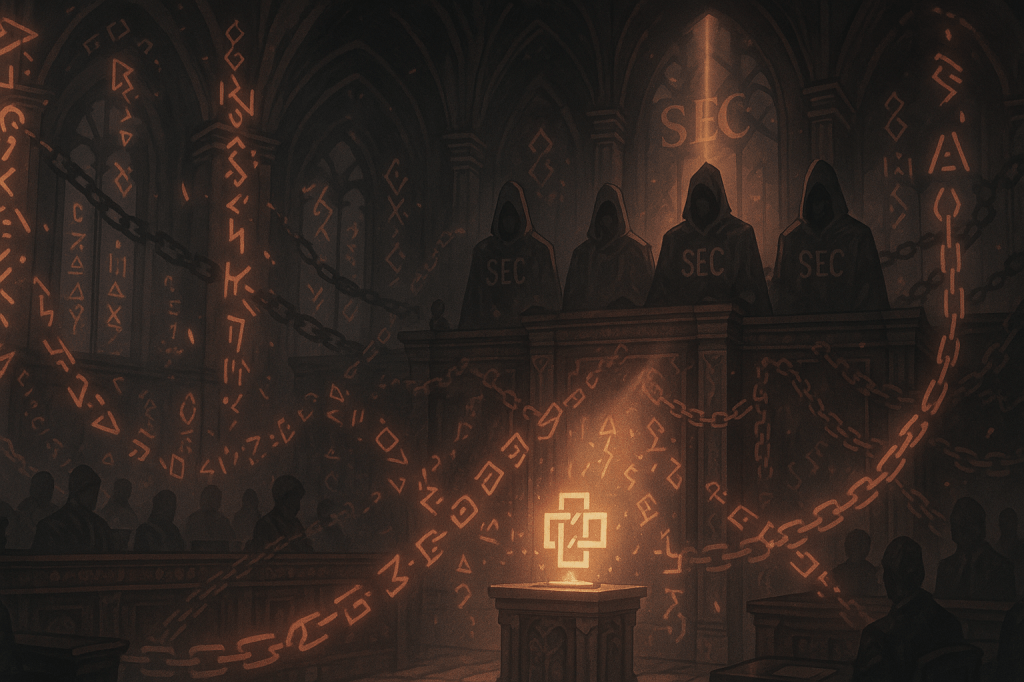
After years of speculation and regulatory shadowboxing, the U.S. Securities and Exchange Commission (SEC) is now staring directly into a future it can no longer defer: What happens when publicly traded stocks go on-chain?
On December 4, the SEC’s Investor Advisory Committee will take on the core question: What does tokenized equity actually look like within the current regulatory system?
This isn’t about synthetic tokens on offshore casinos. This is about Apple shares, with voting rights and dividends, trading as on-chain securities under U.S. law.
The panel includes heavyweights from Nasdaq, Coinbase, BlackRock, Citadel, Robinhood, and Galaxy Digital—and for the first time, they’re tasked with sketching out a compliant, blockchain-native financial system from the inside.
Nasdaq’s Bold Blueprint: Blockchain as Infrastructure, Not Revolution
Nasdaq has already made its move—filing a proposal to tokenize U.S. equities and trade them alongside traditional shares on the same order book, under the same rules.
Their model keeps everything else intact:
- Same CUSIP
- Same market surveillance
- Same investor protections
- Same execution logic under Reg NMS
What changes is the settlement layer. Instead of relying on traditional ledgers and T+2 clearing, blockchain becomes the record-keeping rail, supported by trusted players like the Depository Trust Company (DTC).
This isn’t a crypto free-for-all—it’s Wall Street plumbing with a blockchain backbone.
Native Tokens vs Wrappers: The Crucial Distinction
The SEC is finally drawing a line between true tokenized shares (native tokens issued by companies or their agents) and wrapped derivatives (offshore instruments that only mimic equity exposure).
Nasdaq’s filing warns that wrapped tokens—especially those issued without issuer consent—risk creating a shadow equity system, detached from voting rights, legal recourse, or economic transparency.
In Europe, token trackers of Apple and Amazon often diverged wildly in price and collapsed without recourse for holders. They were derivatives in disguise—not regulated securities.
For tokenized stocks to gain legitimacy, they must deliver full ownership, not just price exposure.
What Works Under Current Law (and What Doesn’t)
The good news? A lot already fits.
✅ Registered tokenized shares traded on regulated exchanges
✅ Blockchain-based ledgers for clearing and settlement
✅ Transfer agents and custodians using smart contracts
But friction arises in areas like:
⚠️ 24/7 trading – clashes with current market hours and best execution rules
⚠️ Off-NMS venues – unregistered exchanges hosting tokenized stocks would violate existing securities law
⚠️ Wrapped tokens – may fall under swap regulations or trigger new disclosure/margining obligations
Why Dec. 4 Is a Pivotal Moment
This meeting won’t approve anything. But it will test whether industry giants can align on custody, interoperability, and governance in a tokenized market.
If consensus forms, the SEC gets a template to evaluate filings like Nasdaq’s. If not, it learns where the engineering and legal bottlenecks lie.
What’s clear is this: the SEC is no longer avoiding the issue. Tokenized equities are coming, and regulators must decide whether to build them within the system or alongside it.
The Big Picture
This isn’t just a debate about tech. It’s a fight for the future shape of capital markets:
- Will blockchain retrofit into today’s tightly regulated exchanges?
- Or will a new model—one that supports 24/7, programmable finance—emerge from scratch?
For now, Nasdaq is betting that compliance-first tokenization is the winning path. And on December 4, they’re making their case.
 Powerbuilding Digital