Fitness / Motivation / Technology & A.I / Crypto

Hey there, and welcome to Edition 96 of the Powerbuilding Digital Newsletter—where grit meets growth, and every week is a fresh opportunity to level up.
Whether you’re returning or just joining us, this newsletter is your go-to blend of strength training, mindset fuel, tech breakthroughs, and the newest innovations shaping the digital asset world. No fluff—just focused insight to keep you moving forward.
Here’s what we’ve got lined up this week:
- Fitness Info & Ideas
Get smarter with your training. We’re covering strength strategies, recovery tips, and routines that actually move the needle. - Motivation & Wellbeing
Because building your best self isn’t just physical. Dive into mindset shifts, mental clarity techniques, and daily habits to help you show up strong—inside and out. - Technology & AI Trends
AI isn’t the future—it’s the now. We highlight new tools, platforms, and ideas that are changing the way we live, work, and create. - Crypto & Digital Asset Trends
Skip the market noise. We’re spotlighting the latest trends, apps, and real-world use cases in Web3, DeFi, NFTs, and blockchain innovation. If it’s useful, interesting, or pushing boundaries—you’ll hear about it here.
Edition 96 is all about momentum and meaningful progress. Let’s keep showing up, leveling up, and building what’s next—together.
Fitness
How to Maintain Your Results Without Losing Motivation

Maintaining progress is often harder than achieving it. After the initial excitement fades, motivation tends to decline, threatening all the results we’ve worked hard to earn. Whether it’s fitness, business goals, or personal development, sustaining results requires a strategic approach rooted in psychology, habit-building, and smart goal-setting. In this article, we’ll provide a comprehensive, actionable blueprint for staying committed long after the novelty has worn off.
Understand the Psychology Behind Motivation Loss
Before strategies can be effective, we need to understand why motivation wanes:
- Goal Fatigue: Once we reach a goal, the sense of urgency disappears.
- Lack of Variety: Repetition can lead to boredom and stagnation.
- External vs. Internal Motivation: Relying solely on rewards or recognition weakens long-term drive.
- Unrealistic Expectations: When progress slows, frustration sets in.
Identifying these psychological pitfalls allows us to build resilience and structure around our achievements.
Set a New Vision Once Goals Are Achieved
When a major milestone is reached, it’s crucial to immediately redefine your vision. This doesn’t mean abandoning your current progress, but rather expanding the horizon:
- Upgrade Your Goals: If you lost 20 pounds, shift focus to maintaining body composition or building muscle.
- Diversify Objectives: Incorporate goals in different areas of life such as learning a new skill, improving mental health, or enhancing your career.
- Layer Micro-Goals: Small, measurable goals keep momentum going and give a sense of progress.
A new vision injects fresh purpose into your routine, preventing complacency.
Embed Consistency Through Routine
Discipline beats motivation. Habits, not emotions, determine long-term success.
- Build Rituals Around Your Progress: Turn your maintenance tasks into daily non-negotiables. For example, morning mobility stretches, weekly progress check-ins, or pre-scheduled time blocks.
- Use Habit Stacking: Pair new habits with existing ones (e.g., do a gratitude journal right after brushing your teeth).
- Leverage Identity-Based Habits: Think of yourself as the kind of person who maintains results, not someone chasing them.
Routines create behavioral anchors that support consistency even on low-motivation days.
Track Progress Meticulously and Objectively
Progress doesn’t always look dramatic, especially during maintenance. That’s why detailed tracking systems are essential:
- Use Data-Driven Metrics: Track workouts, macros, sleep, business KPIs—whatever aligns with your goal.
- Take Monthly Snapshots: Compare data monthly to identify trends, not daily fluctuations.
- Celebrate Maintenance: Recognize that holding the line is a success, not a plateau.
Without measurable feedback, it’s easy to lose perspective and undervalue your discipline.
Adjust Your Environment to Support Long-Term Success
Your environment either supports or sabotages your goals. Optimize it for sustainable motivation:
- Eliminate Decision Fatigue: Prepare meals, outfits, and schedules in advance to reduce mental load.
- Surround Yourself With Accountability: Stay connected with mentors, workout partners, or mastermind groups who reinforce high standards.
- Remove Temptations: Minimize exposure to distractions or triggers that pull you off course.
The right environment lowers the cost of good decisions and makes the right choice the easiest one.
Integrate Recovery and Self-Compassion
Burnout is a motivation killer. High achievers often forget that maintenance requires recovery, too.
- Build in Rest Days: Whether in fitness or work, recovery enhances longevity.
- Reframe Setbacks: Instead of shame, use missteps as learning moments.
- Practice Gratitude: Reflect on how far you’ve come, not just how far you have left to go.
Long-term motivation flourishes in a sustainable, supportive framework, not under punishment.
Continue Learning and Upgrading Knowledge
Stagnation of the mind leads to stagnation of results. Keep feeding your mind:
- Read Books, Watch Seminars, Take Courses: Deepen your understanding of your domain.
- Learn From Those Ahead: Seek coaching or mentorship from people who have maintained success over time.
- Refine Your Process: Constantly upgrade your systems and strategies based on the latest research and tools.
Staying intellectually engaged keeps your passion alive and your performance edge sharp.
Periodically Reflect and Reevaluate Your “Why”
When motivation fades, reconnect with your purpose:
- Journal Weekly: Write down why your results matter to you.
- Visualize the Consequences: Think about where you’d be if you let your progress slip.
- Revisit Your Legacy Goals: Are your current efforts aligned with the bigger impact you want to make?
Your “why” should evolve over time. Reconnecting with it renews motivation from the inside out.
Create Systems, Not Just Goals
Goals are temporary. Systems are forever. A solid system:
- Makes success automatic through repeatable actions.
- Reduces emotional dependence, so you’re not reliant on feeling motivated.
- Protects progress during stress, illness, or burnout periods.
Examples of effective systems:
- Meal prepping every Sunday.
- Reviewing finances on the 1st of each month.
- Logging workouts in a digital app.
- Blocking out “focus time” during workdays.
Systems protect the integrity of your results, regardless of motivation level.
Gamify Your Journey for Long-Term Engagement
Gamification fuels consistent effort. Try:
- Streak Trackers: How many days can you go without missing a habit?
- Reward Systems: Earn rewards for consistency (e.g., a new pair of shoes after 30 consecutive workouts).
- Competition: Friendly challenges with peers to keep spirits high.
This turns the process into a fun, dynamic, and ever-evolving game, not a chore.
Final Thoughts: Progress Is Not a One-Time Event
Maintaining your results is the ultimate sign of mastery. It requires a shift from intensity to consistency, from motivation to identity, and from goals to systems. We don’t stop once we’ve reached our objectives—we evolve, refine, and expand upon them.
Your achievements deserve the same commitment, precision, and care that built them in the first place. Don’t let temporary boredom rob you of permanent pride. Stay engaged, stay curious, and keep building on the foundation you’ve earned.
Motivation
3 Surprising Truths About Self-Realization No One Talks About

Self-realization is often portrayed as a blissful state of enlightenment, a destination where all doubts dissolve, and inner peace reigns eternally. However, this idealized vision obscures the deeper, more nuanced aspects of the journey. While meditation, yoga, and personal development books may help open the door, the full experience is more challenging—and ultimately more rewarding—than most people realize.
Below, we uncover three surprising truths about self-realization that rarely surface in popular discussions.
1. Self-Realization Begins With Brutal Internal Disruption
Contrary to the romanticized versions of awakening, true self-realization is not gentle or easy. It often starts with an existential crisis, not clarity. Most individuals find themselves plunged into self-questioning after a major life event: the death of a loved one, a traumatic breakup, job loss, or simply an overwhelming sense of disconnection.
This disruption dismantles the ego’s carefully constructed illusions—our career identity, social roles, beliefs, and even our idea of who we are. All mental constructs dissolve, leaving a painful vacuum.
This stage is terrifying. It strips away certainty and forces the individual to confront core fears: Am I truly in control? What if everything I believed about myself is wrong? Rather than serenity, the first sign of self-realization is often a deep and uncomfortable inner shaking.
What most people don’t understand is that this pain is essential. It signals the beginning of a transformation—a shedding of the false self. In this stage, real growth happens beneath the surface. It is not pretty, but it is profoundly necessary.
2. The Ego Doesn’t Die—It Evolves
Spiritual circles often preach about “killing the ego” or “transcending the self.” While poetic, this concept is fundamentally misleading. The ego—our sense of individuality—is not something we can or should destroy. Instead, in self-realization, it undergoes refinement and reintegration.
The ego is not the enemy. It is a survival mechanism shaped by evolution to help us navigate the physical world. However, it becomes problematic when we mistake it for our true identity. Self-realization does not obliterate the ego; it reveals its true place—as a servant, not a master.
In fact, during deep spiritual progress, the ego reorganizes itself around new principles: compassion, presence, service, and love. The “I” becomes aligned with higher awareness. You don’t lose yourself—you find a more authentic version.
This nuance is crucial. A healthy ego is like a well-trained dog: it follows your commands, protects you when needed, but never dominates your life. The spiritually awakened ego is quiet, strong, and humble—not absent.
3. Self-Realization is Not a Destination—It’s a Daily Discipline
One of the biggest myths is that self-realization is a one-time event, like flipping a switch or having a lightning-strike moment of divine insight. While sudden insights can and do happen, lasting self-realization is a continual unfolding, not a fixed state.
Awakening is cyclical, not linear. There are stages of expansion, then contraction. Moments of pure awareness followed by emotional turbulence. Just like physical fitness, spiritual clarity must be maintained through ongoing practices: mindfulness, journaling, breathwork, solitude, honest self-inquiry, and being in nature.
What surprises most seekers is that even after profound spiritual experiences, old habits return. Doubts creep in. Anger resurfaces. Fear takes hold. This is not regression—it’s part of integration. Self-realization means learning to dance with all aspects of the self—the light and the shadow—without attachment or aversion.
The awakened individual does not float above life—they walk within life, grounded, accepting its imperfections with grace. The journey demands a lifelong commitment to truth, humility, and practice.
The Hidden Gifts of Authentic Self-Realization
While the path is steep and often hidden beneath discomfort, the rewards are extraordinary. Real self-realization brings:
- Unshakable Inner Peace: Not because life is perfect, but because we no longer resist its imperfection.
- Radical Self-Honesty: A fearless willingness to see things as they are, not as we wish them to be.
- True Freedom: The liberty to act from love and awareness, not from conditioned patterns or social masks.
- Deeper Connections: When we are no longer pretending, we allow others to truly see us, and in turn, see them more clearly.
Ultimately, self-realization is not about escaping the world. It’s about engaging with it fully, armed with the clarity of who we truly are.
Common Misconceptions That Hinder True Self-Realization
Let’s address a few common yet misleading ideas that obstruct genuine awakening:
Myth: You Must Isolate to Awaken
While solitude can accelerate introspection, relationships are powerful mirrors. The friction and feedback from others often reveal our deepest patterns. Awakening in isolation can breed spiritual narcissism. Real growth happens in community.
Myth: Enlightenment Means Bliss 24/7
Awareness doesn’t erase emotions—it gives you space to observe them without being overwhelmed. Pain, grief, and sadness still arise. The difference? You no longer identify with them. You feel everything, but are attached to nothing.
Myth: One Teacher or System Holds the Truth
No single tradition has a monopoly on truth. Authentic self-realization honors multiple paths, drawing from experience, nature, intuition, and universal wisdom. Dogma limits growth—curiosity fuels it.
Final Reflections: The Paradox of Awakening
The irony of self-realization is this: you discover what you’ve always been. There is no arrival, only remembrance. The path doesn’t lead to something new—it peels away what was never truly you.
Each person’s journey is unique. There are no shortcuts, but there are signposts: inner silence, emotional honesty, presence in the now. Trust that wherever you are, you’re already on the path. And the more you surrender to it, the more it reveals its radiant, surprising truth.
Technology & A.I
Meta to Revolutionize Digital Advertising with AI-Driven Ad Creation Tools by 2025

Meta Platforms is preparing to launch an all-in-one AI-powered advertising solution that will enable brands to generate fully customized and targeted ad campaigns by the end of next year. This ambitious move underscores Meta’s commitment to redefining digital marketing through automation, personalization, and cutting-edge artificial intelligence.
Meta’s AI Advertising Strategy: A Glimpse into the Future of Marketing
Meta, the parent company of Facebook and Instagram, is set to transform how brands advertise online. With over 3.43 billion unique active users globally across its platforms, Meta holds a commanding position in the digital marketing space. Leveraging artificial intelligence, the company plans to give businesses unprecedented capabilities to create ads tailored to individual users — all with minimal manual input.
The upcoming AI tools will allow advertisers to upload a product image and input a budget. From there, Meta’s AI will autonomously generate ad creatives — including images, videos, and copy — and determine ideal audience targeting. This technology is expected to optimize ad delivery across Meta’s platforms, such as Facebook and Instagram, while also providing intelligent budget allocation suggestions.
Personalized Ad Experiences: Real-Time AI Customization
According to sources familiar with Meta’s roadmap, the AI tools will do more than just automate ad creation. They will enable real-time personalization of ads, adapting content based on user-specific variables such as geolocation, interests, and behavior. This means two users in different cities might see entirely different versions of the same campaign — each optimized for engagement.
This level of personalization could prove transformative in a competitive digital advertising landscape, where relevance is key to capturing user attention.
Zuckerberg’s Vision: An AI One-Stop Shop for Advertisers
Meta CEO Mark Zuckerberg recently emphasized the importance of measurable outcomes in AI advertising. During a public statement, he explained the company’s goal to offer an AI one-stop shop for businesses — a centralized platform where marketers can define campaign goals, set spending limits, and leave the rest to Meta’s intelligent systems.
“Advertisers need AI tools that deliver real results at scale,” Zuckerberg said, reinforcing the strategic direction Meta is taking to ensure its AI investments translate into tangible returns for its advertising clients.
Competitive Landscape: Social Media Platforms Double Down on AI
As Meta advances its AI advertising platform, other tech and social media firms are ramping up their own AI initiatives. Snap, Pinterest, and Reddit have all increased investments in machine learning and automation tools to attract advertisers and maintain relevance in a market where performance and personalization are king.
In this context, Meta’s AI innovation is not just about improving advertiser outcomes — it’s also a response to the evolving dynamics of the digital advertising ecosystem.
Impact on Ad Industry: Stocks React to Meta’s AI Push
Meta’s announcement has already made waves in the advertising world. Following the news, Meta’s stock climbed by nearly 1% in early trading. Meanwhile, traditional ad giants such as Interpublic Group (IPG) and Omnicom Group (OMC) experienced stock declines of 1.9% and 3.2%, respectively. Similarly, Publicis Groupe and WPP — two major players in the global advertising industry — saw their shares drop by 3.8% and 2.2%.
This market reaction reflects a broader sentiment: AI-driven platforms like Meta could disrupt traditional agency models by offering scalable, cost-effective alternatives to creative and media buying services.
Google, OpenAI, and the Race for AI-Powered Creativity
While Meta leads the charge in integrating AI into digital advertising workflows, it is not alone. Google and OpenAI have launched their own AI-powered video and image generation tools. However, despite their technological advancements, adoption among marketers has been slow due to concerns about brand safety, creative control, and quality assurance.
This presents an opportunity for Meta. By focusing on trust, performance metrics, and user control, it can carve out a dominant position in the AI advertising space while its competitors work to overcome these critical adoption barriers.
The Next Evolution in Digital Advertising
Meta’s planned rollout of AI-driven ad creation tools represents a significant leap forward in the world of performance marketing. By empowering advertisers with automation, personalization, and real-time optimization, Meta aims to deliver higher ROI and more engaging user experiences — all while maintaining control and creative integrity.
As the digital advertising arms race intensifies, brands must prepare for a future where AI is not just a tool, but a partner in marketing strategy. Meta’s bold move signals a future where speed, scale, and personalization become the new standards of successful advertising.
Commercial Kitchens: GRILL X, the AI-Powered Grilling Robot That’s Changing the Culinary Game

Introducing GRILL X: The Future of Automated Grilling
At the 2025 National Restaurant Association Show, a major leap in kitchen automation took center stage. South Korean food tech innovator, Beyond Honeycomb, unveiled GRILL X—a cutting-edge AI-powered grilling robot engineered to automate high-precision cooking in busy commercial kitchens.
This smart kitchen solution isn’t just another robot—it’s the result of deep collaboration between AI engineers and Michelin-trained chefs, bridging culinary artistry with technological precision. GRILL X is compact, intelligent, and tailor-made for the fast-paced world of professional cooking.
Built for Modern Kitchens: Compact Design and Smart Engineering
One of GRILL X’s standout features is its space-efficient architecture. Designed with soft-joint actuators and advanced flame detection sensors, the robot seamlessly fits into tight kitchen environments without compromising safety or performance.
Its engineering takes into account the nuanced demands of commercial kitchens. Whether it’s a high-end restaurant or a fast-casual chain, GRILL X is designed to boost productivity and quality without expanding your kitchen footprint.
AI-Driven Precision: How GRILL X Achieves Consistency
What truly sets GRILL X apart is its use of real-time molecular sensing and artificial intelligence. This robotic grill master doesn’t just follow a script—it responds to the chemical changes in food as it cooks. From tracking the Maillard reaction to monitoring fat rendering, collagen breakdown, and charring levels, GRILL X ensures every meal hits the mark.
By leveraging machine learning algorithms, GRILL X continually improves its cooking accuracy. The system doesn’t rely on guesswork; it reads the actual state of your food to deliver restaurant-quality results—every single time.
High-Volume Performance Without Sacrificing Quality
One of the biggest advantages of GRILL X is its scalability. In a single hour, it can produce up to 80 perfectly grilled servings, all without the need for direct human oversight. That’s a game-changer for operations that rely on consistency and speed.
With GRILL X in the kitchen, restaurant owners can minimize staffing challenges, reduce food waste, and increase efficiency, all while maintaining the high standards expected from a professional kitchen.
Trending Now: The Rise of AI in Food Preparation
GRILL X is more than a robot—it represents a broader movement in the industry. Here are a few key trends reshaping how food is prepared:
1. AI-Enhanced Culinary Techniques
Artificial intelligence is revolutionizing food prep by enabling machines to analyze molecular changes during cooking. This leads to precise, consistent, and scalable food quality across the board.
2. Smart Kitchen Robotics
The fusion of robotics and cooking has created a new wave of automated culinary assistants. Robots like GRILL X are capable of performing complex tasks such as grilling, sautéing, and even plating.
3. Sensor-Based Cooking Technology
Real-time sensors are changing how we cook. By responding to chemical and thermal cues, machines can adjust their cooking process mid-operation, delivering perfectly timed meals.
Industry-Wide Implications of Robotic Cooking Technology
The introduction of GRILL X signals major shifts in several key sectors:
Commercial Kitchen Equipment
Manufacturers of commercial kitchen tools are now investing heavily in robotics and automation, responding to increased demand for tools that reduce labor costs and ensure consistent food quality.
Food Technology Sector
The line between food and tech continues to blur. Companies like Beyond Honeycomb are driving innovation by integrating AI, robotics, and culinary science to push the limits of what’s possible in commercial kitchens.
Restaurant Automation
The hospitality industry is rapidly embracing automated solutions. With devices like GRILL X, restaurants can scale their operations, optimize labor, and maintain high-quality culinary standards—even during peak hours.
The Competitive Advantage of Adopting AI in the Kitchen
Restaurants that invest in AI-powered solutions like GRILL X gain a significant edge. Here’s why:
- Consistent output: No more overcooked or undercooked meals—just reliability.
- Labor optimization: Free up human chefs for creative, high-impact work.
- Increased throughput: Handle more orders in less time without compromising quality.
- Data-driven improvements: GRILL X learns and improves with every use, continually refining its performance.
GRILL X Sets the Bar for Future Kitchens
Beyond Honeycomb’s GRILL X is not just a technological achievement—it’s a glimpse into the future of commercial cooking. With its AI-driven accuracy, real-time sensing, and robotic consistency, it’s reshaping how kitchens operate across the globe.
For restaurants looking to scale efficiently while delivering premium-quality meals, GRILL X offers an unbeatable combination of automation, precision, and culinary excellence.
As the demand for smart kitchen technology continues to rise, GRILL X stands out as a pioneer—showing the world what’s next in AI-powered food preparation.
How Venture Capital Firms Are Using AI and Automation to Revolutionize Deal Sourcing and Operations

Embracing the Future: AI Integration in Venture Capital
Venture capital firms are rapidly integrating artificial intelligence (AI) and automation into their core operations. By leveraging cutting-edge tools like Generative AI (GenAI), large language models (LLMs), Airtable, and Zapier, firms are streamlining everything from deal sourcing and screening to portfolio management. The goal is to automate up to 80% of routine tasks, dramatically increasing efficiency while preserving human insight for critical investment decisions.
This digital transformation mirrors the guidance VCs often give to startups—optimize, scale, and automate. Now, they’re practicing what they preach, turning AI into a cornerstone of modern venture investing.
Automation in Action: Leading Examples from the VC World
Firms like Auxano Capital and IvyCap Ventures are trailblazing this shift. Auxano has already automated 30-40% of its recurring processes, while IvyCap aims to automate 60% of its entire investment workflow—including deal flow, investor relations, and portfolio oversight—by year-end.
The rationale is clear: as startup ecosystems expand, the volume and complexity of tasks have skyrocketed. VCs are inundated with pitch decks and investment opportunities. AI offers a scalable solution, helping firms filter and analyze deals rapidly without sacrificing quality.
GenAI and LLMs: Powering a New Era of Due Diligence
The use of LLMs and GenAI is proving transformative across several key functions:
- Evaluating pitch decks with predefined scoring criteria
- Conducting preliminary market and sector research
- Generating internal reports and communication drafts
- Managing CRM systems and follow-ups automatically
- Performing initial due diligence and flagging risks early
By taking over these labor-intensive tasks, AI enables analysts and partners to concentrate on high-level thinking—such as identifying macro trends and building relationships with founders.
Good Capital: A Blueprint for Scalable Automation
Good Capital, which has invested in startups like Meesho and Solar Square, offers a compelling case study. The firm has automated an estimated 70–80% of its internal operations. Using a tech stack that includes Airtable, Zapier, and Paperform, it collects and centralizes data from multiple sources—WhatsApp, voice notes, emails, and shared links—all updated in real-time.
“Automation isn’t just a productivity hack—it’s how we scale good judgement,” said Arjun Malhotra, General Partner at Good Capital. The firm uses AI prompts to handle first-level triage of inbound deals, reducing human effort while increasing deal velocity and accuracy. Action items and next steps are tagged and assigned automatically, ensuring a seamless workflow.
AI in Deal Sourcing: Filtering the Noise
The early stages of deal sourcing and evaluation are where AI truly shines. According to Vikram Gupta, Managing Partner at IvyCap Ventures, “With the volume of deals we receive, manual evaluation isn’t scalable. AI filters help us shortlist efficiently.” The firm has even appointed a Chief Technology Officer to lead its automation and AI integration efforts.
Bharat Innovation Fund echoes this sentiment. Co-founder Somshubhro Pal Choudhury noted that their systems can now sift through thousands of startups and surface only those aligned with the fund’s thesis. This level of filtering was previously impossible without a large team of analysts.
Strategic Focus: Letting Humans Do What They Do Best
With AI handling the routine, human investors can focus on more nuanced tasks:
- Evaluating founder vision and team dynamics
- Assessing product-market fit and competitive landscapes
- Developing deep domain insights and thought leadership
- Building strong relationships with portfolio companies
These elements remain critical in early-stage investing, where hard metrics are scarce, and success often hinges on intuition, experience, and interpersonal chemistry.
AI also assists in legal review, scanning lengthy documents and extracting key insights in minutes—a task that previously consumed hours of analyst time.
The Human Element: Still Irreplaceable in Final Judgement
Despite the dramatic rise in automation, full AI-driven dealmaking remains distant. Rohit Krishna, General Partner at WEH Ventures, which has achieved around 25% automation, emphasized, “You still need investors to make the final call. Understanding how a startup or sector might evolve over 5–7 years requires imagination—something AI can’t replicate.”
Brijesh Damodaran Nair, Managing Partner at Auxano Capital, echoed this belief, suggesting that while full automation may become technically possible, trust and human judgment will remain vital for years to come.
Encouraging Startups to Follow Suit
VCs aren’t just adopting AI themselves—they’re urging their portfolio companies to follow suit. The benchmark? Achieve at least 40–50% automation of routine operations by FY26. While automation levels vary by industry and stage, the message is consistent: embrace technology or risk falling behind.
The Future of Venture Capital Is Hybrid
The integration of AI and automation in venture capital is no longer optional—it’s essential. By automating repetitive tasks, firms can operate with greater agility, evaluate more deals, and make smarter, faster decisions. However, the best results emerge from a hybrid model, where AI handles the scale and humans provide the strategic judgment.
As tools become more sophisticated and adoption grows, the venture capital landscape will continue to evolve—leaner, faster, and more focused than ever before. Those who adapt will lead the next generation of high-impact investing.
The Real Threat of AI: Why DeepMind’s CEO Fears Misuse More Than Job Loss

The Rising Concerns Around Artificial Intelligence
As the world races toward an AI-powered future, fears of a “jobpocalypse” have dominated headlines. But Demis Hassabis, CEO of Google DeepMind and Nobel Prize laureate, has a different perspective. Rather than worrying about machines replacing humans in the workforce, Hassabis is more alarmed by the possibility of AI misuse by malicious actors—and the lack of meaningful safeguards to prevent it.
In a revealing interview at the SXSW festival in London, Hassabis shared his concerns about the dual-edged nature of artificial intelligence. “Bad actors could repurpose these powerful systems for harmful ends,” he warned. The challenge lies in restricting access to these advanced technologies while still enabling innovators to harness AI for meaningful, beneficial progress.
AI in the Wrong Hands: National Security & Deepfake Dangers
Recent real-world examples underscore Hassabis’ fears. The FBI reported in May that hackers have used AI-generated voice messages to impersonate U.S. government officials. A separate State Department-commissioned report flagged AI as a “catastrophic” national security risk. In addition, AI’s ability to generate deepfake pornography has already prompted legislative action. The Take It Down Act, signed into law recently, makes the distribution of non-consensual explicit images illegal.
This darker side of AI is gaining traction as the technology rapidly evolves. Tools that can now write code, generate video content, or simulate human voices are becoming more accessible. While these advancements open exciting possibilities, they also equip scammers and cybercriminals with unprecedented capabilities.
Lack of Regulation in a Global AI Race
Another key concern is the lack of global regulation as AI development accelerates. The United States and China are locked in a high-stakes race for AI supremacy, yet regulation remains far behind the pace of innovation. Google itself came under scrutiny earlier this year for quietly removing promises from its AI ethics policy, including the pledge not to develop AI for weapons or surveillance.
In contrast, companies like Anthropic have taken a bleaker view of AI’s impact on employment. Its CEO, Dario Amodei, recently predicted that AI could wipe out half of all entry-level white-collar jobs, echoing concerns voiced by Meta’s Mark Zuckerberg, who anticipates AI writing 50% of Facebook’s code by 2026.
Still, Hassabis remains focused on a broader issue—ensuring that artificial general intelligence (AGI), a theoretical form of AI with human-level reasoning, is developed and used responsibly. He advocates for an international agreement that sets firm principles for AI use.
Global Collaboration Needed for Safe AI Development
“Geopolitics makes global cooperation difficult,” Hassabis admitted. “But as AI becomes more sophisticated, I believe it’ll become increasingly clear that we need international coordination.” He emphasizes the importance of creating a framework that distinguishes between beneficial and harmful AI use cases.
This vision includes limiting access to advanced models while empowering responsible actors to unlock their full potential. The key, Hassabis insists, is building systems that enrich human life without enabling harm.
AI Agents and the Rise of the Universal Assistant
Looking ahead, Hassabis envisions a world in which people are supported by AI-powered agents—smart systems capable of handling tasks, answering questions, and even recommending books, films, or social opportunities. Google is actively developing such tools, including AI-integrated smart glasses and enhancements to its search engine, with the goal of building a universal AI assistant.
“This assistant could follow you throughout your day, handle mundane admin tasks, and help enrich your experiences,” he explained. This concept aligns with the broader trend of embedding AI into everyday life—transforming how we work, learn, and socialize.
Progress and Pitfalls: AI’s Unfinished Evolution
Despite growing excitement, AI remains far from perfect. The technology still struggles with issues like bias, hallucinations, and fact fabrication. Just last month, major newspapers including the Chicago Sun-Times and the Philadelphia Inquirer published AI-generated book lists that featured entirely fictitious titles.
These missteps highlight the need for greater transparency, accountability, and testing in AI systems before they are widely deployed.
Will AI Replace Jobs or Create New Ones?
While some industry leaders predict massive job displacement, Hassabis is more optimistic. He acknowledges that AI will reshape the workforce, but doesn’t believe it will leave humanity jobless. Instead, he foresees a shift in the job market—much like past industrial and technological revolutions.
“New and better jobs have always emerged to replace the old,” he said. “AI will bring massive changes, but it will also bring new opportunities.” The challenge, he added, will be figuring out how to distribute the productivity gains AI generates across society in an equitable way.
Steering AI Toward a Safer Future
As artificial intelligence advances at breakneck speed, the world stands at a crossroads. On one hand, AI promises to revolutionize productivity, innovation, and personal convenience. On the other, it poses real risks—both to national security and societal stability.
Demis Hassabis’ warnings remind us that the greatest threat is not job loss, but AI misuse. Without proper guardrails, the same tools that can heal and help could also harm. The path forward requires global cooperation, ethical oversight, and a firm commitment to using AI for the benefit of all.
AI in Entertainment: A Game-Changer for Content Creators and the Independent Film Industry

AI’s Growing Impact on the Global Entertainment Industry
Artificial intelligence (AI) has rapidly become one of the most talked-about innovations in the global entertainment scene. This year’s Cannes Film Festival buzzed with conversations among producers, distributors, and festival organizers trying to understand how to adapt to this accelerating technological revolution. AI is no longer a distant concept—it’s already reshaping how stories are told, how content is created, and how value is derived from intellectual property (IP).
However, not everyone views this shift with skepticism. Zack Kass, a former OpenAI executive and leading AI strategist, sees this disruption as a significant opportunity—particularly for content creators and the independent film sector. With over 16 years of experience in the artificial intelligence space and a track record of advising organizations such as The White House, Coca-Cola, and Morgan Stanley, Kass offers a seasoned perspective on how AI can empower rather than replace creative work.
From Hollywood Boardrooms to Global Stages: Understanding the AI Revolution
As the former Head of Go-To-Market at OpenAI, Kass has participated in high-level discussions with major Hollywood studio executives. These decision-makers are urgently trying to understand how AI fits into their business models and what its long-term implications might be for the creative process.
“AI will undoubtedly disrupt traditional content workflows,” Kass acknowledges. “But disruption doesn’t have to mean destruction—it can mean reinvention, reinvigoration, and expansion.”
The key lies in understanding how AI tools can amplify human creativity, not eliminate it. Whether it’s generating visual effects, enhancing scripts, creating virtual characters, or streamlining production logistics, AI offers a suite of tools that can save time, reduce costs, and unlock new creative possibilities.
Empowering Independent Filmmakers Through AI Innovation
Perhaps the most exciting implication of AI in entertainment is its potential to democratize content creation. Kass argues that independent filmmakers stand to benefit the most from these technological advancements.
“Big studios have always had the upper hand in terms of budget and infrastructure,” Kass explains. “But AI levels the playing field by providing smaller creators with access to tools that were once exclusive to Hollywood’s elite.”
From low-cost animation generators to AI-powered editing platforms, independent content creators now have the ability to produce high-quality material without the need for multimillion-dollar budgets. This evolution could usher in a new era of storytelling where originality and vision matter more than sheer capital.
Creative Integrity and Ethical Boundaries in the Age of AI
Despite its promise, AI in entertainment must be approached with careful ethical consideration. Kass emphasizes the importance of developing “ethical and creative guardrails” to ensure the technology supports—not undermines—human creativity.
“AI should not be used to mimic or exploit someone’s creative work without consent,” Kass warns. “We need clear frameworks to guide the use of generative tools, especially in areas like voice replication, script generation, and visual likeness.”
Organizations across the industry must collaborate to create standards that protect artists, ensure fair compensation, and preserve the authenticity of creative expression. Only through thoughtful implementation can AI truly serve as a force for good in entertainment.
AI as a Catalyst for Storytelling Evolution
One of the most compelling arguments Kass makes is that AI isn’t the end of creativity—it’s the next evolution of it. By automating repetitive tasks, analyzing massive datasets, and generating creative options, AI can actually enhance the human storytelling process.
Writers can use AI tools to explore character arcs and alternative plotlines. Directors can pre-visualize scenes using generative imagery. Production teams can simulate complex environments or crowd scenes without massive expenses. In each case, the technology acts as a collaborative partner rather than a creative threat.
“Humans are still the storytellers,” Kass insists. “AI just gives us more ways to tell our stories.”
The Future of AI in Film and Media: Opportunity Over Fear
While anxiety about job loss and artistic dilution exists, thought leaders like Kass advocate for a mindset shift—from fear to opportunity. By leaning into AI’s capabilities rather than resisting them, the entertainment industry can unlock a new golden age of innovation.
And it’s not just Hollywood. From indie film festivals to grassroots YouTube creators, the tools being developed today are reshaping the entire ecosystem of visual media.
Those who adapt early will lead this transformation. Those who resist may risk being left behind in a fast-changing landscape.
AI and the Renaissance of Creative Power
AI is not here to replace storytellers—it’s here to empower them. As the global entertainment industry stands at a critical juncture, the choices made today will determine whether AI becomes a tool for deeper creativity or a source of disruption.
For Zack Kass and many forward-thinking creators, the answer is clear: with proper guidance, ethical frameworks, and an open mind, AI can fuel a renaissance of storytelling like we’ve never seen before. From Hollywood to home studios, the age of AI-driven creativity has only just begun.
Crypto
Hong Kong Accelerates Crypto Derivatives Legalization to Cement Status as Asia’s Digital Asset Hub

Hong Kong is rapidly positioning itself as a major global player in digital finance, with a strong push toward legalizing crypto derivatives trading. This effort is gaining political traction, as senior officials and regulators work to unlock new Bitcoin futures and options trading for professional investors. The initiative is not only about increasing product diversity—it’s also focused on maintaining rigorous risk management frameworks to ensure the long-term stability and credibility of the virtual asset market.
Enhancing Product Diversity Through Regulated Derivatives
The city’s financial authorities are keen to diversify their product offerings in a controlled and secure environment. According to Christopher Hui, Hong Kong’s Secretary for Financial Services and the Treasury, the recent approval of Bitcoin and Ethereum ETFs has already enhanced the city’s standing as Asia’s leading ETF market.
But ETFs are just the beginning. With crypto staking services, stablecoin regulations, and now derivatives trading on the agenda, Hong Kong aims to establish a full-spectrum digital asset infrastructure that appeals to global institutional investors.
Regulatory Safeguards and Investor Eligibility
The Securities and Futures Commission (SFC) has made it clear that robust risk controls will be central to this new wave of crypto reforms. Initially, crypto derivatives will only be accessible to professional investors, defined as those holding more than HK$8 million (around US$1 million) in investable assets.
These new products will be rolled out in a manner that ensures orderly, transparent, and secure trading environments, aligning with international best practices. The goal is to foster trust among institutional investors while mitigating systemic risk.
Building a Complete Crypto Ecosystem in Hong Kong
Hong Kong’s recent milestones demonstrate a deliberate and structured approach to digital asset regulation. In just over 18 months, the city has:
- Launched Asia’s first spot Bitcoin and Ethereum ETFs (April 2024)
- Unveiled a regulatory roadmap for crypto derivatives (February 2025)
- Approved regulated staking services (April 2025)
- Passed a Stablecoin Bill establishing a licensing regime (May 2025)
- Advanced toward a comprehensive derivatives framework (June 2025)
The SFC believes that these products will enable efficient risk transfer, improve spot market liquidity, and equip professional investors with the tools needed for hedging and leveraging strategies.
Rising Institutional Demand and Global Competition
The drive toward crypto derivatives is also a response to increasing institutional demand and regional competition. Cities like Singapore and Dubai already offer regulated crypto futures, giving them a head start in attracting hedge funds and proprietary trading firms.
Until now, the lack of such instruments has placed Hong Kong at a disadvantage. But with ten virtual asset trading platforms (VATPs) already licensed in the city and more preparing to offer derivatives, Hong Kong is closing the gap quickly.
Additionally, two ETF issuers have recently received approval to amend their documentation to support staking, showing that regulators are becoming more open to modular and innovative frameworks for digital finance.
A New Virtual Asset Policy on the Horizon
Christopher Hui also disclosed that the Hong Kong government is preparing to release a second policy statement on virtual assets. This upcoming statement will explore synergies between traditional finance (TradFi) and decentralized finance (DeFi), aiming to bridge innovation with real-world economic use cases.
Key highlights of this policy may include:
- Extended tax concessions for virtual asset transactions
- Inclusion of private equity firms, family offices, and crypto funds
- Greater regulatory clarity on emerging asset classes
These changes are designed to enhance flexibility, competitiveness, and security within Hong Kong’s financial system while attracting a broader base of fintech companies and global investors.
Crypto Market Snapshot: Key Metrics
- Global Crypto Market Cap: Over $3 trillion
- Annual Global Trading Volume: Around $80 trillion
- Licensed VATPs in Hong Kong: 10 and growing
- Spot Bitcoin ETF AUM in HK: Approximately $566 million
- Number of Fintech Firms in HK: Over 1,100
What’s Next for Hong Kong’s Crypto Landscape?
If Hong Kong finalizes a legal and regulatory framework for crypto derivatives by the end of 2025, it will complete what many see as the “three-legged stool” of its crypto policy:
- Spot ETFs
- Stablecoins
- Derivatives
With this comprehensive toolkit, global investors will be able to trade, hedge, and settle digital assets entirely within Hong Kong’s regulated ecosystem. This would not only boost capital inflows but also establish the city as a trusted crypto finance center in the Asia-Pacific region.
A Web3 Future—One Licensed Derivative at a Time
While mainland China continues to enforce a blanket ban on crypto trading, Hong Kong is pursuing its own path. By developing a Web3-ready financial system, the city sends a powerful message to the world: Hong Kong is open for crypto business—on its own terms, with transparency and regulatory clarity at its core.
Whether this strategy will influence Beijing’s stance remains uncertain. But one thing is clear: Hong Kong’s digital asset roadmap is not only bold but also meticulously planned—ensuring that the city stays at the forefront of global financial innovation.
Cryptocurrency Advocacy Groups Push for Developer Protections in U.S. Crypto Regulation Bill
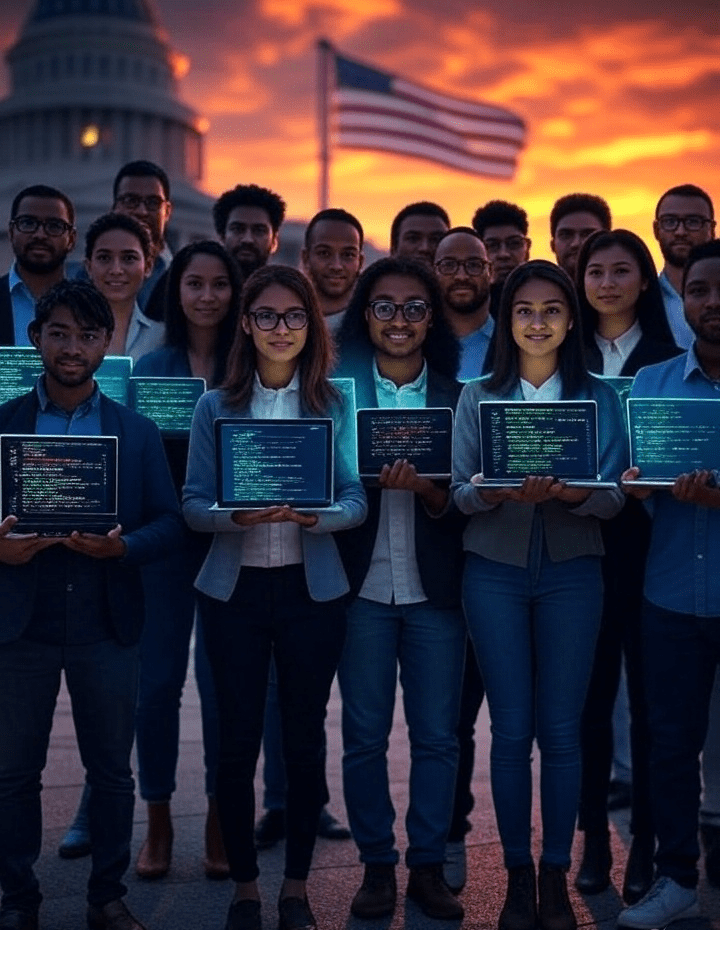
In a united front, several leading cryptocurrency advocacy organizations are urging U.S. lawmakers to include critical protections for software developers in broader legislation aimed at regulating the digital asset ecosystem. Their call to action centers around safeguarding the rights of those who build decentralized, non-custodial platforms—a foundational pillar of blockchain innovation.
Industry Leaders Call for Inclusion of the Blockchain Regulatory Certainty Act
On Thursday, a coalition of respected crypto policy groups, including the DeFi Education Fund, Coin Center, Solana Policy Institute, The Digital Chamber, Blockchain Association, Crypto Council for Innovation, and the Bitcoin Policy Institute, issued a joint statement. Their message was clear: include the Blockchain Regulatory Certainty Act in the ongoing market structure legislative efforts.
This act, recently reintroduced by Representatives Tom Emmer (R-MN) and Ritchie Torres (D-NY), aims to clarify that developers of non-custodial crypto software are not money transmitters and should not be regulated as unlicensed money services businesses. The bill seeks to distinguish between decentralized protocol builders and traditional financial intermediaries.
Why Developer Protection Matters in Crypto Regulation
As the crypto industry evolves, so does the need for intelligent, nuanced regulation. But crypto advocates argue that applying legacy financial rules to blockchain developers could stifle innovation and threaten decentralization.
“Developers building peer-to-peer, non-custodial software and the infrastructure that supports decentralized networks have little in common with traditional financial institutions,” the groups stated. “They should not be regulated as if they are banks or custodians.”
This sentiment reflects the growing concern among crypto stakeholders that innovation could be chilled if policymakers fail to recognize the unique nature of decentralized finance (DeFi) and open-source development.
The Digital Asset Market Clarity Act: What It Proposes
The broader legislative effort, known as the Digital Asset Market Clarity Act, seeks to establish a comprehensive regulatory framework for cryptocurrencies. The bill, currently under discussion in the House of Representatives, addresses several core issues:
- Clearly dividing oversight responsibilities between the U.S. Securities and Exchange Commission (SEC) and the Commodity Futures Trading Commission (CFTC)
- Mandating customer fund segregation to prevent misuse or co-mingling of assets
- Requiring transparent disclosures from digital asset platforms
While these measures aim to enhance investor protections and reduce systemic risk, crypto organizations are pressing for the Blockchain Regulatory Certainty Act to be embedded within this framework to ensure developers are not unfairly targeted.
Congressional Debate Intensifies Amid Political Friction
The call for developer protections comes as Congress intensifies its focus on cryptocurrency policy. This week, the House Financial Services Committee held a public hearing on the Clarity Act, which sparked political tension.
Some Democrats criticized the influence of former President Donald Trump, citing his association with World Liberty Financial, a Trump-endorsed crypto firm, and his support for a memecoin initiative. These developments have further complicated the already heated regulatory discussions.
Despite the distractions, key elements of the bill were reviewed in detail, including the definition of decentralization and the maturity metrics of blockchain networks—critical areas that will shape the future compliance landscape for crypto projects.
Upcoming Legislative Action in Both Chambers
As the House continues to debate, the Senate is also gearing up. On Tuesday, Senator Cynthia Lummis (R-WY), a well-known blockchain advocate, told Bloomberg that work on a market structure bill would officially begin next week.
Meanwhile, a separate Democrat-led hearing is scheduled for Friday, where further input on the structure and direction of crypto legislation will be gathered.
This synchronized movement in both chambers reflects the growing urgency in Washington to create a comprehensive and balanced regulatory approach—one that protects consumers without throttling American blockchain innovation.
Regulation Must Empower, Not Punish, Innovation
The inclusion of the Blockchain Regulatory Certainty Act in broader legislation is a crucial step to protect the decentralized software developers and non-custodial platforms that are redefining the future of finance.
Failing to differentiate between traditional financial firms and decentralized network builders could not only hamper innovation but also push talent and technology overseas. If the U.S. aims to maintain its leadership in digital finance, it must foster an environment that supports open-source development and respects the nature of decentralized infrastructure.
With bipartisan support already in place for key components of the proposed bill, the coming weeks could prove decisive for the future of blockchain regulation in America.
CoinFlip Eyes $1 Billion Sale Amid Growing Crypto M&A Frenzy

CoinFlip, one of the leading cryptocurrency ATM operators in the world, is reportedly exploring a sale that could value the company at a staggering $1 billion. According to Bloomberg, which cited individuals familiar with the matter, CoinFlip has engaged a financial advisor to steer the early stages of the sale process. However, there’s no certainty the transaction will occur or reach the expected valuation.
This strategic move could position CoinFlip among the latest players participating in the expanding wave of crypto mergers and acquisitions (M&A), signaling heightened consolidation and investor interest in the digital asset infrastructure space.
A Global Leader in Bitcoin ATM Services
CoinFlip currently ranks as the second-largest cryptocurrency ATM operator, trailing only Bitcoin Depot, which boasts nearly 8,700 active machines. CoinFlip, meanwhile, maintains a network of approximately 5,600 Bitcoin ATMs worldwide, with over 4,300 located in the United States alone, according to data shared on the company’s website and CoinATMRadar.
Founded in 2015, CoinFlip has rapidly scaled its operations to become a central player in the physical crypto transaction ecosystem. The firm gained early momentum through seed funding from Shoreline Venture Management, JetBlue Technology Ventures, and Heads or Tails Investments, establishing strong financial roots in its initial phase.
Crypto ATMs: Convenience Meets Controversy
Cryptocurrency ATMs allow users to buy, sell, and transfer digital currencies—primarily Bitcoin—through physical kiosks. This hands-on access has been a gateway to crypto adoption for many users who may not be comfortable with online exchanges.
However, the rise of crypto ATMs hasn’t been without concern. These machines have increasingly been linked to fraudulent schemes, especially targeting vulnerable populations such as the elderly. Scammers often manipulate victims into sending funds via crypto ATMs due to the speed and anonymity of transactions.
To combat this, U.S. lawmakers have proposed measures such as the Crypto ATM Fraud Prevention Act, aimed at tightening regulations and enhancing user protection. This legislation is part of a broader government push to ensure that crypto innovation doesn’t come at the cost of consumer safety.
Crypto M&A Surge Fueled by Regulation and Institutional Interest
CoinFlip’s potential sale aligns with a broader uptick in crypto mergers and acquisitions, a trend accelerating since late 2024 and continuing strongly into 2025. This surge is driven by two major forces:
- Improved Regulatory Clarity: As governments worldwide, especially in the United States, define clearer guidelines around digital assets, traditional financial players and venture-backed startups alike are reentering the market with greater confidence.
- Web2 and Fintech Integration: Legacy tech firms and fintech startups are racing to integrate blockchain-based services, acquiring established players to fast-track entry and scalability in the crypto space.
A notable example includes Robinhood’s $200 million acquisition of crypto exchange Bitstamp, finalized on June 3, 2025. The move demonstrates how traditional trading platforms are aggressively positioning themselves to offer a full suite of crypto services.
What a CoinFlip Sale Could Mean for the Industry
If CoinFlip’s $1 billion valuation is realized, it would signal substantial investor belief in the future of physical crypto infrastructure—even in an increasingly digital world. A successful acquisition could:
- Accelerate consolidation in the ATM crypto space, potentially pushing competitors to seek strategic partnerships or buyers.
- Inject capital into adjacent sectors, such as blockchain payments and decentralized finance (DeFi) integrations.
- Encourage more institutional money to flow into crypto infrastructure firms that combine physical reach with digital innovation.
Furthermore, a high-profile sale may shine a spotlight on the regulatory nuances of operating crypto ATMs, especially as legislation tightens and compliance costs rise.
The Road Ahead for CoinFlip
Despite initiating sale talks, CoinFlip faces uncertainties. Achieving a $1 billion price tag will require buyer confidence in both the long-term viability of Bitcoin ATMs and CoinFlip’s growth potential amid increasing regulatory scrutiny and technological disruption from wallet-based payments and Layer-2 scaling solutions.
Yet, CoinFlip’s broad geographic reach, strong brand recognition, and deep operational experience position it as an attractive asset in a crypto market poised for its next evolution.
CoinFlip’s $1B Ambition Marks a Turning Point in Crypto Infrastructure
CoinFlip’s move to explore a billion-dollar sale reflects the growing sophistication and maturity of the crypto market, where infrastructure providers are no longer niche startups but major players in the financial services arena.
As the crypto ecosystem continues its rapid evolution, CoinFlip’s potential acquisition could mark a new era—one where physical and digital crypto services converge, backed by serious capital and strategic vision.
Netflix Unveils ‘House of Streams’: Influencers Battle for Bitcoin in Groundbreaking Reality Show

Netflix is set to make waves this summer with a fresh take on reality television. Premiering on June 18 in the UK and Ireland, “House of Streams” introduces a high-stakes competition where eight livestreaming influencers will battle it out for a single, coveted prize: one whole bitcoin.
Far from being a scam or gimmicky giveaway, this bold new series reflects the ever-evolving intersection of online entertainment, crypto culture, and interactive media.
What is ‘House of Streams’?
“House of Streams” is a reality show unlike any other. Eight popular Twitch streamers from around the globe — including the US, UK, and Australia — will live together in a luxurious villa in Malta for two weeks. During this time, they will compete in a series of challenges and social games, all while livestreaming their experience to fans in real time.
The show is hosted by Nicole Holliday, widely recognized as a prominent face in the EA FIFA streaming scene. The concept was brought to life by Mark Holland, CEO of Stream House Media Productions, with production support from the Malta Film Commission.
Why a Bitcoin Prize?
In a departure from typical reality show rewards like exotic vacations or hefty cash prizes, “House of Streams” offers 1 Bitcoin to the winner. This unique prize is a deliberate move by the show’s creator.
“Everything about House of Streams is different, so the final reward couldn’t have been a simple cash prize or a trip to the Maldives,” said Holland in an interview with the Times of Malta.
The choice of cryptocurrency — specifically BTC — aligns with the modern, tech-savvy audience the show targets. At the time of filming, bitcoin hovered around $18,000, but the landscape has dramatically changed. In 2025, Bitcoin now exceeds $104,000, recently peaking above $111,000, making the prize even more significant and newsworthy.
Twitch Culture Comes to Reality TV
For those unfamiliar with Twitch, it’s one of the leading platforms for livestreaming, particularly in the gaming and influencer space. Viewers interact with streamers via live chat, influencing gameplay, behavior, and conversations — often in real-time. This interactive nature is at the heart of “House of Streams.”
The show is expected to blur the lines between traditional TV and modern social streaming, allowing fans to engage with the streamers throughout the experience.
Crypto Meets the Mainstream
Though the show is not explicitly about cryptocurrency, incorporating Bitcoin as a grand prize helps introduce crypto concepts to a wider audience — especially the younger generation already immersed in Twitch and internet culture.
In contrast to earlier crypto-based entertainment experiments like “Killer Whales” — a Shark Tank-style reality show that failed to gain traction (scoring just 2.9/10 on IMDB) — “House of Streams” appears to be a more polished and culturally relevant offering.
By tying livestreaming, digital currency, and interactive entertainment together, the series may serve as a subtle but effective on-ramp for viewers to become curious about crypto.
Will ‘House of Streams’ Set a New Trend?
With live audience participation and streamers influencing outcomes in real time, House of Streams is more than just another reality show. It’s potentially a blueprint for the future of entertainment.
“I think it will lead the way for shows that have real-time audience participation and will reshape the ‘real’ in reality TV,” Holland commented.
The timing couldn’t be more perfect. As digital currencies reach new milestones and livestreaming continues to dominate youth entertainment, shows like this could herald a new genre of hybrid TV — one that combines blockchain, real-time interaction, influencer culture, and high production value.
Reality TV in the Web3 Age
“House of Streams” may seem like a simple gimmick on the surface, but underneath is a forward-thinking experiment in how blockchain incentives and digital engagement can redefine traditional media. As Bitcoin becomes more normalized and media consumption habits shift toward live, interactive platforms, the success of this show could mark the beginning of a new entertainment era.
Whether you’re a crypto enthusiast, streaming addict, or just looking for something fresh to binge this summer, this show is one to watch.
Australia Imposes $5,000 Cash Limit on Crypto ATMs Amid Scam Concerns

The Australian Transaction Reports and Analysis Centre (AUSTRAC) has introduced a $5,000 cap on cash withdrawals from cryptocurrency ATMs across the country. The decision follows a series of alarming findings by a dedicated task force within the agency, which highlighted a significant rise in scam-related transactions conducted via crypto ATMs.
Brendan Thomas, AUSTRAC’s CEO, stated that the agency had identified deeply troubling patterns involving vulnerable demographics—particularly individuals aged 60 to 70—falling victim to cryptocurrency scams.
“The task force has uncovered disturbing trends, confirming that crypto ATMs are actively exploited for scam and fraud-related activity,” Thomas revealed. “Shockingly, users in the 60–70 age bracket have become some of the most frequent customers of these machines, often using cash to purchase crypto assets, and many have been defrauded.”
Elderly Australians Targeted by Crypto Scams
AUSTRAC’s task force found that Australians aged 60–70 were disproportionately affected, accounting for a striking 29% of the total transaction volume through crypto ATMs. These individuals, often less tech-savvy and more susceptible to deception, are now at the center of government concern.
The agency’s crackdown led to the non-renewal of Harro’s Empires, a cryptocurrency ATM operator flagged for non-compliance. AUSTRAC emphasized the importance of strong internal controls, user monitoring, and transparency within crypto infrastructure to prevent misuse.
Crypto ATM Growth Raises Regulatory Red Flags
Australia’s crypto ATM footprint has expanded dramatically—from just 23 active machines in 2019 to over 1,800 in 2025. These kiosks facilitate nearly 150,000 transactions per year, with a staggering 99% of them being cash deposits for cryptocurrencies such as Bitcoin (BTC), Ethereum (ETH), and stablecoins like USDT (Tether).
This rapid proliferation has increased the risk of unmonitored cash flows entering the crypto ecosystem, potentially enabling criminal activity including money laundering and fraud.
Global Scrutiny Intensifies on Crypto Ties to Political Figures
Simultaneously, crypto regulatory tensions are mounting globally—particularly in the United States, where industry watchers and lawmakers are raising eyebrows over former President Donald Trump’s involvement in blockchain ventures.
Criticism has grown over Trump’s affiliations with World Liberty Financial Inc. (WLFI), the issuer of USD1, a stablecoin intended for cross-border settlements. Trump has also promoted a personal memecoin, rewarding top holders with an exclusive dinner invitation at his golf club. These activities have prompted accusations of leveraging political influence for financial gain.
WLFI’s Controversial Crypto Projects and Token Sales
WLFI reportedly raised around $550 million through two major public token offerings as of March. The company drew additional scrutiny in May when an Abu Dhabi-based investment firm expressed intentions to use the USD1 stablecoin to settle a $2 billion investment with Binance, the world’s largest cryptocurrency exchange.
Critics allege that the Trump family maintains equity in WLFI and indirectly benefits from transaction fees through associated corporate channels. This blurs the lines between public office and private profit in the rapidly expanding crypto arena.
Political Roadblocks Threaten Crypto Legislation in the U.S.
With these revelations surfacing, Democratic lawmakers in both the House of Representatives and the Senate have expressed concern over Trump’s crypto activities. Many warn that such entanglements could hinder the development of critical crypto regulations.
Current bills under consideration in Congress include frameworks for digital asset market structure and comprehensive guidelines for payment stablecoins. Lawmakers worry that the controversy surrounding political figures involved in crypto ventures could stall bipartisan support.
Crypto Regulation: A Global Imperative
As governments around the world grapple with digital asset regulation, Australia’s decision to enforce stricter crypto ATM rules reflects a broader trend: the need for increased transparency and consumer protection in the digital finance landscape.
Whether it’s safeguarding elderly citizens from scams or preventing misuse of stablecoins in geopolitical power plays, regulators are signaling that the era of unchecked crypto innovation is coming to an end.
A Wake-Up Call for the Crypto Industry
AUSTRAC’s move to limit cash transactions at crypto ATMs is more than just a regulatory measure—it’s a warning shot. As cryptocurrency adoption grows, so do the risks. Governments are making it clear: without robust oversight, the decentralized finance revolution risks becoming a tool for exploitation.
For crypto platforms, developers, and investors, the message is simple—compliance is no longer optional. Those who ignore it may find themselves locked out of the future they helped build.
 Powerbuilding Digital