
Fitness / Motivation / Technology & A.I / Crypto

Welcome to Edition 105 of the Powerbuilding Digital Newsletter
Your weekly guide for strength, innovation, and mindset. Whether you’re focused on improving your fitness, staying informed on the latest tech, or exploring new trends in finance, this space is designed to keep you up-to-date and motivated.
In true Powerbuilding style, we break it down into four key areas—each supporting your progress and helping you stay ahead:
Fitness Insights & Strategies
We’re exploring key strategies and techniques that can help optimize your training and support long-term progress.
Motivation & Mindset
Success starts with mindset. This section explores ways to maintain focus, build mental resilience, and stay on track toward your goals, no matter what challenges arise.
AI & Technology Updates
AI and technology continue to shape the world around us. In this section, we cover the latest trends and breakthroughs that are impacting various industries, from fitness to finance and beyond.
Crypto & Blockchain Use Cases
No speculation, just real-world applications. Discover how blockchain and crypto are creating tangible changes in industries like finance, supply chain, and digital ownership.
Edition 105 is a reminder: success comes from consistency. Stay engaged, keep learning, and continue building momentum. Let’s dive in!
Fitness
How to Fit Exercise Into a Busy Family Schedule: Smart Strategies for Staying Active

Fitness, unfortunately, is one of the first things to fall off the schedule. But here’s the truth: you don’t need hours in the gym to be healthy—you just need smart systems and family-friendly strategies that make movement part of your daily life.
Why Prioritizing Fitness Matters for Families
According to the CDC, adults should aim for at least 150 minutes of moderate aerobic activity each week. Yet, 1 in 4 adults don’t meet these guidelines, often due to lack of time.
The Benefits Extend Beyond Physical Health
- Mental clarity for parents
- Improved behavior and focus in kids
- Decreased stress levels across the household
- Stronger family bonds through shared activities
Assessing Your Current Schedule
Before you can fit exercise in, you need to understand how your time is currently being spent.
Family Time Audit
Use a planner or app (like Toggl or Clockify) to log a typical week. Look for:
- Idle screen time
- Overlapping tasks
- Time spent commuting or waiting
Identifying Time Wasters
Do you lose 30–60 minutes a day to social media, excessive TV, or scrolling? Reclaim that time for fitness.
Set Realistic Fitness Goals
Set attainable goals based on your season of life. With kids under 5? Aim for consistency, not intensity. With older kids? Block more focused time for yourself.
Pro Tip: Use SMART goals (Specific, Measurable, Achievable, Relevant, Time-bound).
Use the “Micro-Workout” Strategy
The fitness industry is finally embracing short workouts. Micro-workouts can be just as effective as longer sessions if done with intent.
10-Minute Routines That Work
- 10-minute bodyweight circuit
- 7-minute scientific workout
- 5-minute yoga flow + stretch
HIIT: A Time-Saving Game Changer
High-Intensity Interval Training boosts metabolism and cardiovascular health with workouts as short as 15–20 minutes.
Exercise With Your Kids
Children learn by example. When you move, they move. Turn family time into active time.
Fun Family Fitness Ideas
- Backyard obstacle courses
- Dance party in the living room
- Nature scavenger hunts
Turn Chores Into Workouts
- Squat while folding laundry
- Calf raises while brushing teeth
- Race to tidy rooms together
Build a Weekly Fitness Plan
Use Sunday night to plan workouts just like appointments. Include:
- Days/times
- Duration
- Type (yoga, walk, strength, etc.)
- Backup plan if time is short
Optimize Early Mornings or Evenings
Even 20–30 minutes before the kids wake up or after they go to bed can transform your health. Set clothes out the night before or do a YouTube routine while they’re still asleep.
Use Tech to Stay Accountable
Fitness Apps for Busy Parents
- 7 Minute Workout – Science-backed quick sessions
- Nike Training Club – Free routines by trainers
- FitOn – Stream classes at home
Smartwatches and Trackers
Devices like Fitbit or Apple Watch remind you to move, track sleep, and log workouts.
Work Out While Kids Are at Practice
Don’t waste that 60-minute soccer practice in the car. Walk the track, do laps, stretch, or bring resistance bands to get a solid session in.
Involve Your Partner for Mutual Motivation
Workout dates, challenges, or evening walks strengthen both your bond and your body.
Weekend Warrior Tactics
Use the weekends for longer workouts or family adventures like hikes, park runs, or bike rides.
Create a Home Gym on a Budget
You don’t need a fancy setup. Start with:
- Resistance bands
- Jump rope
- Yoga mat
- Kettlebell or dumbbells
Even a 4×4 corner in your home can be enough.
Leverage Active Transportation
Walk or bike your kids to school, take the stairs, or park farther away when running errands. These small efforts add up.
Practice Flexibility, Not Perfection
Missed a session? Don’t spiral. Shift it or shorten it. Remember, consistency over intensity wins in the long run.
Make Movement a Family Value
Talk about why movement matters. Celebrate small wins. Make being active part of your family’s identity.
Movement as a Lifestyle, Not a Luxury
You don’t need to choose between being a present parent and a healthy individual. With a bit of planning and creativity, fitness can become part of your rhythm—not an extra burden. Remember: your health fuels your family’s health. The stronger you are, the more energy, presence, and joy you bring to your household.
Motivation
How to Master Your Emotions Before They Master You

We’ve all had moments where our emotions hijacked our decisions: a heated argument, an impulsive text, a paralyzing wave of anxiety. But what if emotional turbulence wasn’t a fixed part of life? What if you could learn to master your emotions—before they master you?
Emotional mastery isn’t about becoming stoic or unfeeling. It’s about responding instead of reacting, choosing clarity over chaos, and living from a grounded, powerful center.
Why Emotional Mastery Is a Superpower
Modern psychology and neuroscience agree: those who can regulate their emotional responses have a serious edge in life.
- Better relationships
- Improved career performance
- Stronger physical health
- Greater leadership capacity
A study from TalentSmart found that 90% of top performers are high in emotional intelligence (EQ), while only 20% of bottom performers are.
Understand the Biology of Emotions
To master anything, you must understand it first.
The Role of the Amygdala
The amygdala is the brain’s emotional alarm system. It’s responsible for detecting threats and initiating emotional responses like fear, anger, or excitement. But it often reacts before the logical brain (prefrontal cortex) kicks in.
Emotional Hijacking Explained
Coined by Daniel Goleman, an “amygdala hijack” is when your brain reacts impulsively, bypassing rational thought. You yell, panic, or shut down—and only later think, “Why did I do that?”
The Cost of Letting Emotions Control You
Unregulated emotions can lead to:
- Burnout and chronic stress
- Ruined relationships
- Missed opportunities
- Addictive or self-sabotaging behaviors
Your emotional reactions compound over time. One moment of reactivity can ripple into weeks of damage.
Emotional Intelligence vs. Emotional Suppression
Mastery is not suppression.
- Suppression: “I’m not angry.” (While you grind your teeth and clench your fists.)
- Mastery: “I feel angry, and I’m choosing how to express it.”
Emotionally intelligent people feel deeply, but they channel their emotions constructively.
Step 1: Develop Emotional Awareness
The first rule of emotional mastery: you can’t manage what you don’t recognize.
Labeling Emotions Accurately
Research shows that simply naming a feeling (“This is anxiety”) reduces its intensity. It shifts you from the emotional brain into the observing brain.
The Feelings Wheel Tool
Use a Feelings Wheel to go beyond “mad, sad, glad.” Getting specific (e.g., “resentful” vs. “angry”) increases emotional granularity, which boosts self-control.
Step 2: Master the Pause
The difference between reactivity and response is one breath.
Build a habit of pausing before reacting:
- Inhale deeply
- Count to 5
- Ask: “What’s the most empowered response here?”
Step 3: Identify Emotional Triggers
Everyone has emotional landmines—certain phrases, people, or events that spark intense feelings.
Track patterns with a trigger journal:
- What happened?
- What did I feel?
- What story did I tell myself?
- How did I react?
Awareness builds anticipation. Anticipation builds control.
Step 4: Reframe Emotional Stories
Your brain is a storyteller. Change the story, and you change your experience.
Example:
Instead of “He disrespected me,” reframe to:
“He’s projecting his stress—I don’t need to take it personally.”
Reframing moves you from victim to author of your emotional narrative.
Step 5: Build Your Regulation Toolbox
Emotion regulation is like fitness: you need consistent reps with the right tools.
Breathwork Techniques
- Box Breathing: Inhale 4, hold 4, exhale 4, hold 4
- Physiological Sigh: 2 inhales through the nose, 1 long exhale through the mouth
Both calm the nervous system rapidly.
Grounding Exercises
- Name 5 things you see
- Feel your feet on the ground
- Put your hands in cold water
These anchor you in the present, not the panic.
Somatic Release
Emotions live in the body. Shake, stretch, cry, dance—let your body process what words can’t.
Step 6: Practice Mindful Detachment
Emotions are weather, not your identity.
Mindfulness trains you to observe emotions like passing clouds.
Try this 3-step script:
“I notice I’m feeling [emotion]. It’s okay to feel this. I am not this emotion.”
This builds the witness-self—your calm center that’s always in control.
Step 7: Build Emotional Resilience
Resilience is not about avoiding storms, but learning to navigate them.
Build it through:
- Sleep hygiene (emotional regulation plummets with poor sleep)
- Daily movement (especially outdoors)
- Strong relationships (co-regulation calms the nervous system)
- A gratitude practice (rewires your focus toward the positive)
Long-Term Strategies for Emotional Mastery
- Journaling: Write to understand your inner world.
- Therapy or Coaching: Trained support helps you see blind spots.
- Meditation: Builds emotional distance and inner calm.
- Self-compassion: Beating yourself up weakens emotional regulation.
Habits That Strengthen Emotional Control
- Digital boundaries: Limit exposure to triggering content
- Nutrition: Blood sugar swings worsen mood swings
- Hydration: Dehydration increases irritability
- Daily solitude: Even 5–10 minutes alone calms mental noise
Tools and Apps That Help You Stay Regulated
- Insight Timer – Free meditation and mindfulness tools
- Moodnotes – Helps reframe negative thinking
- Daylio – Tracks mood trends with journaling prompts
- Headspace – Easy meditation for beginners
Final Thoughts: Emotion Is a Signal, Not a Master
You’re not weak for feeling deeply. In fact, your emotions are your greatest compass. But when they go unmanaged, they become your greatest saboteur.
Emotional mastery is not perfection—it’s presence. It’s choosing to respond with intention, not impulse. The more you practice, the more you reclaim your power.
Technology & A.I
OpenAI Confirms GPT-5 Launch for August 2025, Promising Major Leap in AI Performance
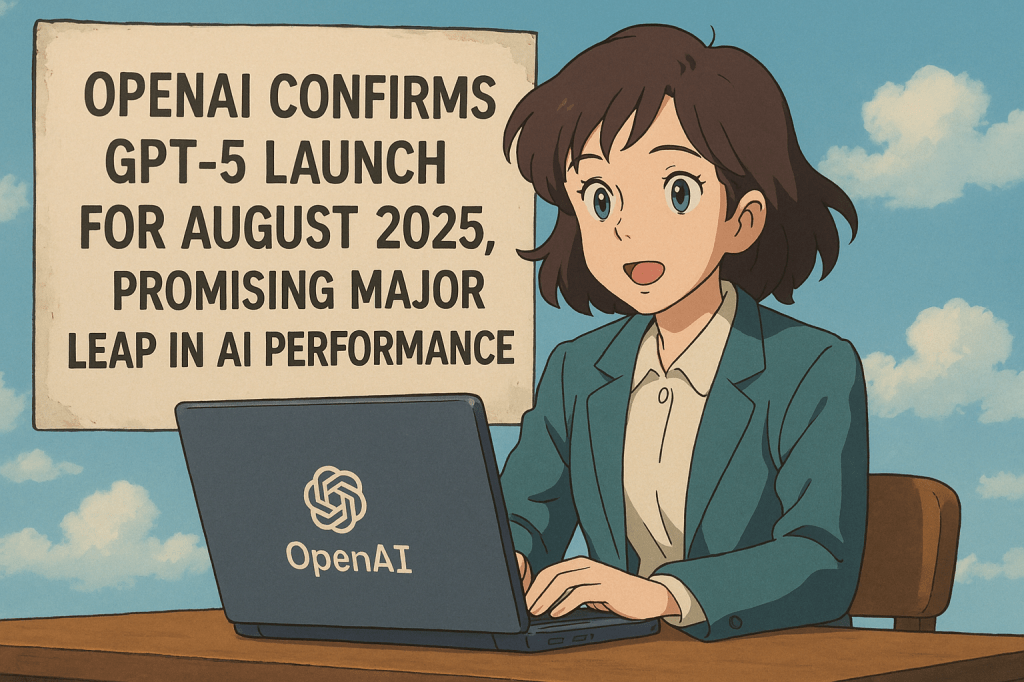
Long-Awaited Upgrade Poised to Redefine AI Benchmarks Across the Industry
After months of speculation, OpenAI has officially confirmed that its highly anticipated GPT-5 model will launch in mid to late August 2025. The announcement comes following a year of delays, closed-door testing, and rising public expectations for what could be the most advanced AI system released to date.
According to industry insiders, GPT-5 is expected to be a defining moment for the AI sector, introducing major improvements in reasoning, memory, and reliability—features that aim to surpass the performance of GPT-4o in meaningful ways.
Key Features: Longer Context, Smarter Memory, and Improved Accuracy
Among the most anticipated upgrades, GPT-5 will include significantly enhanced long-context processing—allowing it to handle much longer conversations, documents, and codebases without losing coherence. This improvement could unlock new use cases in enterprise automation, academic research, legal analysis, and software development.
Other core enhancements include:
- Improved conversation memory, offering better context retention across sessions
- Lower hallucination rates, reducing the likelihood of false or misleading answers
- Confidence scores attached to outputs, helping users assess uncertainty in responses
While OpenAI notes the model will not be entirely error-proof, it is designed to deliver greater accuracy and transparency compared to its predecessors.
Strategic Impact: A Shift for OpenAI and the Broader AI Landscape
The release of GPT-5 is expected to reshape competitive dynamics in the AI sector, especially as rivals like Anthropic, Google DeepMind, and Meta race to improve their own large language models. OpenAI’s move may also signal further integration with Microsoft products, enterprise tools, and developer ecosystems, enhancing its lead in both consumer and B2B applications.
For OpenAI, GPT-5 could also serve as the foundation for a new wave of multimodal tools, agents, and enterprise APIs, expanding far beyond simple chat interfaces.
Looking Ahead
While the exact release date is still under wraps, expectations are high that GPT-5 will set a new standard for commercial AI systems. With advanced memory, better factual grounding, and longer context handling, the model is poised to address some of the biggest limitations that have persisted in large language models to date.
Google Unveils Genie 3 “World Model” to Accelerate Path Toward Artificial General Intelligence

DeepMind’s Next-Gen AI Simulates Reality for Robots, Agents, and Virtual Learning Environments
Google has revealed its latest leap toward Artificial General Intelligence (AGI) with Genie 3, a powerful “world model” designed to simulate realistic environments for AI systems. Built by Google DeepMind, Genie 3 is intended to help train robots, autonomous agents, and virtual assistants in dynamic digital worlds that mirror physical reality.
According to DeepMind, world models are critical to achieving AGI—a theoretical level of artificial intelligence capable of performing a broad range of tasks at human-like proficiency, beyond narrow or single-purpose capabilities such as translation or image recognition.
“We expect this technology to play a critical role as we push toward AGI, and agents play a greater role in the world,” DeepMind said.
What Is Genie 3?
Genie 3 is an AI-powered world simulation engine that generates interactive 3D environments from text prompts. Unlike traditional training datasets or pre-rendered scenes, these simulations can be updated in real time—allowing, for example, a user to insert a herd of deer onto a ski slope or create new objects in a warehouse with a simple prompt.
Google demonstrated scenes such as skiing simulations and warehouse training environments to journalists, showing off Genie 3’s flexibility and realism. The quality is said to rival the company’s Veo 3 video model, but Genie 3 simulations last for several minutes, compared to Veo’s eight-second video generation capability.
While Genie 3 is not yet publicly released, DeepMind noted it is not ready for full deployment and did not provide a timeline.
Applications: Training Robots and Enhancing Autonomous Systems
One of the key use cases for Genie 3 is in robotics and autonomous vehicle training. By placing virtual agents into photorealistic, physics-aware simulations, researchers can teach systems to perform real-world tasks safely and cost-effectively.
“To achieve flexible decision-making, robots need to anticipate the consequences of different actions,” said Professor Subramanian Ramamoorthy, Chair of Robot Learning and Autonomy at the University of Edinburgh.
“World models are extremely important for robot development.”
Simulated environments allow robots to “learn” from vast quantities of trial-and-error interactions before being deployed in physical settings, potentially accelerating real-world implementation in logistics, manufacturing, or even healthcare.
A Bridge Between Language Models and Embodied Intelligence
Beyond robotics, Genie 3 also offers benefits for large language models (LLMs). Andrew Rogoyski, Director at the University of Surrey’s Institute for People-Centred AI, emphasized that world models give disembodied AIs a form of virtual embodiment.
“If you give a disembodied AI the ability to be embodied—even virtually—it can explore and learn,” he explained.
“This adds an important dimension to building more powerful and intelligent systems.”
In contrast to traditional LLMs, which excel at planning or generating responses but lack the capacity to take action, world models offer a pathway for interactive learning—enabling agents to simulate decisions and consequences.
Related Efforts: Google’s Virtual Agent Sima
Genie 3 builds on previous internal projects like Sima, Google’s AI agent capable of performing tasks inside video game environments. Though also unavailable to the public, Sima was introduced with the goal of bridging the gap between planning tasks and executing actions—a longstanding challenge for LLMs.
In research notes, Google highlighted the need for world models to fill this gap, especially as LLMs alone cannot meaningfully operate in dynamic physical or digital environments.
Competitive Context: AGI Race Intensifies
Google’s Genie 3 announcement comes as the global AI arms race intensifies. Just days earlier, OpenAI’s CEO Sam Altman teased a screenshot of what is believed to be the upcoming GPT-5, which promises advancements in memory, reasoning, and autonomy.
Google’s focus on embodied learning and simulation may offer a different path to AGI—one that blends language processing, environmental awareness, and decision-making into a cohesive system.
Final Outlook: Building a Simulated World for Smarter Agents
With Genie 3, Google is positioning itself to lead the next frontier of AI—where intelligent agents can learn, plan, and act within realistic virtual environments. Whether for training robots in warehouses or helping LLMs understand the physical consequences of their instructions, world models like Genie 3 represent a foundational step toward more adaptive, human-like intelligence.
Though still in early stages, Genie 3 could become a central component in the evolution from narrow AI to truly general-purpose systems.
AI-Driven Layoffs Surpass 10,000 in 2025 as U.S. Job Market Faces New Pressures

Report Shows Private-Sector Job Cuts at Highest Level Since 2020 Amid Rising Automation, Tariffs, and Budget Cuts
The U.S. job market is beginning to feel the early tremors of a transformational shift, as artificial intelligence (AI) begins reshaping the employment landscape. According to a report released this week by Challenger, Gray & Christmas, generative AI adoption has contributed to more than 10,000 job cuts in the first seven months of 2025, making AI one of the top five drivers of workforce reductions this year.
The findings come amid broader economic headwinds, including global trade tensions and domestic cost-cutting measures, which have combined to produce the highest private-sector job cut total through July since 2020.
Key Figures: Layoffs Surge, Tech Sector Hit Hardest
- Total private-sector job cuts (Jan–July 2025): 806,000+
- Technology industry layoffs: 89,000+ (up 36% YoY)
- Job cuts directly tied to AI since 2023: 27,000+
- Jobs added in July 2025: 73,000 (well below forecasts)
The technology sector has seen the sharpest reductions, with AI and automation cited as key disruptors. The report also notes the role of visa uncertainty and organizational restructuring in compounding layoffs across the sector.
“The industry is being reshaped by the advancement of artificial intelligence and ongoing uncertainty surrounding work visas,” the firm stated.
Gen Z Faces Tightening Entry-Level Market
AI’s impact is especially visible among younger job seekers, as entry-level corporate roles—once a staple for new graduates—have become increasingly scarce.
According to data from Handshake, a career platform focused on Gen Z employment, job listings for entry-level roles have declined 15% year-over-year. Simultaneously, the presence of “AI” in job descriptions has grown 400% over the past two years, indicating a shift in both employer expectations and the required skill sets for new hires.
Federal Budget Cuts Add to Labor Market Strain
Beyond AI, government spending reductions have also played a critical role. The Department of Government Efficiency (DOGE)—a federal cost-cutting initiative championed by billionaire Elon Musk—has triggered the elimination of over 292,000 positions across government, non-profit, and healthcare sectors.
“We are seeing the federal budget cuts implemented by DOGE impact non-profits and health care in addition to the government,” said Andrew Challenger, senior vice president at Challenger, Gray & Christmas.
Retail Sector Suffers Under Tariffs and Economic Uncertainty
Retail has also been hit hard. Retailers have announced over 80,000 job cuts through July, up nearly 250% compared to the same period last year.
The report cites tariffs, persistent inflation, and slowing consumer spending as major contributors. If these trends continue, further layoffs and store closures are likely.
“Retailers are being impacted by tariffs, inflation, and ongoing economic uncertainty… Further declines in consumer spending could trigger additional losses,” the firm warned.
Outlook: Caution Ahead as AI and Policy Continue to Reshape the Labor Market
While automation and AI may not be the primary cause of job losses in 2025, they are rapidly becoming a structural force in labor market dynamics. Coupled with economic policy changes and global uncertainty, employers are re-evaluating headcount and workforce structure at an accelerating pace.
As AI capabilities expand and cost-cutting measures persist, workers—especially those in tech, government, retail, and entry-level corporate roles—may need to adapt quickly to a new employment landscape.
Crypto
Trump to Sign Executive Order Allowing Crypto in U.S. 401(k) Retirement Plans

$12.5 Trillion Retirement Market Opens Door to Digital Asset Exposure
President Donald Trump is set to sign an executive order that will allow cryptocurrency investments in U.S. 401(k) retirement plans, potentially reshaping how millions of Americans manage their retirement savings. The White House Press Office confirmed the move to Cointelegraph on Thursday.
The order will direct the U.S. Department of Labor to reevaluate current restrictions on alternative assets in defined-contribution plans, including digital assets, private equity, and real estate.
Reassessing Fiduciary Rules for Alternative Investments
A senior White House official stated that the executive order instructs the Labor Secretary to clarify the department’s position on alternative asset classes and to issue guidance on fiduciary responsibilities related to offering such investments in retirement portfolios.
The move comes as part of a broader strategy to expand retirement portfolio diversification, aligning with increased interest in crypto adoption among institutional investors.
Crypto Access for 401(k) Plans: A Strategic Shift
Once implemented, the order will enable direct exposure to cryptocurrencies within 401(k) plans, which collectively manage over $12.5 trillion in assets. This change could significantly expand the retail investor base for digital assets, a goal the crypto industry has long pursued.
Although institutional adoption of crypto has grown in recent years, retirement savers have faced restrictions due to:
- Regulatory uncertainty
- Market volatility
- Concerns over fiduciary liability
By initiating rule evaluations and potential reforms, Trump’s executive order seeks to address these limitations.
Inter-Agency Coordination Underway
The order also calls for inter-agency collaboration, directing the Treasury Department and the Securities and Exchange Commission (SEC) to explore potential rule changes that could support crypto inclusion in retirement products.
This aligns with earlier reporting by the Financial Times on July 18, which cited anonymous sources suggesting the White House was considering expanding 401(k) access to alternative investments, including cryptocurrencies.
Labor Department Reverses Prior Crypto Guidance
The shift follows a significant policy reversal by the Labor Department. On May 28, 2025, the department formally rescinded its 2022 guidance, which had advised fiduciaries to exercise “extreme caution” when evaluating crypto for 401(k) plans.
The earlier stance had effectively discouraged plan administrators from offering crypto investments, citing concerns over investor protection, volatility, and oversight.
SEC Chair Weighs In: Education and Disclosure Are Critical
In a Bloomberg interview, SEC Chair Paul Atkins underscored the importance of investor education and transparent disclosure as crypto becomes more accessible through retirement accounts.
“People should be made aware of what they are getting into,” Atkins said.
“Disclosure is key, and I’m looking forward to what the president will do.”
Trump Administration Stresses Economic Prosperity
White House spokesman Kush Desai emphasized that any policy must come directly from President Trump and that the administration remains focused on “restoring prosperity to everyday Americans”.
“No decisions should be deemed official unless they come from President Trump himself,” Desai told Cointelegraph.
Final Outlook: A Milestone for Crypto and Retirement Investing
If enacted, the executive order could mark a major milestone in the integration of digital assets into traditional financial systems. For the crypto industry, it presents an unprecedented opportunity to access the U.S. retirement market. For investors, it offers a new layer of diversification—alongside new risks.
The impact will likely depend on how fiduciary guidance evolves and how quickly plan administrators adopt crypto offerings under the new regulatory framework.
Paxos Fined $48.5M by NYDFS Over AML Failures in Binance Partnership

Regulator Cites Lack of Oversight and $1.6B in Illicit Flows via BUSD Stablecoin
The New York Department of Financial Services (NYDFS) has reached a $48.5 million settlement with crypto infrastructure firm Paxos, citing failures in anti-money laundering (AML) oversight tied to its partnership with Binance and the distribution of the Binance USD (BUSD) stablecoin.
The settlement includes a $26.5 million penalty and a commitment by Paxos to spend an additional $22 million to overhaul its compliance and risk management programs, according to the NYDFS announcement on Thursday.
Regulator: Paxos Failed to Conduct Due Diligence on Binance
NYDFS officials said Paxos did not perform routine due diligence on Binance, despite facilitating roughly $1.6 billion in illicit flows through the BUSD stablecoin. The regulator previously ordered Paxos to cease issuing BUSD in February 2023.
“Regulated entities must maintain appropriate risk management frameworks that correspond to their business risks,” said NYDFS Superintendent Adrienne A. Harris.
“This includes relationships with business partners and third-party vendors.”
The NYDFS also criticized Paxos for not maintaining adequate Know Your Customer (KYC) controls, a key requirement for regulated financial entities.
Background: Legal Pressure from NYDFS and the SEC
Paxos has faced multi-agency scrutiny over its role in the issuance and management of BUSD. In February 2023, the U.S. Securities and Exchange Commission (SEC) issued a Wells Notice to Paxos, signaling potential enforcement action for allegedly distributing “unregistered securities.”
The SEC argued that Paxos’ partnership with Binance to distribute BUSD may have violated federal securities laws and consumer protection rules. However, the agency later withdrew the Wells Notice in 2024, leaving NYDFS to take the lead in regulatory action.
Just one day after the SEC’s initial warning, the NYDFS followed suit, stating that Binance-Peg BUSD had not been authorized for issuance on any blockchain, and emphasized that only the Ethereum-based version of BUSD had been officially approved.
Paxos Ordered to Strengthen Compliance Standards
As part of the settlement, Paxos will be required to:
- Implement enhanced AML and KYC protocols
- Conduct more rigorous due diligence on third-party partners
- Strengthen internal controls across its stablecoin issuance and custody operations
The regulator highlighted that Paxos failed to meet baseline regulatory obligations in areas such as customer verification, transaction monitoring, and partner oversight—particularly with Binance, a platform that has faced ongoing legal challenges in the U.S. and abroad.
Industry Impact: AML and KYC in the Spotlight
The case underscores the growing regulatory pressure on crypto firms to comply with existing anti-money laundering and consumer protection laws, especially when working with third-party platforms or issuing stablecoins.
With AML and KYC compliance now seen as foundational to legal operation in major jurisdictions, the Paxos-Binance fallout may serve as a warning to other firms with insufficient oversight mechanisms.
“Per DFS requirements, Paxos is required to conduct due diligence on every new customer,” NYDFS stated in its February 2023 notice.
Final Takeaway
The $48.5 million settlement reinforces the NYDFS’s role as a key regulator of digital asset firms operating in New York and signals continued enforcement around compliance failures—particularly where stablecoins and large-scale crypto partnerships are involved.
Paxos has not yet commented publicly on the terms of the settlement or how the changes will impact its future product offerings.
PancakeSwap Launches Onchain Futures Trading for U.S. Stocks, Including Apple, Amazon, and Tesla

New Derivatives Feature Brings Tokenized Equities to the Blockchain with Up to 25x Leverage
PancakeSwap has rolled out a new trading feature that enables users to trade futures contracts tied to major U.S. stocks, including Apple, Amazon, and Tesla, according to a release on August 5. This marks a major expansion of the platform’s decentralized derivatives offering, bridging the gap between traditional equity markets and onchain trading.
The new feature allows users to open long or short leveraged positions on synthetic U.S. equities using only a self-custodied crypto wallet. Built on BNB Chain, the contracts support up to 25x leverage and are designed to track real-world stock prices closely.
How It Works: Fully Onchain, No Brokerage Required
Unlike traditional stock trading—which requires a brokerage account, KYC, and custody of assets—PancakeSwap’s stock futures operate entirely onchain. There is no registration or third-party intermediary involved, offering a non-custodial, permissionless alternative for crypto-native users.
Key features:
- Supported stocks: Apple (AAPL), Amazon (AMZN), Tesla (TSLA)
- Leverage: Up to 25x
- Execution: On BNB Chain
- Trading hours: U.S. market hours (Mon–Fri, 13:30–20:00 UTC)
- Interface: Accessible via the new “Stocks” section in the PancakeSwap app
A New Breed of Derivatives for DeFi Users
These synthetic stock contracts function similarly to crypto perpetual futures, allowing users to speculate on price movements without owning the underlying shares. However, unlike perpetuals that trade 24/7, PancakeSwap’s stock futures follow U.S. equity market hours, adding realism and aligning with traditional trading patterns.
Prices are fed through decentralized infrastructure, helping to maintain accurate market mirroring without reliance on centralized custodians.
High Leverage, High Risk
PancakeSwap emphasized the risks associated with leveraged derivatives trading, warning users that small price fluctuations can result in disproportionate gains or losses. The platform urged traders to fully understand how leverage works and assess their risk tolerance before engaging in tokenized equity markets.
Strategic Vision: Expanding DeFi’s Reach into Traditional Finance
The move underscores PancakeSwap’s broader effort to evolve into a hybrid DeFi platform, offering crypto users exposure to traditional financial markets without ever leaving the blockchain.
By combining synthetic equity products with DeFi-native infrastructure, the protocol aims to unlock new opportunities for decentralized investment strategies and portfolio diversification.
Final Outlook
PancakeSwap’s stock futures launch represents a milestone in DeFi’s convergence with traditional finance, offering a glimpse into how decentralized platforms could reshape access to global markets. As regulatory landscapes evolve and blockchain infrastructure matures, such tools may become core components of onchain investing.
SharpLink Gaming to Raise $200M for Ethereum Treasury Expansion Through New Stock Offering
Joe Lubin-Backed Firm Continues Aggressive ETH Accumulation Strategy Amid Bullish Momentum
SharpLink Gaming (NASDAQ: SBET) has entered into a new institutional purchase agreement to raise $200 million through a common stock offering, with the proceeds earmarked for expanding its Ethereum (ETH) treasury, according to a company statement released this week.
The Minnesota-based firm, led by Consensys founder Joe Lubin, is one of the most aggressive publicly listed entities pursuing an ETH-focused treasury strategy. The latest agreement involves four undisclosed institutional investors, who will purchase SBET shares at $19.50 per share in an at-the-market (ATM) deal expected to close within days.
From Gaming to Ethereum Treasury Play
Originally a sports gaming platform, SharpLink Gaming has repositioned itself as a crypto-native treasury firm focused on Ethereum. The transformation has drawn backing from a wide network of top-tier crypto investors and was bolstered in July when former BlackRock executive Joseph Chalom joined the firm as co-CEO, bringing deep institutional experience to its ETH strategy.
Regulatory Backing and Capital Flexibility
SharpLink’s treasury buildup is made possible by a shelf registration with the U.S. Securities and Exchange Commission (SEC), which allows the company to issue equity or debt on a rolling basis. The firm originally filed for a $1 billion shelf registration, later increased to $6 billion in July, giving it substantial flexibility in raising capital.
“The net proceeds of the offering will be directed toward expanding SharpLink’s ETH treasury, which upon deployment is expected to exceed $2.0 billion in value,” the company said in a statement.
Financial Advisors and Placement Partners
The current $200 million raise is being led by:
- Alliance Global Partners as lead placement agent
- Société Générale as co-placement agent
- Cantor Fitzgerald has joined as a financial advisor
The company has attracted significant attention from major crypto-focused venture firms. Past backers of SharpLink’s public offerings include:
- Arrington Capital
- Consensys
- Galaxy Digital
- Electric Capital
- GSR
- Hivemind Capital
- Pantera Capital
- ParaFi Capital
- Republic Digital
- Ondo
- White Star Capital
Market Impact and ETH Price Action
At the time of publication, Ethereum (ETH) is trading at $3,855.14, up more than 7% on the day, according to The Block’s price data. SharpLink’s announcement aligns with a broader surge in ETH-related momentum and underscores growing institutional appetite for ETH as a long-term asset.
With this move, SharpLink further solidifies its position as a leading Ethereum treasury player, echoing the early Bitcoin treasury strategies employed by firms like MicroStrategy but focused exclusively on ETH.
Institutional ETH Strategies Gain Traction
As crypto markets mature, SharpLink’s approach signals a broader shift toward institutional Ethereum allocation, mirroring Bitcoin’s path in previous cycles. With a $6 billion shelf registration in place and high-profile partners on board, SharpLink may continue to be a bellwether for public market Ethereum exposure—setting the stage for a new wave of corporate treasury strategies centered on digital assets.
 Powerbuilding Digital