
Fitness / Motivation / Technology & A.I / Crypto

Welcome to Edition 113 of the Powerbuilding Digital Newsletter—your weekly foundation for strength, clarity, and forward growth. Whether you’ve been part of this community for a while or you’re just stepping in, this space is designed to help you stay disciplined in your training, sharp in your mindset, and informed in a world that’s moving fast.
Here’s what we’re diving into this week:
- Fitness Info & Ideas
Smart training methods and practical tips to help you build power, avoid burnout, and keep your progress steady over time. - Motivation & Wellbeing
Real-world mindset tools for resilience, balance, and staying locked in on your goals—even when distractions pile up. - Technology & AI Trends
Breakthroughs in AI and tech that matter right now—focused on what’s real, useful, and shaping the way we work and create. - Crypto & Digital Asset Trends
Not price speculation—just the most relevant apps, use cases, and projects redefining what’s possible in blockchain and Web3.
Edition 113 is about stacking consistency. One choice, one rep, one action at a time—that’s how strength and success compound. Let’s keep building forward.
Fitness
Strength Standards: How Much Should You Really Be Able to Lift?

“How much should I be able to lift?” It’s one of the most common questions in the gym. Whether you’re chasing strength for powerlifting, aesthetics, sports, or general health, strength standards provide a reference point.
But here’s the truth: standards are guides, not commandments. They’re useful benchmarks to measure progress—but they don’t define your worth as a lifter.
Why Strength Standards Matter (and Why They Don’t Define You)
- Why they matter: They give structure, track progression, and motivate you.
- Why they don’t define you: Everyone has different genetics, body mechanics, and training history. What matters is progress from your own baseline.
Relative vs. Absolute Strength
- Absolute strength = the raw weight you can lift (e.g., 405 lb deadlift).
- Relative strength = how strong you are compared to your bodyweight (e.g., 2x bodyweight deadlift).
Relative strength is often the better metric for athletes and health.
Key Lifts Used to Measure Standards
- Squat
- Deadlift
- Bench Press
- Overhead Press
- Pull-Ups/Chin-Ups
These compound lifts are the foundation of nearly all strength benchmarks.
Beginner, Intermediate, Advanced, and Elite Categories
- Beginner: Training consistently <1 year
- Intermediate: 1–3 years, solid technique, progressive overload
- Advanced: 3–5 years, high strength relative to bodyweight
- Elite: Competitive powerlifting or top-tier athletic strength
Squat Standards by Bodyweight and Experience
Example (Men):
- Beginner: 0.75x bodyweight
- Intermediate: 1.5x bodyweight
- Advanced: 2x bodyweight
- Elite: 2.5x+ bodyweight
Example (Women):
- Beginner: 0.5x bodyweight
- Intermediate: 1x bodyweight
- Advanced: 1.5x bodyweight
- Elite: 2x+ bodyweight
Deadlift Standards by Bodyweight and Experience
Men:
- Beginner: 1x bodyweight
- Intermediate: 1.75x bodyweight
- Advanced: 2.25x bodyweight
- Elite: 2.75x+ bodyweight
Women:
- Beginner: 0.75x bodyweight
- Intermediate: 1.25x bodyweight
- Advanced: 1.75x bodyweight
- Elite: 2.25x+ bodyweight
Bench Press Standards by Bodyweight and Experience
Men:
- Beginner: 0.75x bodyweight
- Intermediate: 1.25x bodyweight
- Advanced: 1.5x bodyweight
- Elite: 2x bodyweight
Women:
- Beginner: 0.5x bodyweight
- Intermediate: 0.75x bodyweight
- Advanced: 1x bodyweight
- Elite: 1.25–1.5x bodyweight
Overhead Press Standards by Bodyweight and Experience
Men:
- Beginner: 0.5x bodyweight
- Intermediate: 0.75x bodyweight
- Advanced: 1x bodyweight
- Elite: 1.25x+ bodyweight
Women:
- Beginner: 0.3x bodyweight
- Intermediate: 0.5x bodyweight
- Advanced: 0.75x bodyweight
- Elite: 1x+ bodyweight
Pull-Up Standards and Bodyweight Movements
- Men:
- Beginner: 1–3 strict pull-ups
- Intermediate: 8–12
- Advanced: 15–20
- Elite: 25+
- Women:
- Beginner: 1
- Intermediate: 5–8
- Advanced: 10–15
- Elite: 20+
How Gender and Age Affect Strength Standards
- Men generally have higher absolute strength due to testosterone and lean mass.
- Women often excel in endurance and relative strength at higher rep ranges.
- Age impacts recovery and peak output, but strength can be built at any stage of life.
Common Strength Ratios (Squat:Bench:Deadlift)
The classic ratio for balanced lifters is roughly:
- Squat = 100%
- Bench = 75% of squat
- Deadlift = 120–125% of squat
Athletic and Military Strength Benchmarks
- Firefighters often tested on carrying 1.25x bodyweight loads
- Military PT: pull-ups, push-ups, weighted carries
- Collegiate athletes: often benchmarked at 1.5–2x bodyweight squat and deadlift
How to Use Standards Without Comparison Burnout
- Track your progress vs. your past self
- Use standards as milestones, not measurements of self-worth
- Focus on building long-term consistency
Building Toward the Next Level of Strength
- Prioritize progressive overload
- Master technique before adding load
- Eat enough protein (1.6–2.2 g/kg)
- Prioritize sleep and recovery
The Role of Technique, Recovery, and Consistency
Strength is a skill. Without proper form, recovery, and consistency, you’ll never maximize your numbers—or worse, you’ll get injured and regress.
Long-Term Perspective: Strength as a Lifelong Pursuit
Chasing numbers is motivating, but don’t lose sight of the big picture. The strongest lifters aren’t just the ones who lift the heaviest—they’re the ones who stay injury-free, consistent, and adaptable for decades.
Measure Progress, Not Perfection
Strength standards are tools, not judgments. They give you targets to aim for and milestones to celebrate. But the real standard worth chasing? Being stronger than you were yesterday.
If you focus on consistent training, disciplined recovery, and smart progression, you’ll not only meet the benchmarks—you’ll surpass them.
Sources
- Kilgore, Rippetoe, & Pendlay – Practical Programming for Strength Training
- NSCA – Strength Standards and Testing Guidelines
- ExRx Strength Standards Database
- Journal of Strength and Conditioning Research – Relative Strength Studies
Motivation
Turn Resistance into Drive: Motivation from Inner Conflict

Resistance isn’t your enemy—it’s your signal. When you feel inner conflict, procrastination, or fear, it’s not proof that you’re weak. It’s proof that you’re standing at the edge of growth.
The question isn’t whether resistance will show up—it always will. The question is: will you let it paralyze you, or will you turn it into drive?
What Resistance Really Is
Resistance is the mind’s defense system against change. It shows up as excuses, distractions, or fear whenever you try to grow. Psychologists call it a self-preservation mechanism—the brain choosing comfort over challenge.
The Psychology of Inner Conflict
Inner conflict arises when two opposing forces clash:
- The part of you that craves growth and fulfillment
- The part of you that fears discomfort, failure, or rejection
This tension creates energy. Left unmanaged, it paralyzes. Harnessed correctly, it fuels action.
How Resistance Shows Up in Daily Life
- Putting off workouts
- Procrastinating on meaningful work
- Avoiding tough conversations
- Distracting yourself with comfort (scrolling, food, TV)
The Hidden Purpose of Resistance
Resistance isn’t random. It points directly to the areas of life that matter most. If you didn’t care, you wouldn’t resist.
Think of resistance as a compass: the stronger it is, the more that path likely matters.
Turning Pain Points into Power Sources
Pain can paralyze—or it can push. When you lean into discomfort, you train your nervous system to associate struggle with growth. Over time, the very things that used to stop you become the reasons you succeed.
The Role of Self-Awareness in Transformation
You can’t transform what you won’t acknowledge. The first step is awareness: noticing resistance in real time. Without judgment, name it for what it is: a signal, not a stop sign.
Shifting Resistance Into Drive: Step-by-Step Framework
1. Name the Resistance
Call it out: “I’m resisting going to the gym.” Awareness weakens its grip.
2. Find the Fear Beneath It
Is it fear of failure? Fear of discomfort? Fear of being judged? Identify the root.
3. Reframe It as Fuel
Shift perspective: “This resistance means I’m pushing into growth. That’s a good sign.”
4. Take Immediate Micro-Action
Don’t overthink. Take one small step—send the email, put on gym shoes, open the document. Action breaks inertia.
The Science of Cognitive Dissonance and Growth
Cognitive dissonance—holding two opposing beliefs—creates tension. Psychologists have found that people resolve this tension either by retreating to comfort or by taking action to align behavior with their goals. Choosing the latter turns resistance into momentum.
Resistance in Fitness: Using Struggle to Build Consistency
- Skipping workouts = short-term relief, long-term guilt
- Showing up despite resistance = habit-building + confidence
- Athletes know: the hardest reps create the strongest bodies
Resistance in Work: Breaking Through Creative and Professional Blocks
Every writer, entrepreneur, and creator knows resistance. But the most successful are those who sit down anyway. Discipline builds consistency, which invites inspiration.
Resistance in Life: Facing Change and Uncertainty
From moving cities to ending relationships, life changes always spark resistance. Instead of seeing it as a red light, see it as a threshold—an initiation into a stronger version of you.
The Role of Emotional Regulation in Harnessing Resistance
Breathing exercises, journaling, and mindfulness lower the stress response. This makes it easier to choose action over avoidance when resistance hits.
Practical Tools to Convert Resistance Into Drive
- 5-Second Rule (Mel Robbins): Count down and move before the brain argues.
- Implementation Intentions: “If I feel X, I will do Y.”
- Environmental Design: Remove distractions, set up cues for action.
- Accountability: Tell someone your goal to add pressure.
Common Mistakes People Make When Fighting Resistance
- Waiting for motivation instead of acting
- Beating themselves up for feeling resistance (it’s normal)
- Trying to eliminate it instead of channeling it
Long-Term Benefits of Embracing Inner Conflict
- Stronger self-trust
- Greater consistency in habits
- Resilience against setbacks
- Confidence from knowing resistance doesn’t control you
From Friction to Fire
Resistance is proof that you’re on the right path. It’s the bodyguard of growth, testing your commitment.
You can avoid it and stay comfortable—or face it, reframe it, and let it fuel you. Every time you push through, you strengthen the muscle of resilience.
Turn resistance into drive, and inner conflict becomes your greatest ally.
Sources
- Pressfield, S. – The War of Art
- Robbins, M. – The 5 Second Rule
- Festinger, L. – A Theory of Cognitive Dissonance
- Journal of Behavioral Psychology – Resistance and Habit Formation Studies
Technology & A.I
Thinking Machines Launches “Tinker” to Democratize Fine-Tuning of Frontier AI Models

A new player with serious OpenAI pedigree has entered the arena. Thinking Machines Lab, a well-funded startup founded by several former OpenAI leaders, has announced its first major release: Tinker, a platform that simplifies and automates the fine-tuning of advanced open-source AI models.
The goal? Make frontier AI capabilities accessible to everyone—from researchers and startups to developers and hobbyists.
“We’re making what is otherwise a frontier capability accessible to all, and that is completely game-changing,” said Mira Murati, CEO of Thinking Machines and former CTO of OpenAI.
What Tinker Does
Tinker offers an API that lets users fine-tune powerful models like Meta’s LLaMA and Alibaba’s Qwen through:
- Supervised learning (using labeled datasets)
- Reinforcement learning (tweaking model behavior based on feedback)
The platform handles the infrastructure complexity—like GPU clusters and distributed training—while still giving users full control over data, training parameters, and algorithms.
“We abstract away the distributed training details, but we still give people full control over the data and the algorithms,” said cofounder John Schulman, who also helped fine-tune ChatGPT.
Users can fine-tune a model and then deploy it wherever they want—on-prem, in the cloud, or embedded into their own apps.
Why This Matters
Fine-tuning AI models is typically limited to big tech and academic labs due to the cost and complexity involved. Tinker lowers that barrier and could spark a wave of innovation in niche use cases—legal, medical, educational, and more—by giving independent developers the tools to customize models to their needs.
Early testers say Tinker stands out for being powerful yet simple, outperforming current tools like VERL or SkyRL in both flexibility and usability.
Who’s Behind It?
Thinking Machines Lab has attracted attention not just for its product but for its team:
- Mira Murati – Former CTO and briefly CEO of OpenAI
- John Schulman – OpenAI cofounder and expert in reinforcement learning
- Barret Zoph, Lilian Weng, Andrew Tulloch, Luke Metz – Former OpenAI leads in safety, pretraining, robotics, and post-training
The startup raised a staggering $2 billion in seed funding, giving it a $12 billion valuation before its first product even launched.
A Push for Open Access
Tinker is launching at a time when U.S. AI labs are trending toward closed models accessible only through limited APIs. By contrast, China currently leads in open-source frontier models.
Murati hopes that Tinker will help reverse that trend by bringing high-level AI experimentation back into the hands of the global developer community. “There are a ton of smart people out there,” she said. “And we need as many of them as possible to do frontier AI research.”
Access & Future Plans
Tinker is open for applications starting this week, with the API currently free during the early access period. The company plans to charge for access in the future and is working on automated safeguards to prevent misuse—especially as open-source models raise concerns about potential abuse.
This may be Thinking Machines Lab’s first product, but with deep technical expertise and a mission to open up the frontier of AI, it’s likely just the beginning.
Avalara Unveils AI Agents That Automate the Entire Tax & Compliance Lifecycle
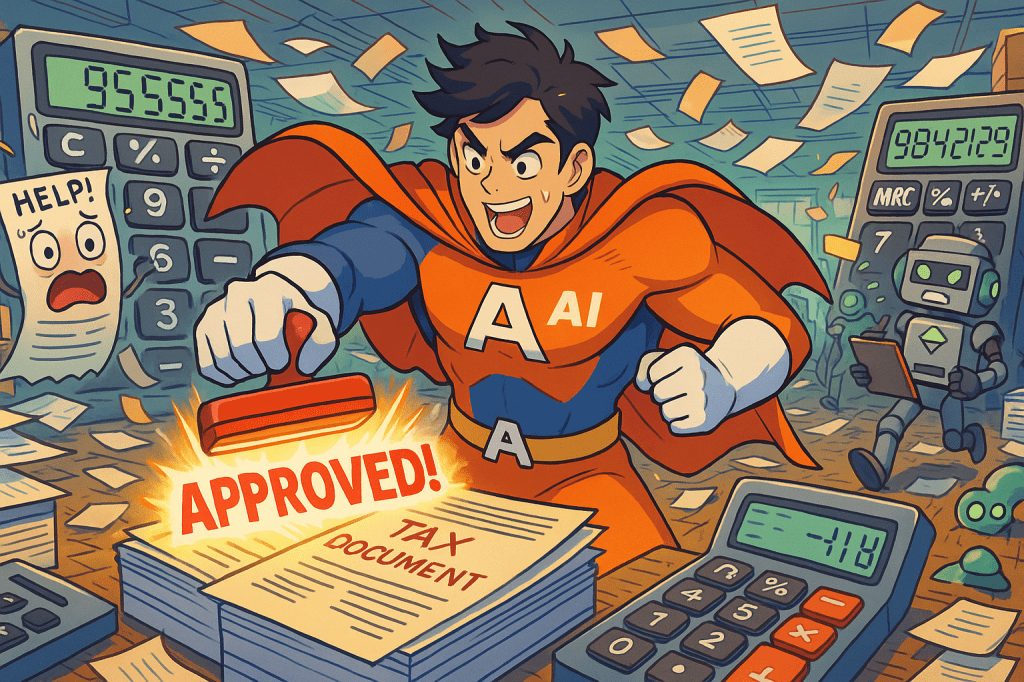
Avalara, Inc. is entering a new era of automation with the launch of Agentic Tax and Compliance™, a next-generation platform of intelligent AI agents built to handle the full scope of regulatory and tax compliance—autonomously and at scale.
Launching October 2025, the platform represents a significant step forward in enterprise automation by shifting compliance workflows from assistance-based AI (copilots) to fully agentic systems capable of executing tasks from start to finish.
A New Operating Model: Agentic Compliance
Unlike traditional automation tools or AI copilots, Avalara’s AI agents don’t just assist—they observe, advise, and execute.
Using its proprietary ALFA framework (Avalara LLM Framework for Agentic Applications), the company integrates:
- Private LLMs with enterprise-grade data isolation
- Proprietary domain-specific Small Language Models (SLMs) trained on billions of tax and compliance data points
- Agentic middleware that allows tasks to run where the data lives—whether in an ERP, ecommerce platform, or email inbox
The result is a platform where compliance becomes seamless, scalable, and always-on.
“Just as Harvey AI transformed legal workflows and PathAI redefined diagnostics, Avalara is now setting the standard in agentic tax and compliance,” said Scott McFarlane, CEO and Co-Founder of Avalara.
From Tax Returns to Regulatory Filings—Handled by AI
In practice, Avalara’s agents can perform actions that typically require dedicated departments:
- Ingest and process transactional data
- Select appropriate forms based on jurisdictional rules
- Execute filings through Avalara’s Returns APIs
- Monitor for changes in laws, tax codes, and compliance thresholds—automatically
For example, an agent can prepare and file a VAT return in Europe, manage marketplace facilitator rules in the U.S., or handle excise tax obligations in Brazil—without human intervention.
Architecture Built for Scale
Avalara’s agentic systems are hosted on a resilient, active-active, multi-cloud infrastructure using AWS, Azure, GCP, and Oracle Cloud. The architecture is horizontally scalable, delivering millisecond response times and global reach.
With over 1,400 partner integrations, Avalara’s AI agents can embed directly into leading platforms—ERP systems, ecommerce checkouts, POS systems, and more—meeting compliance needs wherever business happens.
Interoperability Between Agents
One standout feature is Avalara’s push toward agent-to-agent communication. Agents from different systems—such as ERP platforms or procurement tools—can now collaborate with Avalara’s AI agents to complete compliance tasks in real time.
“Have your agent call our agent” is no longer a metaphor. It’s a foundational feature of Avalara’s new operating model.
Developer Access & Use Cases
Developers can begin integrating today by accessing Avalara’s Model Context Protocol (MCP) servers at developer.avalara.com.
Agentic capabilities are being added across Avalara’s entire suite, including:
- AvaTax (for AP and AR)
- Returns & Reporting
- E-Invoicing
- Business Licenses
- Exemption Certificate Management
- 1099/W9 and Property Tax Services
- Tariff Code & Product Classification
Each module is being redesigned with agentic automation at the core, offering more efficiency with fewer manual inputs.
Looking Ahead
Avalara has already disrupted the industry once with its cloud-native tax platform. Now, with Agentic Tax and Compliance™, it’s redefining automation—moving from static rule-based systems to adaptive, intelligent agents capable of scaling across global markets.
Whether managing cross-border tax rules, monitoring regulatory changes, or filing jurisdictional forms, Avalara’s AI agents are designed to act in real time, at scale, and in harmony with a company’s broader agentic infrastructure.
AWS and NBA Launch “Inside the Game” AI Platform for Live Sports Intelligence

Amazon Web Services (AWS) has entered a multi-year partnership with the NBA to power a new AI-driven platform called NBA Inside the Game, bringing real-time data insights and interactive features to fans, broadcasters, and teams alike.
The platform will leverage AWS’s machine learning capabilities to transform raw game data—like player movement, defensive positioning, and shot patterns—into real-time, interactive statistics that enhance both live broadcasts and second-screen experiences.
Available across the NBA App, website, and social platforms, the tool will provide fans with AI-generated stats such as:
- Defensive coverage heatmaps
- Shot success probabilities
- Strategy breakdowns during live gameplay
Beyond fan engagement, NBA teams will also gain access to this enriched data to assist in game strategy and performance reviews.
“We build every statistic with team input. It’s not just about fans—it’s about helping teams compete smarter,” said Ken DeGennaro, NBA’s Head of Media Operations and Technology.
This move underscores a growing trend where sports leagues tap AI and cloud partnerships to reinvent the viewing experience and optimize on-court performance. Earlier this year, Microsoft partnered with the Premier League to embed its AI Copilot across the league’s digital ecosystem.
As AI becomes a new competitive edge in both sports and broadcasting, this collaboration between AWS and the NBA signals a major step toward data-enriched, immersive fan experiences and smarter coaching strategies.
Crypto
Coinbase Crosses $1 Billion in Bitcoin-Backed Loans, Sets $100 Billion Target

Eight months after launching its on-chain Bitcoin-backed loan product, Coinbase has surpassed $1 billion in originations, with CEO Brian Armstrong now targeting $100 billion in lifetime loans.
The loan system uses cbBTC, a wrapped version of Bitcoin on Coinbase, as collateral. This collateral is posted on-chain and routed to a Morpho market on Base, where USDC loans are issued to borrowers’ Coinbase accounts. Interest rates are variable and adjust every block based on market utilization.
Key mechanics:
- Liquidation threshold: 86% loan-to-value (LTV)
- Liquidation penalty: 4.38%
- Repayment: No fixed schedule
- Collateral: cbBTC is backed 1:1 with Bitcoin in Coinbase custody, with public proof-of-reserves
- Availability: U.S. (excluding New York)
As of mid-2025, Coinbase-connected collateral passed $1 billion, and active loans reached several hundred million, according to Morpho. DefiLlama data shows strong activity on Base, with elevated daily transactions, active addresses, and multi-billion-dollar bridged TVL—supporting robust liquidation mechanics.
Market Context & Forward Growth
The broader DeFi credit market is expanding. Decentralized lending outstanding hit $26.47 billion in Q2 2025, a 42% quarter-over-quarter increase. The move aligns with rising demand for asset-backed lending in traditional finance, where firms like KKR have raised billions for similar structures.
To reach the $100B target:
- 2030 arrival requires ~7.7% monthly compounded growth
- 2029 target = ~9.6% monthly growth
- 2027 target = ~21.2% monthly growth
Success hinges on scaling both USDC liquidity and average loan size, while managing collateral price risk and gas costs during volatile conditions.
Risk & Liquidity Considerations
Liquidations are automatic and on-chain, and borrowers with high LTVs are more exposed to sharp BTC price swings. Morpho’s rate-setting mechanism means interest costs can spike if USDC demand surges, affecting long-term loan holders.
To address these dynamics, Coinbase and Morpho are adjusting governance and incentives to grow dollar liquidity and increase loan capacity for higher net-worth users.
The front-end experience remains centralized and user-friendly, while back-end lending activity operates permissionlessly on Base—a hybrid known as the “DeFi mullet.”
While structurally different from the failed centralized lenders of 2022, the Coinbase-Morpho model still depends heavily on liquidity during market stress. Watching utilization rates, bridged TVL, and Base network performance provides key insight into the platform’s ability to scale safely.
Sharps Technology Plans $100M Stock Buyback, Citing Solana Treasury Strategy

Sharps Technology (STSS), a Nasdaq-listed medical device company, announced plans to repurchase up to $100 million of its outstanding common stock—part of a broader strategy tied to its Solana-based digital asset treasury (DAT).
The company, which holds 2 million SOL tokens (valued around $448 million), aims to communicate confidence in its valuation with the buyback move. “This new stock repurchase program will enable the company to repurchase its shares in the open market and in negotiated transactions,” the company said Thursday.
In August, Sharps made waves by declaring its intent to become the largest Solana digital asset treasury and secured over $400 million through a PIPE (private investment in public equity) transaction involving notable backers like ParaFi Capital and Pantera Capital.
Why It Matters
This kind of move reflects an emerging use case for crypto: using blockchain-based treasuries (in this case, Solana) as a strategic balance sheet asset. The buyback could serve to stabilize or boost share price, which has dropped from a high of $16 in August to $6.52.
It also signals that blockchain assets are starting to show up in traditional public company strategies, not just in tech or DeFi firms—but in sectors as unexpected as healthcare.
This may be one of the earliest examples of a “digital asset treasury” strategy being deployed at scale by a publicly traded small-cap firm.
Strategy Raises Dividend Again, Ties Perpetual Stock to Bitcoin Treasury Growth

Strategy has raised the annual dividend on its Variable Rate Series A Perpetual Stretch (STRC) Preferred Stock for the second time in a month, bumping the rate from 10% to 10.25% effective October 1. A $0.8541 per share cash dividend will be paid on October 31 to holders of record as of October 15, according to a recent SEC filing.
Why It Matters
This dividend increase comes shortly after Strategy’s $449.3 million Bitcoin acquisition on September 2, which added 4,048 BTC to its balance sheet. The company now holds 636,505 BTC at a total cost of $46.95 billion, making it one of the largest corporate holders of Bitcoin—representing over 3% of the total capped supply.
Funding Model Under Scrutiny
The Bitcoin purchase was funded through a mix of equity and preferred stock:
- $425.3 million via Class A common stock sales
- $46.5 million through preferred share offerings, including STRK, STRF, STRD, and STRC
Critics like short-seller James Chanos argue that the company’s reliance on common equity over income-focused securities reflects weak investor demand. However, Strategy reports it has raised $5.6 billion through preferred stock offerings in 2025 alone, making up 12% of all U.S. IPOs this year.
Bitcoin Treasury Trend Faces Regulatory Pressure
As more companies adopt Bitcoin treasury strategies, regulatory attention is intensifying. A Sept. 25 CryptoQuant report found that crypto treasury firms’ stock prices often decline toward PIPE (private investment in public equity) issuance levels, potentially harming existing shareholders.
Examples cited:
- Kindly MD: Spiked 18.5x post-PIPE, then dropped 97%
- Strive: Trades at $3.00, down 78% from 2025 highs, nearing its $1.35 PIPE price
Regulators, including the SEC, are now investigating whether firms or insiders profited from crypto-related trades before public announcements, raising concerns over transparency and market manipulation.
 Powerbuilding Digital