
Fitness / Motivation / Technology & A.I / Crypto

Welcome to Edition 138 of the Powerbuilding Digital Newsletter—your weekly anchor for strength, clarity, and forward execution. At this level, growth is no longer about starting—it’s about sustaining excellence. Keeping your standards high, your actions aligned, and your focus locked in despite distractions.
This edition is about discipline in motion—not waiting for the right moment, but operating with consistency regardless of conditions. That’s where real separation is built.
Here’s what we’re focused on this week:
- Fitness Info & Ideas
Training with purpose—structured progression, efficient recovery, and methods that help you maintain strength while continuing to evolve. - Motivation & Wellbeing
Control what you can control. We break down mental frameworks that strengthen discipline, sharpen focus, and reinforce emotional stability. - Technology & AI Trends
Awareness creates opportunity. We highlight AI tools and digital advancements that are shaping how individuals gain leverage and stay competitive. - Crypto & Digital Asset Trends
Quiet innovation, real impact—exploring blockchain platforms, applications, and Web3 developments building long-term utility.
Edition 138 is about staying locked into your standard—executing daily, refining continuously, and moving forward without hesitation. Keep building. Stay disciplined.
Disclaimer:
The information provided in the Powerbuilding Digital Newsletter is for educational and informational purposes only. It is not medical, mental health, legal, financial, or investment advice. Always consult qualified professionals before making decisions related to your health, training, finances, technology usage, or participation in digital assets. Digital assets involve risk, and all actions taken based on this content are solely your responsibility.
Fitness
How to Lift Heavy for 10+ Years Without Breaking Down

Lifting heavy for 10+ years isn’t about how hard you can push in a single session—it’s about how well you can sustain progress without accumulating damage. The goal isn’t to survive training; it’s to adapt to it. That starts with understanding that heavy lifting places stress not just on muscles, but on joints, tendons, and your nervous system. If you don’t manage that stress, it will eventually catch up to you. Longevity comes from respecting that balance.
Technique is the first line of defense. The heavier the weight, the less room there is for error. Small inefficiencies become big problems over time. Prioritizing clean, repeatable form allows you to train hard without unnecessary strain. It also ensures that the right muscles are doing the work, rather than forcing joints and connective tissue to compensate. Strength built on poor mechanics always has a ceiling—and usually ends in injury.
Progression needs to be controlled. Adding weight every session might work short term, but long-term progress requires structure. This means using gradual increases, cycling intensity, and allowing periods of lower stress to let your body recover and rebuild. Pushing heavy all the time doesn’t make you stronger—it just makes you more fatigued. Strategic variation and planned deloads are what keep progress moving forward year after year.
Recovery is where most lifters fall short. Sleep, nutrition, and rest aren’t optional—they are part of the training process. Without them, the body never fully repairs, and small issues begin to stack. Over time, that turns into chronic fatigue, joint pain, or injury. Consistently getting enough sleep, eating to support performance, and giving your body time to reset allows you to handle heavier loads without breaking down.
Listening to your body doesn’t mean avoiding hard work—it means recognizing the difference between productive strain and warning signs. There will always be discomfort in training, but sharp pain, persistent soreness, or declining performance are signals that something needs to adjust. Ignoring them doesn’t make you tougher—it shortens your lifespan in the gym.
The lifters who last are the ones who think long-term. They train with intent, manage stress, and stay consistent without chasing extremes. Over a decade, that approach compounds into real strength—built not just on effort, but on sustainability.
Motivation
The Hidden War Between Who You Are and Who You Could Be

There’s a constant tension beneath the surface of your daily life—a quiet conflict between who you are right now and who you’re capable of becoming. It doesn’t always show up as something dramatic. Most of the time, it’s subtle. It’s in the hesitation before action, the negotiation you make with yourself when things get uncomfortable, the pull toward what’s easy instead of what moves you forward. This is where the real battle happens—not externally, but internally.
Who you are today is built from patterns. Habits repeated, thoughts reinforced, choices made over time. They form a version of you that feels familiar, predictable, and safe. But that same version can also become limiting. It resists change, avoids discomfort, and protects the identity you’ve grown used to—even if it’s no longer aligned with where you want to go. Growth requires disruption. It demands that you challenge those patterns and step outside of what feels natural.
The version of you that you could become operates differently. It doesn’t wait for the right mood or perfect conditions. It acts with intention, follows through on commitments, and moves forward despite resistance. That version isn’t built in a single moment—it’s developed through consistent decisions that gradually shift your behavior and mindset. Every time you choose discipline over avoidance, you move closer to that potential. Every time you fall back into old habits, you reinforce the current version of yourself.
This conflict isn’t something you resolve once and move on from. It’s ongoing. Every day presents a choice between staying within your current identity or pushing toward something greater. The discomfort you feel is part of the process. It’s a signal that you’re stepping beyond what’s familiar. Avoiding it keeps you where you are. Facing it is what creates change.
Over time, the balance begins to shift. The actions that once felt forced start to feel normal. The discipline that once required effort becomes part of your baseline. The gap between who you are and who you could be starts to close—not through intention alone, but through consistent execution. And eventually, the version of you that once felt distant becomes the one you operate as every day.
Technology & A.I
The Bank Isn’t Hiring More People—It’s Deploying Agents Instead

The next analyst doesn’t walk in.
It gets deployed.
The shift most firms haven’t fully accepted yet
Financial institutions aren’t struggling with ideas.
They’re struggling with execution.
AI has been available.
Powerful.
Fast.
But still underused where it matters most.
That’s the gap Anthropic is targeting.
Not one tool—an entire layer of labor
Anthropic just introduced 10 AI agents designed specifically for financial work.
Not generic assistants.
Specialized operators.
They handle:
- Pitchbook creation
- Financial close processes
- Credit memo drafting
Tasks that used to require:
- Teams
- Time
- Iteration
Now compressed into systems.
This isn’t about capability—it’s about deployment
According to Dario Amodei, the bottleneck isn’t intelligence.
It’s adoption.
The models are ready.
Enterprises aren’t.
That mismatch creates friction.
So the strategy becomes clear
Don’t just build better AI.
Build systems that fit into how companies already operate.
That’s why Anthropic is:
- Embedding into tools like Microsoft 365
- Partnering with data firms
- Aligning with financial workflows
Because without integration…
Power doesn’t translate into usage.
This is also about revenue—and timing matters
Both Anthropic and OpenAI are moving toward potential IPOs.
That changes priorities.
It’s no longer just:
- Innovation
It’s:
Demonstrated adoption and revenue growth
Enterprise clients become the proving ground.
Why finance is the ideal entry point
Financial services firms already operate on:
- Data
- Precision
- Repetition
- Regulation
Which makes them:
Perfect environments for AI deployment
And the demand is already there
Major institutions are actively integrating AI.
Jamie Dimon made it clear:
- Hundreds of use cases
- Across risk, fraud, marketing, and operations
And that’s just the beginning.
But this isn’t happening in isolation
Anthropic is building an ecosystem around this push:
- Partnerships with firms like Moody’s and Dun & Bradstreet
- A joint venture with Wall Street players
- Collaboration with financial infrastructure providers
This isn’t product rollout.
It’s market penetration.
Meanwhile, competition is tightening
OpenAI is pushing into the same space.
Securing:
- Banking clients
- Enterprise partnerships
- Distribution channels
Different approach.
Same objective:
Own the enterprise layer
The hidden risk inside all of this
More powerful systems are entering critical infrastructure.
Including models like Mythos.
Capable of:
- Advanced analysis
- Cyber vulnerability discovery
Which raises a new question:
How much capability is too much too soon?
And even industry leaders are cautious
The rollout isn’t wide open.
It’s controlled.
Because once systems reach this level…
They don’t just improve workflows.
They introduce new risks.
Zoom out—this is a labor shift, not a tech upgrade
What’s happening isn’t:
- AI assisting workers
It’s:
- AI performing defined roles
That’s a structural change.
The part most people will feel later
At first, it looks like efficiency:
- Faster output
- Lower costs
- Better productivity
But over time, it becomes:
- Fewer roles needed
- Different skill requirements
- New definitions of work
Final thought
The financial industry isn’t adopting AI because it’s innovative.
It’s adopting it because it’s inevitable.
And the firms that move first won’t just gain efficiency.
They’ll redefine what a workforce looks like.
Because the next hire…
Doesn’t need onboarding.
The Model Dream Is Expensive—So the Smart Money Builds the Infrastructure Instead
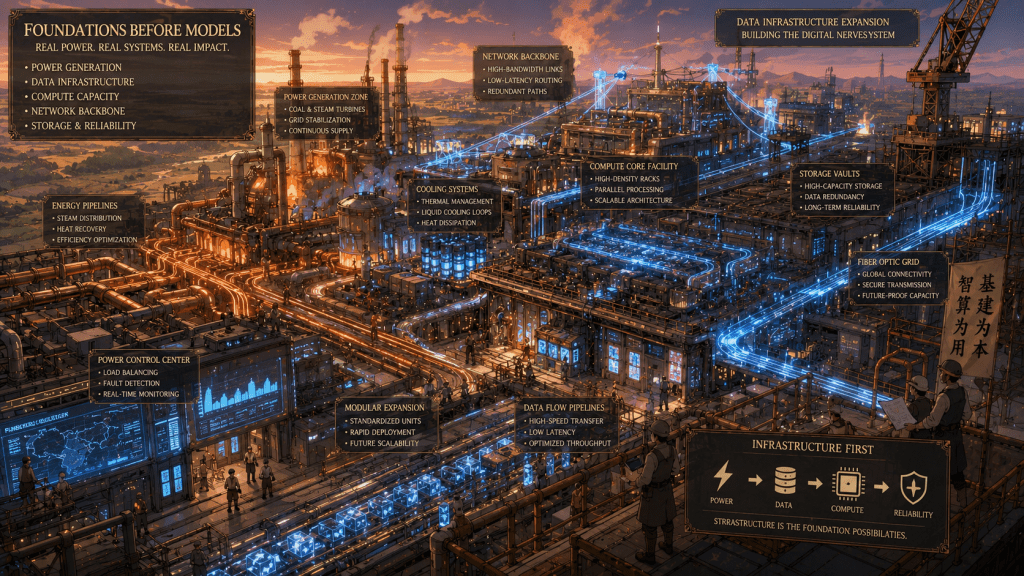
Everyone wants to build the model.
Few can afford to keep doing it.
That’s where the shift begins.
Silence usually means something changed
Krutrim didn’t disappear.
It recalibrated.
After months of limited product updates, the company is pivoting away from core model development…
And toward cloud services.
That’s not a downgrade.
It’s a decision.
Because building frontier AI isn’t just hard—it’s brutal
Training large-scale models requires:
- Massive compute
- Constant iteration
- Endless capital
And even then…
There’s no guarantee you’ll compete with:
- OpenAI
- Anthropic
That reality forces a question:
Do you compete at the top—or support the system beneath it?
Krutrim made its choice
Instead of doubling down on models, it’s shifting to:
- AI cloud services
- GPU infrastructure
- Enterprise compute support
Which means:
Selling the tools—not the intelligence itself
The part most people won’t notice
This pivot wasn’t sudden.
It came with:
- Capital reallocation
- Talent restructuring
- Paused chip design efforts
- Product pullbacks
Even the company’s AI assistant quietly disappeared from app stores.
That’s not iteration.
That’s repositioning.
And yet—the numbers still tell a strong story
Krutrim reported:
- ~3x revenue growth year-over-year
- First annual profit
- Margins exceeding 10%
On paper, that looks like momentum.
But there’s a question behind it:
Where is that revenue really coming from?
Because internal demand isn’t the same as market demand
Much of the company’s earlier revenue came from within its own ecosystem.
That matters.
Because scaling externally is a different challenge entirely.
Still, the demand for infrastructure is real
Krutrim now claims:
- 25+ enterprise clients
- GPU capacity nearly fully allocated
Across sectors like:
- Telecom
- Finance
- Healthcare
That aligns with a broader trend:
Everyone needs compute—even if they don’t build models
Meanwhile, others are taking the opposite path
Sarvam is still pushing forward:
- New models
- Open-source releases
- Strategic partnerships
Even exploring AI-powered orbital data centers.
Different strategy.
Same ambition.
So which path wins?
There are two emerging lanes:
1. Model Builders
- High risk
- High cost
- High upside
2. Infrastructure Providers
- Lower risk
- Consistent demand
- Scalable revenue
Krutrim is moving into lane two.
Zoom out—this is how markets mature
At the beginning:
- Everyone builds
Over time:
- Specialization emerges
Eventually:
- The ecosystem separates into layers
We’re entering that phase now.
The uncomfortable truth behind the pivot
Not every company can be a frontier AI leader.
But many can still win by supporting the system.
And sometimes…
That’s the smarter play.
Final thought
The narrative says AI is about models.
But the reality is:
AI is about who controls the infrastructure those models depend on
Because when demand for intelligence explodes…
The real leverage sits with the ones powering it.
Before You See the Model, the Government Already Has

By the time a new AI model reaches the public…
It’s already been tested somewhere else.
Not in the market.
In controlled environments.
Behind closed systems.
The unseen checkpoint most people never think about
The U.S. government isn’t waiting for AI to be released.
It’s stepping in before that point.
Through the Center for AI Standards and Innovation, early versions of models from:
- Google DeepMind
- Microsoft
- xAI
are now being reviewed before public deployment.
This isn’t testing—it’s evaluation under different rules
These aren’t polished releases.
They’re early builds.
Sometimes with:
- Reduced safeguards
- Expanded capabilities
- Fewer restrictions
Because to understand risk…
You need to see the system without limits.
What they’re actually looking for
Not performance.
Not benchmarks.
But risk vectors tied to:
- Cybersecurity
- Biosecurity
- Chemical threats
That tells you something important:
AI isn’t just being measured by what it can do—but by what it could enable
This system already exists—it’s just expanding
The government has already:
- Completed 40+ evaluations
- Tested unreleased models
- Worked with companies before launch cycles
Now it’s scaling.
Because the models are scaling.
And the timing isn’t random
Newer systems—like those coming out of Anthropic—have triggered concern at a different level.
Not incremental improvement.
Exponential jumps.
Capabilities that could:
- Accelerate vulnerability discovery
- Enable advanced attacks
- Reduce the barrier to complex operations
So the response becomes predictable
Limit exposure.
Control rollout.
Test aggressively before release.
That’s why models like Mythos aren’t widely available.
They’re being contained.
Zoom out—this is coordination, not control
There’s a difference.
The government isn’t building these systems.
But it’s inserting itself into the lifecycle.
Early.
Strategically.
And this isn’t just happening in the U.S.
Microsoft has signed similar agreements in the UK with its AI Security Institute.
Different countries.
Same approach.
That signals convergence.
The part most people don’t see clearly yet
AI development now has three layers:
- Private creation
- Government evaluation
- Public release
That middle layer didn’t exist before at this scale.
Now it’s becoming standard.
Why companies are agreeing to this
Because they have to.
Not just for regulation.
But for:
- Credibility
- Security alignment
- Long-term deployment access
In this phase, cooperation becomes leverage.
The underlying tension remains
Companies want:
- Speed
- Innovation
- Deployment
Governments want:
- Control
- Risk visibility
- Containment
Those goals don’t always align.
Final thought
The next time a powerful AI model is released…
It won’t be the first time it’s been tested.
It’ll be the first time you’ve seen it.
Because before AI reaches the public…
It passes through a layer most people never witness—
Where capability is measured not by what it builds…
But by what it could break.
You Won’t Choose the App—You’ll Choose the Intelligence Behind It

For years, software has been the product.
Now it’s becoming the container.
And what actually matters is what’s inside.
Apple is changing something subtle—but massive
Apple isn’t just adding AI features.
It’s opening the door.
With its upcoming systems—iOS 27, iPadOS 27, macOS 27—users will be able to:
Choose which AI model powers their experience
Not one default.
Multiple options.
This is the part that flips the model
Until now, AI inside devices has been:
- Controlled
- Fixed
- Invisible
You didn’t choose it.
You just used it.
Now?
You select the intelligence layer the same way you choose an app.
Apple calls it “Extensions”—but that undersells it
On the surface, it’s a settings option.
Underneath, it’s a platform shift.
Because once users can swap AI providers:
- The OS becomes neutral
- The models compete directly
- The experience becomes modular
And the players are already lining up
Apple is testing integrations with:
- Anthropic
While its broader ecosystem continues to intersect with:
- Microsoft
This isn’t just collaboration.
It’s positioning.
Why Apple is making this move now
Because it’s behind.
Not in hardware.
Not in ecosystem.
But in visible AI rollout.
While others pushed aggressively into AI features…
Apple stayed controlled.
Now it’s accelerating—but differently.
Instead of building everything—it’s orchestrating
Rather than forcing one model across all users…
Apple is creating:
A marketplace of intelligence
Where:
- Providers plug in
- Users choose
- Experiences vary
This changes how competition works entirely
Before:
- Companies competed on apps
Now:
- They compete on intelligence quality
The question shifts from:
“Which app should I use?”
To:
“Which model should I trust?”
Siri becomes something else entirely
With models like Google’s Gemini expected to power parts of Apple’s AI system…
Siri stops being a single assistant.
It becomes:
An interface to multiple intelligences
That’s a fundamental change.
Zoom out—this is the next layer of computing
We’re moving toward:
- Hardware → stable
- Software → flexible
- Intelligence → interchangeable
That last layer is new.
And it’s where the real competition lives.
The part most people won’t realize at first
Nothing will feel dramatically different.
You’ll still:
- Type
- Speak
- Generate
But behind the scenes:
- Different models produce different outputs
- Different systems interpret your requests
- Different intelligence shapes your experience
And that creates a new kind of user decision
Not technical.
Not complex.
But subtle:
Which intelligence feels right to you?
Final thought
Apple isn’t just adding AI.
It’s redefining where AI lives in the system.
Not as a feature.
Not as a tool.
But as a layer you can choose.
And once intelligence becomes selectable…
It stops being background.
It becomes the product.
Crypto
The Exchange Isn’t the Story Anymore—The Oversight Is

Crypto used to fight for legitimacy.
Now it’s fighting to prove it can survive scrutiny.
That’s a different phase entirely.
The deal never really ended
Back in 2023, Binance agreed to:
- A $4.3 billion settlement
- Federal oversight
- A three-year monitoring program
At the time, many saw it as closure.
It wasn’t.
It was the beginning of supervision.
Now the pressure returns
According to reports, the United States Department of the Treasury privately demanded Binance remain fully compliant with that monitoring structure after allegations surfaced involving:
~$1 billion in flows tied to Iranian entities
That immediately changes the temperature.
Because once sanctions and anti-money laundering concerns reappear…
Oversight hardens.
This isn’t just about transactions
The more important detail may be internal.
Reports claim individuals who raised concerns inside Binance were later removed.
If true, that transforms the issue from:
- Compliance failure
Into:
- Governance failure
And regulators treat those very differently.
The system around Binance is tightening
Senators are now pushing for:
- Formal reviews
- Compliance reporting
- Treasury accountability updates
That tells you this isn’t being viewed as isolated.
It’s becoming political.
And politics changes everything in crypto
Because Binance no longer exists outside the broader power structure.
Its connections now intersect with:
- U.S. regulators
- International sanctions frameworks
- Political networks tied to crypto itself
Including relationships connected to Donald Trump and crypto ventures surrounding World Liberty Financial.
That creates a completely different level of scrutiny.
The market structure is changing underneath all of this
Years ago, crypto exchanges operated like:
- Fast-moving startups
- Offshore systems
- Borderless platforms
Now?
They’re being forced into:
- Banking-style oversight
- Multi-agency monitoring
- Long-term compliance frameworks
That transition is uncomfortable.
But unavoidable.
Meanwhile, CZ is signaling something important
Changpeng Zhao says he’s done leading companies.
No new startup.
No return as CEO.
That matters symbolically.
Because crypto’s founder era is slowly giving way to:
Institutional governance era
But the irony is impossible to ignore
Binance still remains one of the most influential exchanges in the world.
Even under:
- Settlements
- Monitoring
- Political scrutiny
- Regulatory pressure
Which tells you something deeper:
The infrastructure became too large to ignore—even after enforcement arrived
Zoom out—this is what maturation actually looks like
Not hype.
Not price action.
But:
- Oversight
- Enforcement
- Political integration
- Compliance standardization
Messy systems becoming formalized.
The hidden battle happening beneath the headlines
This isn’t only about Binance.
It’s about who controls:
- Global liquidity
- Cross-border digital capital
- Financial rails outside traditional banking
And governments are making it clear:
Those systems will not remain unsupervised
Final thought
Crypto once marketed itself as outside the system.
Now the system is moving directly into crypto.
Not to stop it.
To shape it.
Because once digital assets become large enough to influence global capital flows…
Oversight stops being optional.
Crypto Finally Meets the Cash Counter: Kraken’s Bet on Real-World Liquidity
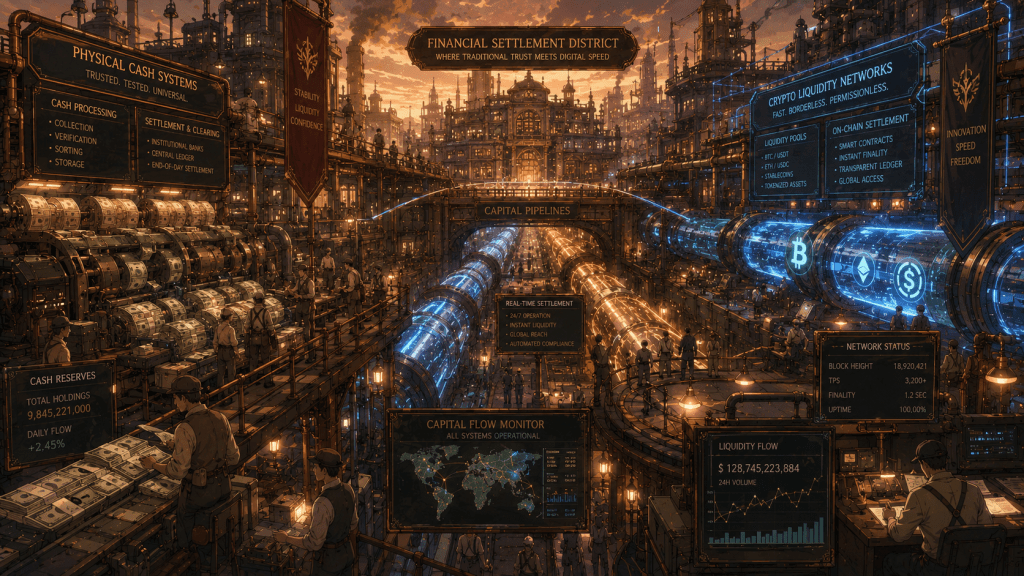
Crypto solved movement.
It never fully solved exit.
That’s been the friction point all along.
Because value isn’t useful until it becomes spendable
You can trade globally in seconds.
Move stablecoins across borders instantly.
Hold assets without banks.
But eventually, most people still ask the same question:
“How do I turn this into usable local money?”
That’s the gap Kraken and MoneyGram are trying to close.
This isn’t another payment app integration
It’s infrastructure convergence.
Through the partnership:
- Kraken users can convert crypto into cash
- Pick up fiat currency through MoneyGram’s network
- Access services across 100+ countries
In many cases:
Almost instantly
The part that matters isn’t speed
Crypto already had speed.
What it lacked was:
- Reliable local access
- Trusted cash infrastructure
- Global off-ramp consistency
That’s what MoneyGram brings.
Half a million locations changes the equation
MoneyGram operates through:
- ~500,000 retail locations
- 200+ countries and territories
That scale matters because:
Adoption doesn’t happen only online
It happens where people can actually access money.
This is crypto moving into practical utility
Not speculation.
Not trading.
Function.
The partnership creates a bridge between:
- Digital asset liquidity
And - Traditional financial access points
That’s where crypto starts behaving less like an isolated market…
And more like infrastructure.
The model is intentionally divided
Kraken handles:
- Compliance
- User onboarding
- Exchange infrastructure
MoneyGram handles:
- Licensed money transmission
- Local payout systems
- Regulatory rails
That separation is strategic.
Because scaling globally requires:
Different systems specializing in different layers
Zoom out—this is the direction the industry is moving
The narrative used to be:
- Crypto versus traditional finance
Now?
It’s:
Crypto integrating into traditional finance
Not replacing it.
Connecting with it.
And the rollout map tells you exactly where demand exists
Initial expansion includes:
- Latin America
- Africa
- Asia Pacific
- Europe
- The U.S.
Regions where:
- Banking access varies
- Currency movement matters
- Remittance infrastructure is critical
This also changes how people think about exchanges
Exchanges are evolving from:
- Trading venues
Into:
- Financial access layers
The more they integrate:
- Payments
- Settlement
- Withdrawals
- Banking connections
The closer they move toward becoming:
Parallel financial platforms
The subtle signal underneath all this
Cash pickup still matters.
That’s important.
Because despite all the innovation:
- The physical financial world still exists
- Local liquidity still matters
- Trust still lives in real-world access points
And that’s where crypto historically struggled
Digital wealth is meaningless if:
- You can’t withdraw it
- Access is restricted
- Liquidity disappears locally
This partnership targets that exact weakness.
Final thought
Crypto adoption doesn’t scale when people can only trade.
It scales when they can:
- Receive
- Convert
- Spend
- Exit seamlessly
And the systems that win the next phase won’t just move digital assets faster.
They’ll make those assets usable anywhere—
Even at a cash counter thousands of miles away.
Germany’s Crypto Advantage May Be Ending: The Tax Shift That Could Redraw Europe’s Bitcoin Map

For years, Germany quietly became one of the best places in Europe to hold Bitcoin.
Not because it was loud about crypto.
Because it left long-term holders alone.
That may be about to change.
The rule that made Germany different
Under current German law:
Hold your crypto for more than one year…
And capital gains are generally tax-free.
That single policy transformed Germany into:
- A long-term holder haven
- A tax-efficient jurisdiction
- A strategic base for serious crypto investors
Especially compared to much of Europe.
Now the government is looking at it differently
Lars Klingbeil has signaled plans to:
- Increase crypto tax revenue
- Tighten compliance
- Change how digital assets are taxed beginning in 2027
The target?
Potentially the very exemption that made Germany attractive in the first place.
This isn’t just about crypto—it’s about budget pressure
The government wants:
An additional €2 billion in revenue
And crypto is increasingly being folded into broader deficit reduction efforts.
That matters.
Because once an asset class shifts from:
- Innovation category
To:
- Revenue source
Policy changes accelerate.
The quiet fear spreading through the industry
Industry groups believe the likely move is simple:
End the one-year tax-free holding period.
If that happens, Germany moves closer to:
- Austria’s model
- Standard capital gains treatment
- Permanent taxation regardless of holding length
And Austria is being used as a warning
Austria removed its crypto holding exemption in 2022.
The result?
Critics argue:
- More bureaucracy
- More compliance complexity
- Minimal additional tax benefit
Even leaders inside the crypto industry called it a mistake.
What disappears if Germany follows the same path
Not just tax efficiency.
Competitive positioning.
Germany currently holds an edge because it rewards:
- Long-term conviction
- Patient capital
- Investor stability
Remove that…
And the incentive structure changes overnight.
The timing isn’t accidental
At the same time, Europe is tightening transparency through DAC8 rules.
Crypto service providers will now:
- Report transaction data
- Share customer activity with tax authorities
- Reduce undeclared trading activity significantly
That creates a new environment:
Less anonymity. More enforcement. Higher visibility.
Zoom out—Europe is entering its compliance phase
The early era of:
- Loose oversight
- Friendly ambiguity
- Experimental regulation
Is fading.
Now the focus becomes:
- Monitoring
- Reporting
- Tax harmonization
And the market may react faster than policymakers expect
Critics warn that over-taxation creates:
- Capital flight
- Offshore migration
- Reduced local innovation
Because digital assets move easier than traditional capital.
The hidden tension underneath all this
Governments want:
- Tax revenue
- Regulatory control
- Transparent reporting
Investors want:
- Clarity
- Stability
- Incentives to remain compliant
Those goals only align if policy feels balanced.
The irony inside the debate
Europe spent years trying to:
- Legitimize crypto
- Bring it into regulated systems
- Encourage compliant participation
Now some fear aggressive taxation could:
Push activity back outside the regulated perimeter
Final thought
Germany’s crypto appeal wasn’t built on hype.
It was built on patience.
The idea that long-term holders wouldn’t be punished for conviction.
If that principle disappears…
The question won’t just be how much tax gets collected.
It’ll be:
Whether the country still remains competitive in the digital asset era at all.
Retirement Portfolios Are Quietly Entering Crypto’s Next Phase

Crypto used to be viewed as speculation.
Now it’s being positioned beside retirement planning.
That alone tells you how much the industry has changed.
The audience Coinbase is targeting now is very different
Coinbase isn’t chasing traders with this move.
It’s targeting trustees.
Long-term allocators.
People managing retirement capital through Australia’s self-managed super fund system.
That shift matters.
Because retirement money behaves differently than speculative capital.
This is about legitimacy through structure
Coinbase’s Australian division has launched dedicated support for SMSFs—self-managed super funds.
Not just basic crypto access.
Infrastructure tailored specifically for:
- Retirement structures
- Compliance requirements
- Long-term reporting needs
Including:
- Audit-ready documentation
- Institutional-grade custody
- SMSF-specific onboarding
That’s not retail crypto positioning.
That’s financial integration.
And the capital pool is enormous
Australia’s SMSF sector controls:
Over $1 trillion AUD in assets
Across:
- 650,000+ funds
- 1.2 million+ members
That represents one of the world’s largest pools of self-directed retirement capital.
The psychology of this move matters more than the feature
When crypto enters retirement frameworks…
The narrative changes.
From:
- Fast money
- Trading culture
- Volatility obsession
To:
- Long-term allocation
- Diversification
- Strategic exposure
That transition reshapes perception entirely.
But Coinbase isn’t entering blindly
The company already secured an:
Australian Financial Services Licence
Which positions it ahead of Australia’s incoming digital asset licensing framework scheduled for 2027.
That timing is strategic.
Because regulation is becoming the gateway to participation
The next phase of crypto growth won’t be driven only by:
- Apps
- Tokens
- Speculation
It’ll be driven by:
- Licensed access
- Retirement products
- Institutional compliance pathways
And Australia is building that framework aggressively
The country’s new digital asset regime will require:
- Licensed exchanges
- Approved custody structures
- Regulatory oversight
Which means firms preparing early gain an advantage.
Zoom out—this isn’t just about Coinbase
Even traditional super funds in Australia are exploring crypto exposure.
Carefully.
Quietly.
But increasingly.
That’s the signal.
The hidden evolution happening here
Crypto adoption is maturing in layers:
First:
- Retail speculation
Then:
- Institutional products
Now:
- Retirement allocation frameworks
That third stage changes the industry permanently.
Because retirement capital moves differently
It demands:
- Security
- Compliance
- Longevity
- Stability of infrastructure
You can’t market it the same way you market meme coins.
The irony inside the shift
For years, critics argued crypto was too unstable for serious portfolios.
Now exchanges are building:
- Retirement integrations
- Long-term custody systems
- Pension-compatible structures
Not because volatility disappeared.
But because the infrastructure improved.
Final thought
The real signal isn’t that retirement funds can buy crypto.
It’s that crypto companies are redesigning themselves to serve retirement capital.
That means the industry is no longer trying to prove it exists.
It’s trying to prove it belongs inside the financial system people trust most—
Their future savings.
The Public Company That Turned Itself Into a Crypto Treasury Machine

Most public companies hold:
- Cash
- Bonds
- Buybacks
This one is accumulating a token instead.
And that changes how investors have to think about corporate balance sheets.
The company isn’t selling a product anymore—it’s selling exposure
Hyperliquid Strategies Inc. now holds roughly:
20 million HYPE tokens
That’s the core strategy.
Not software.
Not biotech.
Not manufacturing.
Accumulation.
This is a different kind of public company
The firm emerged from a merger with:
Sonnet BioTherapeutics
But instead of continuing down the traditional biotech path…
It pivoted toward becoming:
A publicly traded vehicle for HYPE exposure
That’s an entirely different corporate model.
The mechanics underneath are important
The company isn’t just buying tokens and sitting on them.
It’s:
- Staking
- Optimizing yield
- Participating in ecosystem infrastructure
- Operating validator partnerships
That means the treasury itself becomes:
An active financial engine
This starts to resemble crypto-native capital markets
Traditionally:
- Shareholders buy stock for company performance
Here:
- Shareholders buy stock for token exposure + treasury strategy
That blurs the line between:
- Equity markets
And - Digital asset accumulation vehicles
The company is leaning fully into the model
Since late 2025, it has deployed:
~$216 million into HYPE acquisitions
While maintaining:
~$103 million in cash reserves
That cash acts as optionality:
- Future token accumulation
- Share repurchases
- Treasury expansion
And they’re not only buying HYPE
The company also repurchased:
~3 million PURR shares
That’s important.
Because it signals management sees:
- Treasury expansion
And - Equity structure management
As connected strategies.
But the volatility cuts both ways
Despite the aggressive treasury growth…
The company posted:
~$165 million net loss over nine months
Largely due to:
- Unrealized HYPE losses
- Legacy business write-offs
- Deferred tax expenses
That’s the trade-off.
When your balance sheet is tied heavily to digital assets…
Volatility moves directly into earnings.
This creates a new type of shareholder experience
Investors aren’t just exposed to:
- Company operations
They’re exposed to:
- Token price fluctuations
- Staking economics
- Ecosystem growth
- On-chain activity
That’s closer to:
A crypto strategy fund wrapped inside a public company
Zoom out—this model is spreading
More firms are beginning to act less like operating businesses…
And more like:
- Digital asset treasuries
- Yield vehicles
- Ecosystem proxies
Because public markets still provide something crypto often can’t:
Broad capital access
The hidden idea behind all this
If a token ecosystem grows fast enough…
Owning the treasury vehicle becomes another way to own the network itself.
Especially for:
- Traditional investors
- Institutions
- Public market participants unable or unwilling to hold tokens directly
And the timing matters
Hyperliquid’s growth in on-chain finance is happening while:
- DeFi matures
- Tokenized finance expands
- Public companies search for new capital narratives
That combination creates fertile ground for hybrid models like this.
Final thought
This isn’t just a company buying crypto.
It’s a signal that public markets are adapting to on-chain economics.
Where balance sheets no longer only hold:
- Cash
- Inventory
- Securities
But protocol exposure itself.
And if that trend continues…
The next generation of public companies may look less like corporations—
And more like strategic digital asset vaults with ticker symbols.
 Powerbuilding Digital